
Most british businesses underestimate how much their SEO performance can impact brand growth online. With over 60 percent of consumers relying on search engines to find local brands, missing the right metrics can mean lost opportunities in markets like Sydney. Understanding which SEO markers matter and how to track them gives your british brand a real advantage, offering clarity for digital strategy and unlocking your website’s full visibility potential.
Table of Contents
- Stage 1: Define Key SEO Metrics For Your Brand
- Stage 2: Set Up Reliable Tracking Tools Ethically
- Stage 3: Gather Performance Data Using Insights
- Stage 4: Analyse Results For Value-Driven Improvements
- Stage 5: Review And Refine Your Monitoring Process
Quick Summary
| Key Point | Explanation |
|---|---|
| 1. Define Relevant SEO Metrics | Focus on 3-5 key indicators that align with your digital objectives to track SEO performance effectively. |
| 2. Use Ethical Tracking Tools | Select tools like Google Analytics that respect user privacy while providing comprehensive data insights. |
| 3. Regularly Analyse Performance Data | Implement a schedule for consistent data tracking and analysis to identify trends and opportunities for improvement. |
| 4. Compare Metrics Against Benchmarks | Assess your performance indicators against established benchmarks to understand strengths and weaknesses in your strategy. |
| 5. Refine Monitoring Processes Continuously | Conduct quarterly reviews to adapt metrics and tools to stay aligned with evolving business objectives and market trends. |
Stage 1: Define key SEO metrics for your brand
Successful SEO performance monitoring requires identifying precise metrics that align with your Sydney brand’s digital objectives. By establishing clear benchmarks, you can systematically track your website’s growth and optimise your online strategy.
Starting with foundational metrics helps create a robust tracking framework. The Australian Retailers Association recommends focusing on key performance indicators that provide meaningful insights into your digital presence. These critical metrics include domain authority, keyword rankings, bounce rate, local search performance, and backlink quality. Each metric offers unique perspectives on your website’s search engine visibility and user engagement.
Another strategic approach involves mapping metrics to broader business goals. The Media Federation of Australia suggests analysing metrics like organic search revenue, website traffic volume, competitive market share, and keyword ranking positions. This method transforms raw data into actionable intelligence, enabling targeted improvements in your digital marketing strategy.
Pro Tip: Do not get overwhelmed by multiple metrics. Select 3-5 key indicators that directly reflect your brand’s specific objectives and consistently track them.
As you complete this stage, you will have a clear understanding of which SEO metrics matter most for your Sydney brand, setting the foundation for comprehensive performance monitoring.
Stage 2: Set up reliable tracking tools ethically
Establishing transparent and responsible SEO tracking requires strategic tool selection and implementation that respects user privacy and delivers meaningful insights for your Sydney brand.

When selecting tracking tools, the Small Business Development Corporation emphasises the importance of understanding the cost, scope, and expected outcomes of SEO services to ensure ethical and transparent digital performance monitoring. Start by evaluating potential tools based on their ability to provide comprehensive data while maintaining user privacy. Look for platforms that offer granular insights into website performance such as Google Analytics, SEMrush, or Moz, which provide robust tracking capabilities without compromising ethical standards.
Moreover, research from James Cook University highlights the critical need for ethical integration of digital tracking technologies, suggesting a framework that prioritises data protection and user consent. This means selecting tools that allow clear opt-out mechanisms, anonymise user data, and provide transparent reporting on data collection practices. Consider tools that offer GDPR and Australian privacy law compliance, ensuring your tracking approach respects individual digital rights.
Pro Tip: Always obtain explicit user consent for data tracking and provide clear, accessible information about how their data will be used.
By completing this stage, you will have established a reliable and ethically sound tracking infrastructure that supports your brand’s digital growth while maintaining user trust.
Stage 3: Gather performance data using insights
Effective SEO performance monitoring requires a systematic approach to collecting and interpreting website data that provides meaningful insights into your digital strategy’s effectiveness.
Start by configuring your selected tracking tools to generate comprehensive reports across multiple performance dimensions. Focus on extracting data from key metrics such as organic search traffic, keyword ranking positions, click through rates, bounce rates, and conversion metrics. Utilise dashboards in platforms like Google Analytics to create custom reports that align with your specific brand objectives and provide granular insights into user behaviour and website performance.
To maximise the value of your data collection, implement a regular monitoring schedule that allows for consistent tracking and comparative analysis. This might involve weekly performance reviews, monthly comprehensive audits, and quarterly strategic assessments. Pay special attention to trends and patterns in your data rather than isolated datapoints, looking for sustained improvements or potential areas requiring strategic intervention. 8 Essential Steps in Your SEO Audit Checklist can provide additional guidance on systematic performance evaluation.
Pro Tip: Create a standardised reporting template that allows for easy comparison across different time periods, enabling you to track your SEO performance trajectory effectively.
By completing this stage, you will have established a robust method for gathering and interpreting performance data that supports informed decision making for your Sydney brand’s digital strategy.
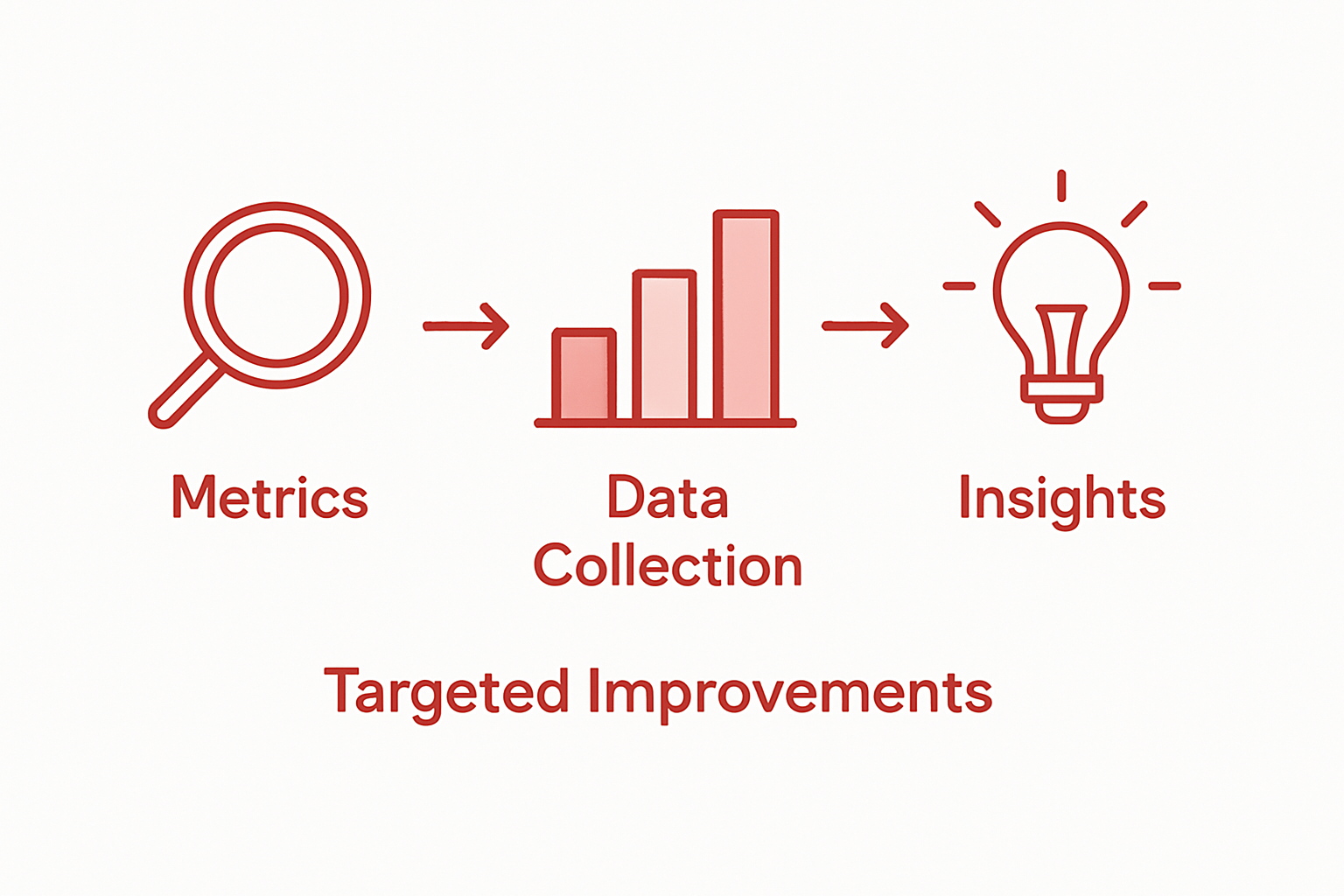
Stage 4: Analyse results for value-driven improvements
Transforming SEO data into actionable strategies requires a systematic approach to interpreting performance metrics and identifying meaningful opportunities for your Sydney brand’s digital growth.
The Small Business Development Corporation recommends monitoring key performance indicators that directly demonstrate the return on investment of your SEO efforts. Begin by comparing your current metrics against established benchmarks, focusing on critical indicators such as page rankings, website traffic volumes, conversion rates, and keyword performance. Look beyond surface level numbers to understand the underlying trends that reveal your digital strategy’s strengths and potential areas for enhancement.
The Australian Retailers Association emphasises the importance of comprehensive metric analysis, highlighting domain authority, keyword rankings, and bounce rates as crucial evaluation points. Create a systematic scoring mechanism that allows you to objectively assess each metric’s performance. Prioritise metrics that directly correlate with your business objectives, such as lead generation, online sales, or brand visibility. SEO Ranking Factors: Complete Guide for Australia can provide additional context for interpreting these performance signals.
Pro Tip: Develop a quarterly review process that compares current performance against historical data, allowing you to track progression and identify emerging trends.
By completing this stage, you will have transformed raw data into strategic insights that guide targeted improvements for your digital marketing approach.
Stage 5: Review and refine your monitoring process
Continuous improvement of your SEO performance monitoring strategy is essential for maintaining a competitive digital presence and ensuring your Sydney brand remains adaptable in a dynamic online environment.
The Small Business Development Corporation emphasises the critical importance of regularly evaluating and adapting your monitoring processes to align with changing business objectives and market dynamics. Begin by scheduling quarterly comprehensive reviews of your existing monitoring framework. During these reviews, critically assess the relevance of current metrics, the effectiveness of tracking tools, and the alignment of your SEO strategy with broader business goals. Identify metrics that have become less meaningful and be prepared to introduce new performance indicators that better reflect your evolving digital landscape.
Develop a systematic approach to process refinement that encourages continuous learning and adaptation. This might involve creating a feedback loop where team members can contribute insights about the monitoring process, tracking emerging industry trends, and remaining open to integrating new analytical methodologies. Understanding Local SEO for Businesses can provide additional context for tailoring your monitoring approach to the specific nuances of the Australian market.
Pro Tip: Maintain a living document that tracks changes to your monitoring process, helping you understand the evolution of your SEO strategy over time.
By completing this stage, you will have established a dynamic and responsive SEO performance monitoring system that can adapt and grow alongside your Sydney brand’s digital ambitions.
Elevate Your Sydney Brand with Ethical SEO and Sustainable Performance
Monitoring SEO performance is essential but can be challenging when you face the complexities of selecting the right metrics, setting up reliable tracking tools, and turning raw data into actionable growth strategies. If you struggle to balance ethical data practices with powerful digital results for your Sydney brand, you are not alone. The article highlights core challenges like defining key SEO metrics, ensuring privacy-compliant tracking, and making value-driven improvements that resonate with your business objectives.
At Marzipan, we understand the pressure to grow your online presence without compromising your values. By combining ethical AI, sustainable web design, and performance-driven SEO strategies, we tailor solutions that respect user privacy while delivering measurable success. Gain clarity on your SEO performance and amplify your brand impact with our purpose-driven approach.
Ready to transform your SEO monitoring into a growth engine that aligns with your mission? Discover how our websites are built to perform and campaigns crafted to scale impact, not noise. Explore the possibilities with Marzipan and take your Sydney brand to new heights today. Start your journey with an ethical and effective SEO strategy designed specifically for your needs on our homepage and learn more about how we help mission-led brands grow.
Frequently Asked Questions
What are the key SEO metrics I should monitor for my Sydney brand?
To effectively monitor SEO performance, focus on critical metrics such as domain authority, keyword rankings, bounce rate, local search performance, and backlink quality. Select 3-5 key indicators that directly reflect your brand’s goals and track these consistently to optimise your online strategy.
How can I set up ethical tracking tools for my brand’s SEO?
Start by selecting tracking tools that respect user privacy and offer comprehensive data analysis. Ensure that you obtain explicit user consent for data tracking and choose platforms that comply with data protection laws, allowing transparent reporting on how user data is collected and used.
How often should I gather and analyse SEO performance data?
Establish a regular monitoring schedule, conducting weekly reviews for quick adjustments and monthly audits for thorough insights. Additionally, implement quarterly strategic assessments to track trends and make informed decisions based on comprehensive data analysis.
What should I focus on when analysing SEO results for improvements?
Compare current metrics against your established benchmarks and prioritise indicators that directly correlate with your business objectives, such as conversion rates and website traffic volumes. Look for underlying trends that signal strengths and areas needing enhancement to guide your digital growth strategies.
How can I continuously improve my SEO monitoring process?
Schedule quarterly reviews of your monitoring framework to assess the relevance of your metrics and the effectiveness of your tools. Be open to refining your approach by adopting new indicators and encouraging team feedback to keep your monitoring process aligned with changing business objectives.
Recommended
- SEO Ranking Factors: Complete Guide for Australia – Marzipan
- 7 Essential Types of Digital Marketing for Sydney Businesses – Marzipan
- Complete Guide to Local SEO Sydney Strategies – Marzipan
- 7 Essential Types of SEO Strategies for Sydney Businesses – Marzipan
- Mastering the Art of Marketing Your Perfume Dupes