
Most advice about keywords still misses what matters for british brands aiming to stand out online. With over 90 percent of traffic driven by search engines, knowing how to use keywords the right way becomes a game-changer for anyone looking to reach a british audience. This guide explains what sets effective keywords apart, offers clarity on choosing the best terms for your goals, and highlights ethical practices that can help british businesses earn trust and long-term digital success.
Table of Contents
- Defining Keywords And Their SEO Significance
- Types Of Keywords And Search Intent
- Keyword Research For Purpose-Led Brands
- Ethical Use Of Keywords In Content
- Risks Of Keyword Misuse And Best Practices
Key Takeaways
| Point | Details |
|---|---|
| Keywords Are Fundamental to SEO | Keywords connect user searches to online content, enhancing visibility and engagement through careful selection based on audience intent. |
| Types of Keywords Reflect Intent | Keywords can be classified by their specificity and intent, influencing their strategic use in digital marketing and content creation. |
| Ethical Keyword Use is Essential | Responsible keyword implementation should prioritise user experience and genuine content value over manipulative practices. |
| Risks of Misusing Keywords are Significant | Manipulative keyword strategies can lead to severe penalties from search engines, impacting brand credibility and visibility. |
Defining Keywords and Their SEO Significance
Search engine optimisation (SEO) fundamentally relies on keywords, which are specific terms and phrases that connect online content with user search queries. At their core, keywords function as critical communication bridges between websites and potential audiences. Keywords connect content to user queries, enabling more precise digital interactions and improving overall online visibility.
Understanding keywords requires recognising their strategic importance in digital marketing. These are not merely random words, but carefully selected linguistic tools that reflect user intent, search patterns, and content relevance. Effective keyword research involves identifying the precise language audiences use when seeking information, products, or services. By analysing search volume, competition levels, and user intent, businesses can craft content that directly addresses specific audience needs.
In practical SEO implementation, keywords serve multiple critical functions. They guide content creation, inform website structure, and help search engines understand page context. Optimising website SEO requires a nuanced approach that balances technical precision with genuine user value. High-performing keywords should:
- Accurately represent content subject matter
- Match potential user search intentions
- Demonstrate reasonable search volume
- Show manageable competitive landscape
- Align with overall content marketing strategy
Successful keyword integration is not about quantity, but strategic, contextually relevant placement that enhances user experience while signalling relevance to search algorithms.
Types of Keywords and Search Intent
In the realm of search engine optimisation, keywords are categorised into distinct types that reflect varying levels of specificity and user intent. Keyword classifications range from short-tail to long-tail structures, each serving unique strategic purposes in digital marketing. Short-tail keywords are broad, high-volume terms typically consisting of one or two words, while long-tail keywords are more specific, detailed phrases that capture nuanced user searches.
Understanding user search intent is crucial for effective keyword strategy. Search queries can be classified into four primary intent categories: informational, navigational, transactional, and commercial. Informational keywords indicate users seeking knowledge or answers, navigational keywords target specific websites or brands, transactional keywords suggest purchase readiness, and commercial keywords reflect research preceding a potential purchase.
Keyword types can be further broken down into additional strategic categories:
- Branded keywords: Specific to company or product names
- Generic keywords: Broad terms describing products or services
- Local keywords: Location-specific search terms
- Long-tail keywords: Detailed, specific phrases with lower competition
- Semantic keywords: Conceptually related terms expanding content relevance
Effective keyword selection requires balancing search volume, competition, and precise alignment with target audience intentions. Successful digital marketers understand that keyword strategy is not about volume, but about strategic relevance and user-focused content design.
Keyword Research for Purpose-Led Brands
Purposeful keyword research represents a strategic approach that goes beyond traditional search engine optimisation, focusing on aligning digital content with a brand’s core mission and values. Purpose-led brands must carefully select keywords that not only improve search visibility but also authentically communicate their unique organisational narrative and social impact objectives.

The process of keyword research for mission-driven organisations requires a nuanced methodology that balances technical SEO considerations with genuine audience connection. Purpose-driven marketing strategies demand keywords that reflect the organisation’s deeper commitment to social value, sustainability, and meaningful change. This approach involves understanding the language and search behaviours of audiences who are actively seeking brands with authentic social missions.
Key considerations for purpose-led keyword research include:
- Identifying values-aligned search terms
- Understanding audience motivations and intent
- Mapping keywords to specific social impact goals
- Balancing technical SEO requirements with mission-driven messaging
- Exploring semantic variations that capture organisational ethos
Successful keyword strategies for purpose-led brands transcend mere search rankings, creating meaningful digital connections that reflect genuine organisational values and resonate with socially conscious audiences seeking authentic, impactful partnerships.
Ethical Use of Keywords in Content
Careful keyword selection and implementation represents a fundamental principle of responsible digital content creation. Ethical keyword usage transcends mere search engine manipulation, focusing instead on creating genuine value for readers while maintaining transparency and authenticity. Content creators must prioritise user experience and meaningful communication over algorithmic gaming or deceptive optimisation tactics.
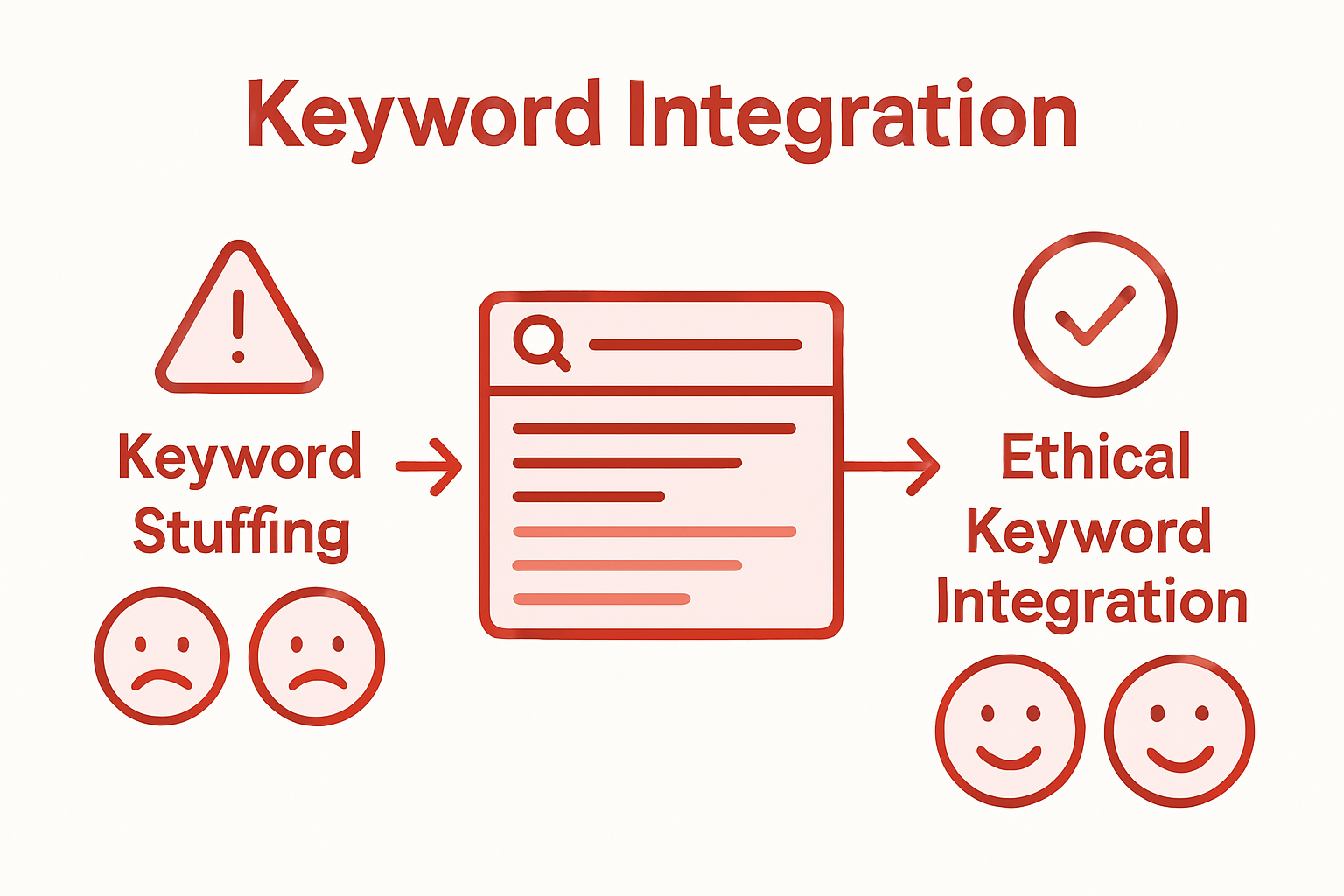
The cornerstone of ethical keyword practices involves strategic, contextually relevant placement that genuinely reflects content substance. Website content creation workflows should integrate keywords naturally, ensuring they enhance rather than disrupt the reading experience. This approach requires balancing technical SEO requirements with a commitment to producing high-quality, informative content that serves readers’ genuine informational needs.
Key principles of ethical keyword implementation include:
- Maintaining authentic content relevance
- Avoiding keyword stuffing or artificial density manipulation
- Prioritising reader comprehension over search engine algorithms
- Ensuring transparent, genuine information delivery
- Respecting intellectual property and original content standards
- Creating meaningful context around selected keywords
Ultimately, ethical keyword usage represents a holistic approach that recognises content as a communication tool designed to inform, engage, and provide genuine value to audiences, rather than merely attracting algorithmic attention.
Risks of Keyword Misuse and Best Practices
Inappropriate keyword strategies can trigger significant penalties from search engines, potentially devastating a website’s digital visibility and reputation. Search algorithms have become increasingly sophisticated in detecting manipulative practices, meaning organisations must adopt a nuanced approach that prioritises genuine content quality over algorithmic exploitation. The consequences of keyword misuse extend beyond immediate search ranking drops, potentially damaging brand credibility and user trust.
Understanding the specific risks associated with keyword manipulation is crucial for digital marketers and content creators. Australian SEO practices emphasise transparency and authenticity as fundamental principles. Common keyword misuse risks include:
- Keyword Stuffing: Excessive repetition that renders content unreadable
- Hidden Text: Attempting to conceal keywords through colour or formatting tricks
- Irrelevant Keyword Targeting: Using terms unrelated to actual content
- Duplicate Content: Reproducing identical keyword-rich content across multiple pages
- Cloaking: Presenting different content to search engines versus users
Best practices demand a holistic approach that integrates keywords naturally, focusing on creating valuable, user-centric content that genuinely addresses audience needs while maintaining technical SEO integrity. Successful digital strategies recognise keywords as communication tools, not manipulative mechanisms for artificial ranking improvements.
Elevate Your Ethical Growth with Purpose-Driven SEO Solutions
The article highlights critical challenges such as avoiding keyword misuse, embracing ethical keyword practices, and aligning SEO with genuine organisational values. If you are a mission-led brand seeking to grow online without compromising your ethics, you understand the importance of purposeful keyword research and transparent, authentic content strategies. At Marzipan, we combine sustainable web design and ethical AI with performance-driven SEO to help you build websites that truly resonate with your audience while protecting your brand’s integrity.
Discover how we help purpose-driven businesses like yours grow responsibly at Marzipan. Learn more about our approach to ethical SEO that avoids manipulative tactics while boosting meaningful visibility. Take the next step to create digital experiences that scale your impact, not just noise. Connect with us today to start building a lasting online presence aligned with your values.
Frequently Asked Questions
What are keywords in SEO?
Keywords are specific terms and phrases that connect online content with user search queries, acting as bridges between websites and potential audiences. They are essential for improving online visibility and engaging target audiences effectively.
Why is keyword research important for purpose-led brands?
Keyword research for purpose-led brands focuses on aligning digital content with the brand’s core mission and values. It helps in identifying search terms that not only improve visibility but also communicate the brand’s social impact objectives authentically.
What are the different types of keywords?
Keywords can be categorised into several types including short-tail keywords, long-tail keywords, branded keywords, generic keywords, local keywords, and semantic keywords. Each type serves distinct strategic purposes in digital marketing.
What are the risks of keyword misuse in SEO?
Risks of keyword misuse include keyword stuffing, hidden text, irrelevant keyword targeting, duplicate content, and cloaking. Such practices can trigger penalties from search engines, damaging a website’s visibility and brand credibility.