Table of Contents
- What Is Sustainable Web Design?
- Why Sustainable Web Design Matters in 2025
- The 5 Key Ingredients of Sustainable Web Design
- How to Measure Your Website’s Carbon Footprint
- Business Benefits of Sustainable Web Design
- Real-World Case Studies
- Your Action Plan: Getting Started
- Frequently Asked Questions
TL;DR – What Is Sustainable Web Design?
Sustainable web design is about building websites that are lighter, faster, more efficient, and more ethical. It goes beyond green hosting to consider everything from page weight and performance to accessibility and digital carbon footprint. Done right, it’s better for your users, your business, and the planet.
Key Stats: The average website produces 0.5g of CO₂ per page view. With 4.1 billion people online, sustainable design isn’t optional—it’s essential.

What Is Sustainable Web Design?
Sustainable web design is the practice of creating websites that minimise environmental impact whilst maximising performance and accessibility. It goes beyond choosing green hosting to encompass every aspect of web development—from code efficiency to content strategy.
Core Principles of Sustainable Web Design:
- Reduce data transfer through optimised images, compressed files, and efficient code
- Prioritise performance with faster loading times that consume less server energy
- Choose renewable infrastructure via green hosting and efficient content delivery networks
- Design for longevity with accessible, maintainable code that doesn’t need frequent rebuilds
- Focus on user needs by eliminating unnecessary features and content
Why Sustainable Web Design Matters More Than Ever in 2025
The digital sector now accounts for 3.7% of global carbon emissions—more than the aviation industry. As AI tools proliferate and internet usage grows, this impact is accelerating rapidly.
The Growing Digital Carbon Crisis
With over 4.1 billion people online, individual web page requests create a massive cumulative environmental impact. Each “small raindrop” of data transfer builds into a gigantic sea of energy consumption.
The AI Factor: AI-powered features like chatbots and recommendation engines consume up to 10 times more energy than standard web interactions, according to Bloomberg research. Every AI search query can use as much energy as 10 traditional searches.
What Makes Websites Unsustainable?
Faster internet speeds and accessible content creation tools have led to bloated websites. Businesses now load pages with large graphics, videos, and animations to capture shrinking attention spans, whilst adding multiple tracking scripts to monitor visitor behaviour. This bulk dramatically increases page-load times and the energy required to load websites, driving up their carbon footprint.
Common Website Sustainability Issues:
- Bloated pages packed with unnecessary scripts, animations, and massive images
- Auto-playing videos that burn data and slow everything down
- Overly complex designs that look pretty but frustrate users (and use more power)
- Cheap hosting that runs on fossil-fuel-powered data centres
- Content for content’s sake—adding pages because “that’s what SEO needs”
The 5 Key Ingredients of Sustainable Web Design
Website carbon emissions directly correlate with page load speed. Slower-loading pages force servers to work harder, consume more energy, and generate more carbon. Faster pages produce fewer emissions.
1. Lightweight Code That Works Smarter, Not Harder
Bloated code slows things down and burns more energy. Focus on:
- Minimising scripts and plugins
- Cleaning up CSS and JavaScript
- Using modern frameworks like Astro or Vite for speed-first performance
- Eliminating unused code and dependencies
2. Green Hosting With Real Impact
If your site lives on fossil-fuelled infrastructure, it’s leaving a carbon footprint. Choose green hosts powered by renewables, preferably with local data centres to reduce transmission distance.
What to Look For:
- Renewable energy certificates
- Carbon-neutral or carbon-negative commitments
- Energy-efficient hardware and cooling systems
- Transparent sustainability reporting
3. Performance That Puts People First
Sustainable equals fast. Optimise for:
- Image compression (WebP format, lazy loading)
- Clean UX with no unnecessary detours
- Core Web Vitals optimisation from day one
- Efficient caching strategies
4. Accessibility as Standard
When you design inclusively, you naturally:
- Use less flashy, heavy content
- Follow semantic HTML structure
- Work better across all devices and connection speeds
- Create more efficient, maintainable code
5. Content That Respects Time (and the Planet)
Sustainable content is:
- Clear, valuable, and purposeful
- Structured for both humans and search engines
- Designed to guide action, not fill space
- Regularly audited to remove outdated material
How to Measure Your Website’s Digital Carbon Footprint
Free Tools to Get Started:
- Website Carbon Calculator – Quick CO₂ assessment per page view
- Ecograder – Comprehensive sustainability audit
- GTmetrix – Performance metrics that correlate with energy use
- Google PageSpeed Insights – Core Web Vitals analysis
Key Metrics to Monitor:
- CO₂ per pageview (aim for under 0.5g)
- Page weight (under 1MB is ideal)
- Green hosting status (renewable energy usage)
- Load speed and performance (under 3 seconds)
- Largest Contentful Paint (under 2.5 seconds)
What to Do With the Data:
- Reduce page size — compress images, trim plugins, eliminate unused code
- Improve load times — implement lazy loading, use modern image formats
- Switch to green hosting — migrate to renewable-powered servers
- Track changes monthly — progress measurement drives improvement
The Business Case for Sustainable Web Design
Sustainability isn’t just good for the planet—it’s profitable for business.
Faster Load Times = Better Conversions
- Sites loading in 1 second convert 3x better than slow ones
- 100ms delay can reduce conversions by 7%
- Users abandon sites that take longer than 3 seconds to load
Better SEO Rankings
- Google rewards clean, accessible, mobile-friendly websites
- Sustainability improvements boost Core Web Vitals scores
- Faster sites have lower bounce rates and higher engagement
Increased Trust and Brand Loyalty
- 81% of consumers prefer sustainable brands
- 64% say they’d switch providers for better environmental values
- Younger demographics particularly value corporate responsibility
Lower Operational Costs
- Reduced hosting requirements and bandwidth usage
- Fewer bugs and maintenance issues with cleaner code
- More efficient development processes
- Lower long-term technical debt
A Competitive Edge You Can Talk About
It’s more than a website. It’s a story of doing better—and people notice.
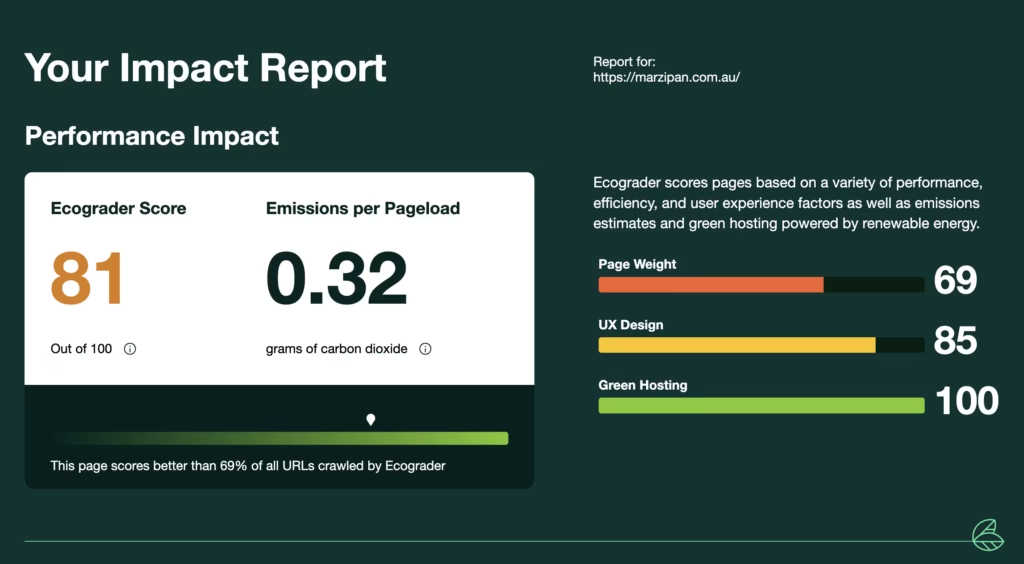
We’re proud of our impact and sustainability score for the Marzipan Media website:
Real-World Results from Sustainable Web Design
Wellizen Health Platform
Results: +310% new users, 134/100 site health score, 40% higher engagement Approach: Optimised images, streamlined code, green hosting migration View Case Study
Popology Experience Centre
Results: Fast-loading experiential site with full accessibility and reduced emissions Approach: Modern build tools, efficient animations, sustainable infrastructure View Case Study
Common Results Across Projects:
- Page sizes reduced by up to 70%
- Load times improved by 40-60%
- Emissions dropped below 0.2g CO₂ per view
- Users stayed longer and converted more often
- Maintenance costs reduced by 30%
Your Action Plan: Getting Started
Step 1: Audit Your Current Site
Run your website through these tools:
- Website Carbon Calculator
- Ecograder
- Google PageSpeed Insights
Step 2: Identify Quick Wins
Immediate Actions:
- Compress and optimise all images
- Remove unused plugins and scripts
- Enable browser caching
- Audit and clean up old content
Step 3: Plan Your Green Hosting Migration
Research sustainable hosting providers:
- Check renewable energy commitments
- Compare performance and pricing
- Plan migration timeline
- Set up monitoring for the transition
Step 4: Implement Performance Optimisations
Technical Improvements:
- Implement lazy loading for images
- Minify CSS, JavaScript, and HTML
- Use modern image formats (WebP, AVIF)
- Optimise database queries
Step 5: Monitor and Iterate
- Set up monthly sustainability audits
- Track performance metrics over time
- Document improvements and learnings
- Share results with your team
Let’s Build a Better Web, Together 🌱
Sustainable web design isn’t about stripping everything back or sacrificing great design. It’s about making conscious, efficient choices that create high-performing websites without unnecessary waste.
Whether you’re a startup, non-profit, or enterprise brand, you can lead the way by choosing a digital presence that reflects your values and respects both users and the environment.
Your website should:
- Load fast and work brilliantly
- Be accessible to everyone
- Run on clean, ethical infrastructure
- Align with your goals and values
- Make every interaction count
The internet isn’t going anywhere—but the way we build it can change for the better. Every sustainable choice you make contributes to a more efficient, accessible, and environmentally responsible web.
Ready to make your website part of the solution? The more sustainable your site becomes, the more powerful your message grows.
Ready to let your website shine a little brighter online?
Frequently Asked Questions
What is sustainable web design?
Sustainable web design is the practice of creating websites that minimise environmental impact through efficient code, optimised performance, green hosting, and thoughtful content strategy. It results in faster, more accessible websites that consume less energy.
How much CO₂ does a website produce?
The average website produces approximately 0.5 grams of CO₂ per page view. However, this varies significantly based on page size, hosting infrastructure, and user behaviour. Optimised sites can achieve as little as 0.1g CO₂ per view.
Does sustainable web design affect website performance?
Yes, but positively. Sustainable web design principles—like optimised images, clean code, and efficient hosting—actually improve website performance, leading to faster load times and better user experience.
Is green hosting more expensive?
Not necessarily. Many green hosting providers offer competitive pricing, and the performance benefits of sustainable design often reduce overall hosting costs through lower bandwidth and resource usage.
How do I convince my boss to invest in sustainable web design?
Focus on the business benefits: improved SEO rankings, faster load times, better user experience, reduced hosting costs, and enhanced brand reputation. Sustainability often pays for itself through improved performance.
Can I make my existing website more sustainable?
Absolutely. Start with image optimisation, remove unused plugins, switch to green hosting, and audit your content. Many sustainability improvements can be implemented without a complete redesign.
What's the difference between sustainable and fast web design?
They’re closely related but not identical. Sustainable web design considers the entire lifecycle environmental impact, including hosting infrastructure, content longevity, and user behaviour patterns, whilst fast web design focuses primarily on load times.
How often should I audit my website's sustainability?
Monthly audits are ideal for active sites. This allows you to catch performance regressions early and track improvement trends over time.
Wow – you made it this far. We should totally talk