Over 80 percent of Australian consumers expect brands to stand for something bigger than just business. This shift highlights a growing demand for marketing that connects with social values and delivers real impact. Purpose driven marketing meets this need by moving beyond empty promises and building trust through action. Discover how this approach is shaping brand loyalty, driving growth, and setting a new standard for businesses across Australia.
Table of Contents
- Defining Purpose Driven Marketing in Australia
- Types of Purpose Driven Marketing Strategies
- How Purpose Leads to Strong Brand Loyalty
- Practical Benefits for Mission-Led Businesses
- Risks, Pitfalls, and Avoiding Greenwashing
Key Takeaways
| Point | Details |
|---|---|
| Purpose Driven Marketing | Connects businesses with consumers through authentic missions that prioritize social and environmental goals over mere profit. |
| Brand Loyalty | Engendered through emotional resonance, transparency, and shared commitment, transforming customers into active participants in a broader narrative. |
| Mission-Led Business Benefits | Enhances brand reputation, employee engagement, and financial performance by aligning social impact with core business operations. |
| Avoiding Greenwashing | Requires authentic communication and measurable impact, with a focus on radical transparency to build consumer trust and credibility. |
Defining Purpose Driven Marketing in Australia
Purpose driven marketing represents more than just selling products or services. It’s about connecting with customers through a meaningful organisational mission that extends beyond financial outcomes.
According to businessthink, Professor Frederik Anseel from UNSW Business School highlights how purpose-driven organisations attract and motivate people by articulating a clear vision of their existence and value. This approach transforms marketing from transactional interactions into genuine relationships built on shared values and meaningful impact.
In the Australian context, purpose driven marketing involves several key characteristics:
- Authentic commitment to social or environmental goals
- Transparent communication about organisational values
- Demonstrating tangible impact beyond profit generation
- Engaging customers as partners in creating positive change
By integrating digital marketing strategies with a genuine organisational purpose, businesses can create deeper connections. These connections transcend traditional marketing approaches, positioning brands as meaningful contributors to societal progress rather than mere commercial entities.
Ultimately, purpose driven marketing represents a strategic approach where businesses align their core operations with broader social missions. It’s not about performative gestures, but creating genuine, measurable positive impact that resonates with increasingly conscious Australian consumers.
Types of Purpose Driven Marketing Strategies
Purpose driven marketing encompasses diverse strategic approaches that enable businesses to communicate their core values and social commitments authentically. These strategies go beyond traditional marketing techniques by embedding meaningful impact into every communication touchpoint.
One primary strategy is social impact marketing, where brands align their campaigns directly with specific societal challenges. For instance, a company might develop brand storytelling initiatives that highlight their commitment to environmental sustainability, community development, or social equity.
Key types of purpose driven marketing strategies include:
- Cause-related marketing
- Sustainability communication
- Community engagement campaigns
- Ethical brand positioning
- Social responsibility storytelling
- Transparent impact reporting
Another powerful approach is transparency marketing, where organisations openly share their challenges, progress, and genuine efforts towards creating positive change. This strategy builds trust by demonstrating vulnerability and commitment to continuous improvement rather than presenting a perfect, polished image.
Digital platforms have transformed how these strategies are implemented. Types of digital marketing now allow purpose-driven brands to create multi-channel narratives that engage audiences through storytelling, interactive content, and real-time impact demonstrations. The goal is not just to communicate a message, but to invite consumers into a meaningful dialogue about creating collective social progress.

How Purpose Leads to Strong Brand Loyalty
Brand loyalty emerges from deeper connections that transcend traditional transactional relationships. When businesses communicate a genuine, meaningful purpose, they transform customer interactions into emotional partnerships that extend far beyond simple product purchases.
According to businessthink, Professor Frederik Anseel highlights how a clear and well-articulated purpose helps organisations attract individuals who deeply resonate with their mission. This alignment creates a powerful psychological connection where customers see themselves as active participants in the brand’s broader vision, not just passive consumers.
Key mechanisms through which purpose builds brand loyalty include:
- Emotional resonance with brand values
- Sense of contributing to meaningful change
- Transparency in organisational practices
- Shared commitment to social or environmental goals
- Authentic storytelling and impact demonstration
Britwealth showcases remarkable Australian examples like Who Gives A Crap and Thankyou Group, which have successfully built loyal customer bases by demonstrating that business success and social impact can coexist harmoniously.
Ultimately, purpose-driven brands create loyalty by inviting customers into a larger narrative of positive change. They transform traditional consumer relationships into collaborative movements, where purchasing becomes an act of collective empowerment and shared social responsibility.
Practical Benefits for Mission-Led Businesses
Mission-led businesses represent a strategic approach to organisational design that prioritises social impact alongside financial performance. By embedding purpose at the core of their operations, these enterprises unlock a range of compelling advantages that extend far beyond traditional business models.
Britwealth highlights how purpose-driven businesses in Australia have achieved remarkable growth by integrating their mission directly into their business strategies. This approach transforms conventional thinking about corporate success, demonstrating that financial performance and social impact can be mutually reinforcing objectives.
Practical benefits for mission-led businesses include:
- Enhanced brand reputation and differentiation
- Improved employee recruitment and retention
- Stronger customer loyalty and engagement
- Access to purpose-driven investment capital
- Increased resilience during market disruptions
- Higher employee motivation and productivity
- Potential tax incentives for social impact initiatives
The competitive advantages of this approach are significant. Mission-led businesses typically experience deeper customer connections, more engaged workforce, and a more robust organisational culture. They attract talent who are seeking more than just a paycheck – individuals who want to contribute to meaningful change and feel personally aligned with their organisation’s broader vision.
Ultimately, mission-led businesses represent a new paradigm of corporate success. They prove that profitability and positive social impact are not mutually exclusive, but can be powerful allies in creating sustainable, meaningful enterprise that resonates with modern consumers, employees, and stakeholders.
Risks, Pitfalls, and Avoiding Greenwashing
Greenwashing represents a critical risk for mission-driven businesses that claim social responsibility without substantive action. It’s a dangerous practice that can rapidly erode consumer trust and damage brand reputation in an increasingly discerning marketplace.
According to businessthink, Professor Frederik Anseel warns that when a company’s purpose appears insincere or lacks clear articulation, it can trigger significant consumer skepticism. This underscores the absolute necessity of authentic, transparent communication about a business’s genuine social impact efforts.
Key risks and warning signs of potential greenwashing include:
- Making vague or unsubstantiated environmental claims
- Highlighting minor sustainable practices while ignoring larger systemic issues
- Lack of transparent, measurable impact reporting
- Overemphasising marketing messages versus actual organisational change
- Inconsistency between stated values and business practices
To build genuine credibility, businesses must move beyond superficial marketing narratives. Sustainable website marketing requires demonstrating real commitment through concrete actions, comprehensive reporting, and a willingness to acknowledge ongoing improvement processes.
Ultimately, avoiding greenwashing demands radical transparency.
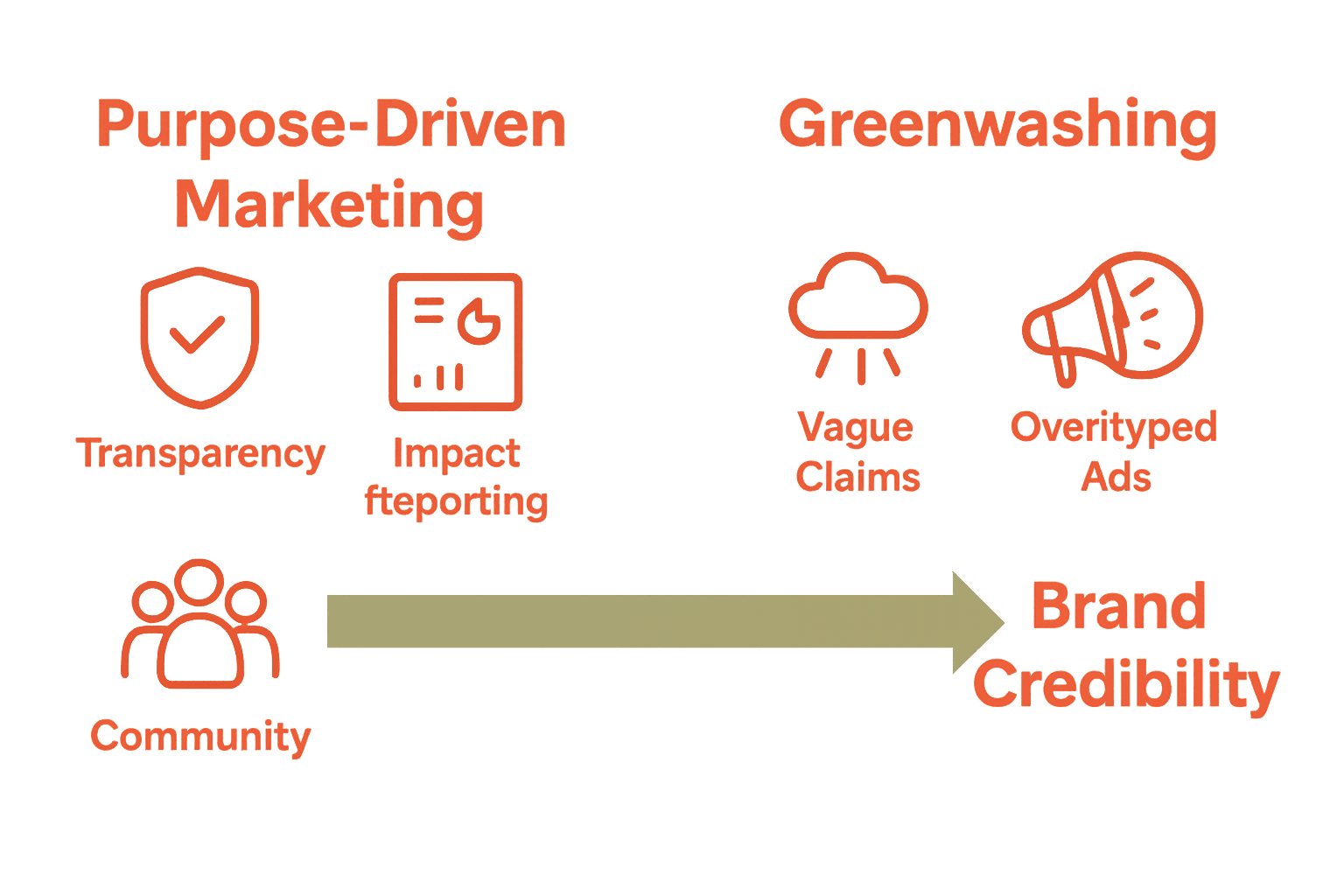 Businesses must be prepared to showcase their genuine efforts, acknowledge imperfections, and demonstrate a sincere, ongoing commitment to meaningful social and environmental progress.
Elevate Your Purpose Driven Marketing with Sustainable Digital Solutions
Purpose driven marketing calls for authentic connections and transparent storytelling that resonate deeply with your audience’s values. If your mission led business struggles to communicate this genuine impact or avoid appearing insincere, you are not alone. Many organisations face the challenge of transforming their purpose into compelling online narratives that build trust and foster brand loyalty.
At Marzipan, we understand the power of aligning your social or environmental goals with effective digital marketing strategies. We specialise in building sustainable websites tailored for mission led businesses, helping you showcase transparency and measurable impact. Our expertise in creating targeted meta ads and optimised SEO ensures your purpose driven message reaches the right audience with clarity and emotional resonance.
Don’t let your inspiring mission be diluted by generic marketing. Take the next crucial step by partnering with us at Marzipan to craft an authentic digital presence that embodies your values. Visit our site to see how we can elevate your purpose driven marketing today and create meaningful, long-lasting connections with your customers.
Frequently Asked Questions
What is purpose driven marketing?
Purpose driven marketing focuses on building genuine connections with customers through an organisational mission that prioritizes social or environmental goals, rather than solely focusing on profit.
How can purpose driven marketing benefit my business?
It can enhance brand reputation, attract dedicated customers, improve employee loyalty, and create competitive advantages by aligning business practices with meaningful social impact.
What are some common strategies used in purpose driven marketing?
Key strategies include cause-related marketing, sustainability communication, community engagement campaigns, and transparency marketing, which help organizations authentically communicate their values and impact.
How can a business avoid greenwashing when implementing purpose driven marketing?
Businesses can avoid greenwashing by ensuring transparency in their communication, providing measurable impact reports, and demonstrating genuine commitment to their stated social and environmental goals.