

Most advice about SEO audits leaves British businesses confused about what really drives online success. Despite the importance of digital visibility, many still believe SEO audits are just technical checklists rather than a strategic review. Over 60 percent of websites miss key improvements by misunderstanding the true purpose of a professional SEO assessment. This article breaks down misconceptions, highlights why SEO audits matter, and explains how accurate insights can boost visibility and results for British organisations.
Table of Contents
- Defining SEO Audits And Common Misconceptions
- Key Types Of SEO Audits Explained
- Essential Components Of A Robust Audit
- How SEO Audits Drive Business Results
- Risks Of Neglecting Regular SEO Audits
- Ethical And Sustainable SEO Auditing Practices
Key Takeaways
| Point | Details |
|---|---|
| SEO Audits Are Comprehensive Tools | An SEO audit evaluates multiple aspects of a website, including technical performance, content quality, and user experience, rather than merely focusing on keyword rankings. |
| Regular Audits Enhance Website Health | Neglecting SEO audits can lead to deteriorating technical infrastructure, which negatively impacts online visibility and user trust. |
| Actionable Insights Drive Business Results | SEO audits provide strategic recommendations that allow organisations to optimise digital performance, improving user engagement and conversion rates. |
| Ethical SEO Practices Are Essential | Sustainable auditing incorporates ethical considerations that prioritise user value and environmental responsibility, ensuring long-term digital success. |
Defining SEO Audits And Common Misconceptions
An SEO audit represents a comprehensive evaluation of a website’s search engine optimisation performance, designed to uncover technical, content, and structural barriers preventing optimal online visibility. At its core, SEO represents a strategic process involving systematic audience analysis, where digital content is meticulously optimised to satisfy both human users and complex search engine algorithms.
Contrary to popular misconceptions, an SEO audit is not a one-time quick fix but a nuanced diagnostic tool that provides deep insights into website health. Many businesses mistakenly believe SEO audits are purely technical exercises focused solely on keyword rankings. In reality, these assessments explore multiple dimensions: technical infrastructure, content quality, user experience, backlink profiles, and alignment with current search engine guidelines.
The primary objectives of an SEO audit extend beyond identifying problems—they aim to develop strategic recommendations that enhance website performance. These insights help organisations understand their digital presence more comprehensively, revealing opportunities for improvement that directly impact online visibility and user engagement. By systematically examining website elements, businesses can develop targeted strategies that improve search rankings, attract relevant traffic, and ultimately drive meaningful conversions.
Key Types Of SEO Audits Explained
Websites can benefit from multiple comprehensive SEO audit approaches that systematically evaluate digital performance across different dimensions. These audit types provide nuanced insights into website health, helping organisations identify and address specific optimisation challenges.
Technical SEO Audits represent a critical examination of website infrastructure. These assessments focus on elements like robots.txt files and canonical tags, ensuring search engines can effectively crawl and index website content. Key technical audit areas include site speed, mobile responsiveness, structured data implementation, security protocols, and server configuration.

Beyond technical considerations, On-Page SEO Audits analyse content quality, keyword optimisation, metadata effectiveness, and internal linking strategies. These evaluations determine how well website content aligns with user search intent and search engine ranking algorithms. Off-Page SEO Audits complement this approach by examining external factors like backlink profiles, domain authority, and social media engagement, providing a holistic view of a website’s digital reputation.
The final crucial audit type involves Competitive and User Experience Analyses. These comprehensive assessments compare a website’s performance against industry competitors, identifying strategic opportunities for improvement. By examining website elements through multiple lenses, businesses can develop targeted strategies that enhance online visibility, user engagement, and ultimately, conversion potential.
Essential Components Of A Robust Audit
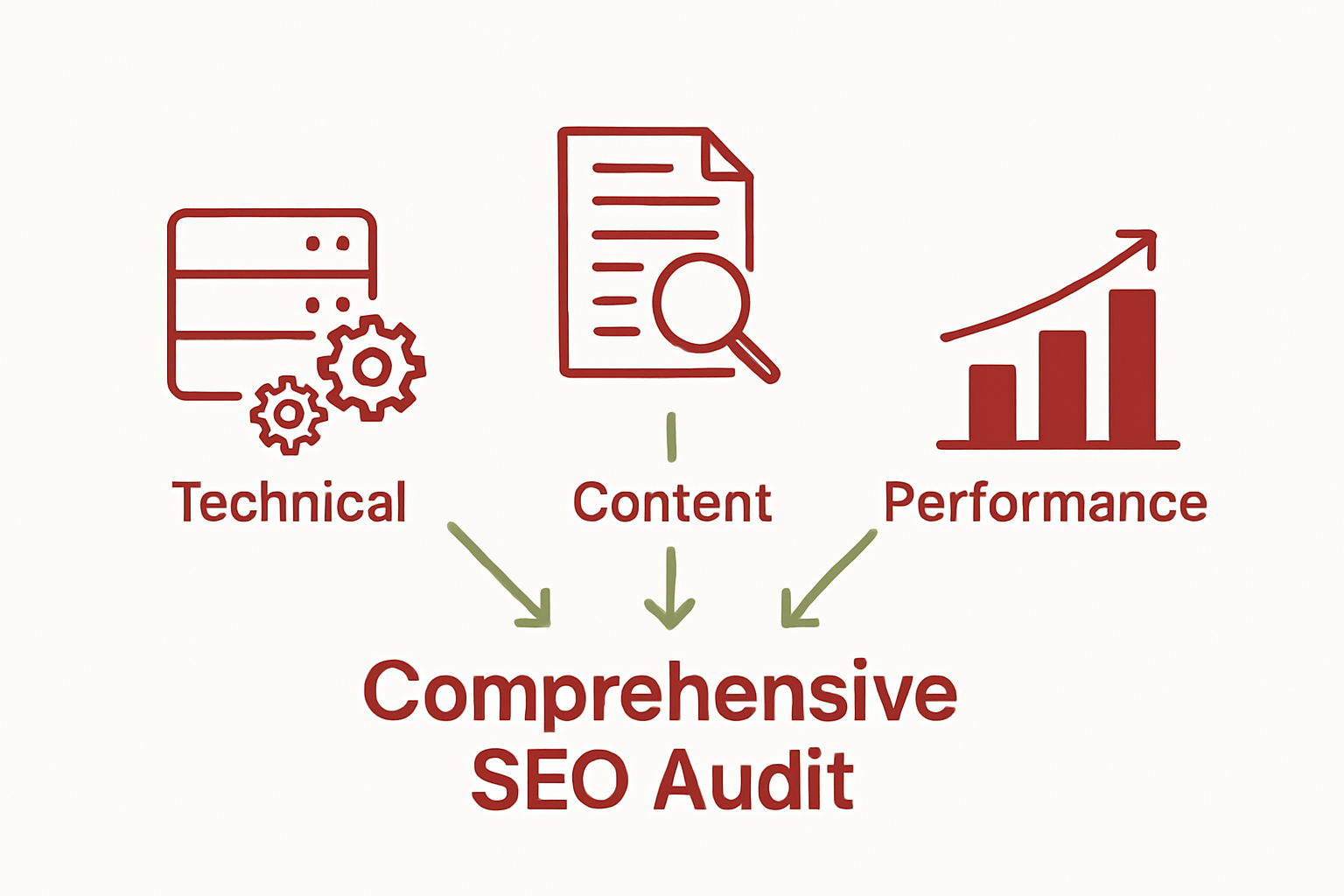
A comprehensive SEO audit demands a meticulous approach that combines quantitative and qualitative evaluations across multiple digital performance dimensions. By systematically examining website elements, organisations can uncover hidden optimisation opportunities and address potential barriers to online success.
Structural Analysis forms the foundation of a robust audit, focusing on critical technical elements that impact search engine performance. Key components include reviewing web logos, navigation links, page titles, headers, and meaningful link text to enhance both SEO effectiveness and user experience. This examination ensures website infrastructure supports seamless crawling and indexing while maintaining clear, intuitive navigation for visitors.
Content evaluation represents another crucial audit dimension, encompassing in-depth assessments of textual and multimedia elements. Auditors meticulously analyse alternative text, meta descriptions, keyword relevance, content quality, and semantic structure. By examining website elements through multiple strategic lenses, businesses can develop targeted strategies that align content with user intent and search engine requirements.
The final stage involves comprehensive performance benchmarking, where audit findings are compared against industry standards and competitive landscapes. This holistic approach transforms raw data into actionable insights, enabling organisations to prioritise improvements, allocate resources effectively, and develop long-term digital optimisation strategies that drive meaningful online engagement.
How SEO Audits Drive Business Results
Effective SEO practices can significantly transform business performance, translating technical website analysis into tangible commercial outcomes. SEO audits serve as strategic tools that convert digital diagnostics into actionable business intelligence, enabling organisations to make data-driven decisions that directly impact bottom-line results.
One of the most immediate business benefits involves traffic optimisation. Organic Search Performance receives substantial improvements through comprehensive audits, which systematically analyse content marketing strategies to increase visibility and customer engagement. By identifying and addressing critical website elements, businesses can reduce bounce rates, enhance user experience, and create more compelling digital pathways that guide potential customers through conversion funnels.
Beyond immediate traffic improvements, SEO audits provide strategic insights that inform broader business development strategies. By examining website elements through multiple strategic lenses, organisations can uncover competitive advantages, understand audience behaviour patterns, and align digital assets with specific business objectives. These insights enable precise resource allocation, targeted marketing efforts, and more intelligent product development approaches.
Ultimately, SEO audits represent more than technical exercises—they are sophisticated business intelligence tools. By transforming complex digital data into clear, actionable strategies, these assessments help organisations navigate increasingly competitive digital landscapes, drive meaningful engagement, and create sustainable growth mechanisms that extend far beyond traditional marketing approaches.
Risks Of Neglecting Regular SEO Audits
Neglecting regular SEO audits can create substantial technical vulnerabilities that progressively undermine a website’s digital performance. These unaddressed issues accumulate silently, transforming minor technical complications into significant obstacles that can dramatically reduce online visibility and organisational credibility.
Technical Infrastructure Deterioration represents a critical risk zone. Without routine website reviews, organisations face escalating challenges like broken links, outdated content, and deteriorating SEO practices that compromise digital effectiveness. Unresolved technical configurations such as improper robots.txt settings, misconfigured canonical tags, and ineffective crawl management can progressively erode search engine rankings and user experience.
Search engine algorithms continuously evolve, creating dynamic digital environments where static websites quickly become obsolete. By examining website elements through multiple strategic lenses, businesses can proactively identify and address emerging performance challenges. Neglecting these systematic evaluations means organisations risk falling behind competitors who maintain agile, responsive digital infrastructures.
The cumulative impact of overlooked SEO maintenance extends far beyond technical metrics. Degraded website performance can trigger cascading negative consequences: reduced organic traffic, diminished user trust, lower conversion rates, and ultimately, compromised business growth. Regular, comprehensive SEO audits transform these potential risks into strategic opportunities for continuous digital improvement and sustainable online success.
Ethical And Sustainable SEO Auditing Practices
Ethical SEO requires a fundamental understanding of search engine algorithms that prioritises creating content serving both technological systems and human audiences responsibly. This approach transcends traditional optimization strategies, emphasising transparency, user value, and long-term digital ecosystem integrity.
Sustainable Auditing Methodology involves comprehensive evaluations that extend beyond superficial performance metrics. These practices systematically examine technical, on-page, and off-page elements to ensure consistent website quality, creating digital experiences that respect user expectations and search engine guidelines. By integrating ethical considerations into technical assessments, organisations can develop digital strategies that balance performance with genuine user needs.
By examining website elements through nuanced sustainable frameworks, businesses can cultivate digital environments that minimise environmental impact while maximising user experience. This approach recognises that true digital sustainability involves reducing computational complexity, optimising resource consumption, and creating streamlined, efficient web experiences that consume less energy and provide greater value.
Ultimately, ethical SEO auditing represents a holistic approach to digital development. It requires continuous learning, adaptability, and a commitment to creating digital ecosystems that prioritise human experience, technological efficiency, and environmental responsibility. By embracing these principles, organisations can transform traditional SEO practices into meaningful, sustainable digital strategies that create genuine value for users and technology alike.
Unlock Your Website’s True Potential with Expert SEO Audits
The article highlights how crucial comprehensive SEO audits are for overcoming hidden technical issues, improving content alignment, and sustaining long-term digital growth. If you recognise the risks of neglecting regular website evaluations and want to transform your business performance, it is time to take strategic action. Performing audits that consider technical infrastructure, content quality, and user experience can make the difference between falling behind and flourishing in today’s competitive online landscape.
At Marzipan, we specialise in crafting websites built to perform and SEO strategies designed to last. By combining ethical AI and sustainable web design with performance-driven SEO, we help purpose-driven brands like yours grow online without compromising values. Let us partner with you to uncover vital website insights and develop targeted strategies that truly connect with your audience and scale your impact.

Ready to elevate your website with a robust SEO audit that delivers transparent, actionable results? Visit Marzipan today to explore how our ethical SEO and sustainable digital practices can drive meaningful growth for your mission-led brand. Your website deserves more than surface-level fixes — discover the power of a comprehensive audit and start transforming your digital presence now.
Frequently Asked Questions
What is an SEO audit?
An SEO audit is a comprehensive evaluation of a website’s search engine optimisation performance, aimed at identifying technical, content, and structural barriers that affect online visibility.
Why are SEO audits important for my website?
SEO audits uncover hidden optimisation opportunities, enhance website performance, and provide strategic insights that can directly improve organic traffic and user engagement.
How often should I conduct an SEO audit?
Regular SEO audits are recommended, typically every 6 to 12 months, to ensure your website adapts to changing search engine algorithms and maintains optimal performance.
What key components are assessed during an SEO audit?
An SEO audit assesses multiple components, including technical infrastructure, content quality, user experience, backlink profiles, and competitive analysis to provide a holistic view of a website’s digital health.