Most australian community groups underestimate how much energy their websites consume compared to a typical british business. As digital demand rises, sustainable web designers in Sydney face important choices that impact both climate commitments and long-term costs. This guide sheds light on green technology with practical concepts and fresh australian data, helping digital marketers and designers make responsible decisions for their organizations and the communities they serve.
Table of Contents
- Defining Green Technology And Key Concepts
- Major Types And Real-World Examples
- Core Pillars And How Green Tech Works
- Digital Applications And Sustainable Web Design
- Risks, Costs, And Common Misconceptions
Key Takeaways
| Point | Details |
|---|---|
| Emphasis on Green Technology | Green technology is essential for addressing environmental challenges while driving economic growth through sustainable innovations. |
| Integration Necessary for Success | Effective implementation requires a holistic approach that includes policy frameworks, community engagement, and ongoing innovation. |
| Long-term Benefits | While initial costs for green technologies may seem high, they often lead to significant long-term savings and economic incentives. |
| Common Misconceptions | Misconceptions about costs and complexity can hinder adoption; recognising the potential for long-term benefits and modular implementation is crucial. |
Defining Green Technology and Key Concepts
Green technology represents a transformative approach to addressing environmental challenges by developing innovative solutions that minimise ecological impact while supporting sustainable economic development. At its core, green technology encompasses technological systems and processes designed to reduce carbon emissions, conserve natural resources, and create more environmentally responsible infrastructure across multiple sectors.
In the Australian context, green technology has become a critical strategy for achieving national climate goals. Australia’s Net Zero Plan outlines a comprehensive approach to transitioning towards low-carbon technologies, emphasising clean electricity generation, energy efficiency, and technological innovation. The plan demonstrates how green technologies can simultaneously address environmental concerns and drive economic growth, creating new employment opportunities and supporting industrial transformation.
Key components of green technology include renewable energy systems, energy-efficient technologies, waste reduction methodologies, and sustainable design principles. These technologies span diverse domains such as:
- Solar and wind power generation
- Electric vehicle infrastructure
- Smart grid technologies
- Circular economy manufacturing processes
- Carbon capture and storage solutions
- Sustainable building design and materials
Moreover, the Climate Change Authority highlights that effective green technology implementation requires more than just technological advancement. It demands integrated approaches involving policy frameworks, community engagement, and continuous innovation to achieve meaningful environmental progress.
Pro tip: When exploring green technology solutions, prioritise holistic approaches that balance technological innovation with systemic economic and social considerations.
Major Types and Real-World Examples
Green technology encompasses diverse technological solutions designed to address environmental challenges across multiple sectors. Understanding these technologies requires exploring their specific types and practical applications that demonstrate their transformative potential in creating sustainable infrastructure and reducing ecological impact.
Australian energy statistics reveal significant progress in renewable energy technologies. In 2024, renewable sources constitute 36% of total electricity generation, with solar (18%), wind (12%), and hydro (5%) leading technological innovations. These renewable energy technologies represent crucial components of green technology, offering scalable solutions for decarbonising electricity production.
Key types of green technology include:
-
Renewable Energy Systems
- Solar photovoltaic panels
- Wind turbine technologies
- Hydroelectric power generation
- Geothermal energy infrastructure
-
Energy Efficiency Technologies
- Smart building management systems
- LED lighting solutions
- High-efficiency electrical appliances
- Advanced thermal insulation materials
-
Sustainable Transportation
- Electric vehicle technologies
- Hydrogen fuel cell systems
- Public transport electrification
- Bicycle and pedestrian infrastructure
The Australian Renewable Energy Agency plays a pivotal role in accelerating these technological developments, supporting projects that demonstrate practical applications of green technologies across various domains. Their initiatives showcase how innovative solutions can simultaneously address environmental challenges and drive economic opportunities.
To clarify the main forms of green technology, here is a side-by-side summary of major types, their core features, and their societal impact:
| Green Technology Type | Core Feature | Societal Impact |
|---|---|---|
| Renewable Energy Systems | Generate power from natural sources | Lower emissions and energy costs |
| Energy Efficiency | Optimise resource consumption | Reduces energy waste |
| Sustainable Transportation | Shift to low-carbon transport | Improved urban air quality |
| Circular Manufacturing | Reuse and recycle materials | Minimises landfill waste |
| Smart Infrastructure | Digitally managed utilities | Enables resilient communities |
Pro tip: When evaluating green technology implementations, consider both environmental impact and economic feasibility to ensure sustainable and practical technological transitions.
Core Pillars and How Green Tech Works
Green technology operates through interconnected principles that transform traditional approaches to energy, infrastructure, and industrial processes. Australia’s Long Term Emissions Reduction Plan emphasises technology-driven solutions as fundamental mechanisms for achieving sustainable development and carbon neutrality.

The core pillars of green technology functionality centre on several critical strategic approaches. These include technological innovation, systemic electrification, renewable energy integration, and comprehensive emissions reduction strategies. Powering Australia’s strategic framework highlights how these pillars work synergistically to create comprehensive environmental solutions.
Key operational mechanisms of green technology include:
-
Technological Cost Reduction
- Developing more efficient renewable energy systems
- Reducing manufacturing costs for green technologies
- Creating scalable infrastructure solutions
- Improving energy storage capabilities
-
Emissions Transformation
- Implementing carbon capture technologies
- Transitioning from fossil fuel dependency
- Developing low-carbon industrial processes
- Creating circular economic models
-
Infrastructure Resilience
- Building adaptable energy networks
- Developing smart grid technologies
- Integrating decentralised energy systems
- Creating robust sustainable infrastructure
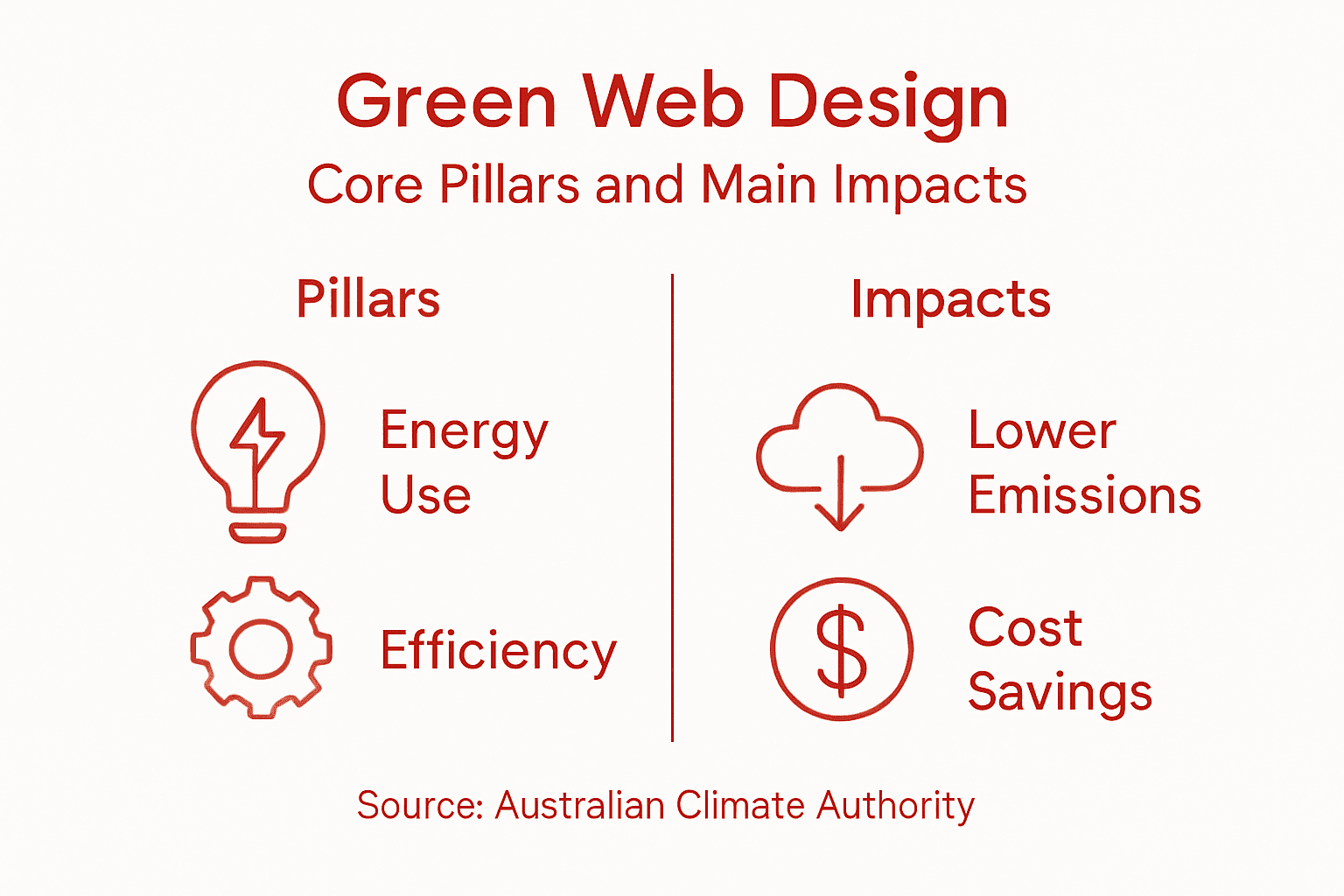
Website designers can draw inspiration from these principles by understanding environmentally friendly web practices, which parallel green technology’s systemic approach to sustainability. The interconnected nature of these technologies demonstrates how innovative thinking can create transformative solutions across multiple domains.
Pro tip: When implementing green technology strategies, prioritise holistic approaches that balance technological innovation with economic and environmental considerations.
Digital Applications and Sustainable Web Design
Sustainable web design represents a critical intersection between digital innovation and environmental responsibility. Digital Experience Policy standards demonstrate how government frameworks increasingly prioritise efficient, resource-conscious digital service delivery that minimises technological environmental impact.
Digital applications in sustainable web design focus on reducing computational energy consumption, optimising performance, and creating environmentally intelligent online experiences. These approaches involve strategic design choices that minimise data transfer, reduce server load, and implement carbon-aware computing principles. Data and Digital Government Strategy emphasises developing digital capabilities that support broader environmental sustainability objectives.
Key digital applications for sustainable web design include:
-
Energy-Efficient Web Architecture
- Minimalist design principles
- Compressed image and media files
- Efficient coding practices
- Lightweight frontend frameworks
-
Carbon-Aware Computing
- Dynamic content loading
- Intelligent caching mechanisms
- Server-side optimisation
- Green hosting solutions
-
Accessibility and Performance
- Reduced page weight
- Faster loading times
- Mobile-responsive designs
- Semantic HTML structures
Website designers can further explore sustainable website features to understand how digital technologies can create more environmentally conscious online experiences. The goal is transforming web design from a potential environmental burden to a platform for sustainable digital innovation.
Pro tip: Prioritise incremental optimisations in web design that collectively reduce digital carbon footprint, focusing on efficiency rather than dramatic overhauls.
Risks, Costs, and Common Misconceptions
Navigating the landscape of green technology requires understanding the complex financial and operational considerations that often intimidate potential adopters. Economic analyses of emissions abatement reveal that while upfront investments might seem substantial, long-term benefits frequently outweigh initial expenses.
Financial Risks and Misconceptions frequently emerge from incomplete understanding of technological transitions. Climate change financial risks demonstrate that organisations overlooking green technology adoption face potentially greater economic challenges through increased regulatory pressures and potential market disruptions.
Common misconceptions about green technology include:
The following table highlights common misconceptions about green technology and provides corrective insights:
| Misconception | Reality | Practical Implication |
|---|---|---|
| Green tech always costs more | Long-term savings accrue | Lower total cost of ownership |
| Performance is unreliable | Modern systems deliver high reliability | Suitable for critical applications |
| Too complex to implement | Modular adoption possible | Stepwise upgrades reduce risk |
| Economic incentives are rare | Government support is expanding | Grants and subsidies offset adoption |
-
Cost Perceptions
- Believing green technologies are always expensive
- Underestimating long-term financial savings
- Overlooking potential government incentives
- Assuming traditional technologies remain more economical
-
Performance Doubts
- Questioning reliability of renewable systems
- Assuming green technologies are less efficient
- Misconceiving scalability limitations
- Underestimating technological advancements
-
Implementation Challenges
- Perceiving transitions as overly complex
- Overestimating required organisational changes
- Underrating existing technological capabilities
- Misunderstanding adaptation processes
Website designers can explore 7 key examples of green web design practices to understand practical approaches for mitigating technological risks and implementing sustainable design strategies effectively.
Pro tip: Conduct comprehensive cost-benefit analyses that consider both immediate expenses and long-term strategic advantages when evaluating green technology investments.
Transform Your Online Presence with Sustainable Web Design
The article highlights the challenge of integrating green technology principles into web design to reduce digital carbon footprints without sacrificing performance or user experience. If you aim to create a website that aligns with sustainable values while delivering measurable growth, Marzipan offers a unique solution combining ethical AI, sustainable web design, and performance-driven SEO strategies. We understand the importance of balancing environmental responsibility with economic feasibility and technological innovation.
Our approach helps community-based organisations and mission-led brands build websites that not only perform but scale impact over time. By embracing concepts like energy-efficient web architecture and carbon-aware computing discussed in the article, your digital platform can become a powerful tool for positive environmental and social change.

Ready to grow online without compromising your values? Visit Marzipan today. Discover how our web design expertise and ethical SEO can help your brand shine brighter while supporting sustainability. Explore sustainable website features and ethical SEO practices that create lasting connections and reduce your digital carbon footprint. Take the first step towards a sustainable digital future now.
Frequently Asked Questions
What is green technology in web design?
Green technology in web design refers to innovative practices and methods that aim to enhance the sustainability and energy efficiency of websites. This includes minimising energy consumption, optimising performance, and reducing the overall environmental impact of digital services.
How can sustainable web design reduce carbon footprint?
Sustainable web design reduces carbon footprint by implementing energy-efficient web architecture, such as minimalist design, compressed files, and efficient coding. These strategies lower server load and minimise data transfer, ultimately decreasing the energy required for hosting and accessing websites.
What are some key principles of energy-efficient web design?
Key principles of energy-efficient web design include using lightweight frontend frameworks, dynamic content loading, intelligent caching mechanisms, and green hosting solutions. These concepts focus on creating a streamlined, fast-loading user experience while significantly reducing energy consumption.
Why is it important for businesses to adopt green technology in their web design?
Adopting green technology in web design is important for businesses as it demonstrates environmental responsibility, can lower operational costs through energy savings, and improves user experience through faster load times. Additionally, it can enhance brand reputation and attract environmentally conscious consumers.