Most british small business owners know that first impressions online are made in just seconds, yet only a fraction truly reflect their brand’s ethical values and community focus. Standing out in Sydney’s vibrant market now means more than a sleek website. It requires sustainable, user-friendly design that genuinely expresses your unique mission. This guide walks you through building a performance-driven online presence that connects with your audience and highlights your commitment to community and ethical practices.
Table of Contents
- Step 1: Define Your Brand Values And Website Goals
- Step 2: Plan User-Friendly Structure And Ethical Features
- Step 3: Develop Engaging Content And Visual Identity
- Step 4: Build Sustainable And SEO-Optimised Website
- Step 5: Test Performance And Launch With Community Focus
Quick Summary
| Key Insight | Explanation |
|---|---|
| 1. Define brand values and goals | Identify your uniqueness, core mission, and audience needs to shape your digital strategy effectively. |
| 2. Create user-friendly structure | Use clear navigation and ethical features to build user trust and enhance accessibility throughout the website. |
| 3. Develop engaging content and visuals | Consistent branding and audience-focused content help establish a professional presence and convey your business identity. |
| 4. Prioritise sustainable SEO practices | Focus on quality content and ethical optimisation techniques to attract visitors and enhance user experience without manipulation. |
| 5. Test performance before launch | Conduct thorough testing to ensure functionality across devices and gather feedback to refine the user experience effectively. |
Step 1: Define your brand values and website goals
Before building a website, you need crystal clear clarity about what makes your small business unique. This process involves identifying your core purpose, understanding your target audience, and creating a digital strategy that authentically represents your organisation.
Start by reflecting deeply on your business mission. What problem do you solve? Who do you serve? Your website should be a strategic tool that communicates your unique business objectives. Consider how your digital presence can showcase your commitment to community and ethical practice. Mapping out your brand values requires honest introspection: Are you driven by sustainability? Social impact? Innovation? These principles will shape every design decision and content choice for your website.
Documenting your goals transforms abstract ideas into actionable strategies. Break down what you want your website to achieve specifically – whether that is generating leads, providing information, selling products, or building community trust. Your goals should align with both your business strategy and your audience’s needs. Protecting your intellectual property becomes part of this process, ensuring your unique brand identity remains secure.
Here’s a summary of typical website goals and their strategic impact:
| Website Goal | Strategic Impact | Example Objective |
|---|---|---|
| Lead generation | Business growth | Collect visitor enquiries |
| Information provision | Build credibility | Share expert guides |
| Product sales | Revenue generation | Enable secure online purchases |
| Community trust | Reputation enhancement | Display ethical credentials |
Professional insight: When defining your website goals, create measurable targets that connect directly to your broader business mission, not just vanity metrics.
Step 2: Plan user-friendly structure and ethical features
Designing a website that balances user experience with ethical principles requires thoughtful planning and strategic design. Your goal is to create a digital space that feels welcoming, intuitive, and respectful of your visitors’ needs and privacy.
Begin by mapping out a clear, logical navigation structure that helps users find information easily. Consider user-centric design principles that prioritise accessibility and simplicity. This means creating straightforward menus, using clear headings, and ensuring that important information is no more than three clicks away. Your website structure should feel like a smooth pathway that guides visitors exactly where they want to go, minimising confusion and frustration.
Ethical features are now fundamental to building user trust. Online safety guidelines recommend implementing robust privacy protections, transparent data practices, and clear consent mechanisms. This might include providing explicit information about how user data is collected and used, offering easy opt-out options, and ensuring your website has secure connections. Remember that ethical design is not just about preventing harm but actively creating a digital environment that respects user autonomy and builds genuine connection.

Below is a comparison of ethical website features and their impact on user trust:
| Ethical Feature | User Benefit | Business Advantage |
|---|---|---|
| Clear data consent | Control over personal data | Demonstrates transparency |
| Secure connections | Protection of sensitive info | Reduces risk of data breaches |
| Accessible design | Inclusive user experience | Expands potential audience |
| Transparent policies | Builds visitor confidence | Strengthens brand reputation |
Professional insight: Always test your website navigation with real users from your target audience to understand how intuitively they can move through your digital space.
Step 3: Develop engaging content and visual identity
Creating a compelling online presence requires thoughtful content strategy and visual design that authentically represents your small business. Your website should tell a unique story that connects with your audience while maintaining a professional and memorable brand identity.
Start by developing a consistent visual language that reflects your business personality. Creative digital storytelling involves choosing colour palettes, typography, and imagery that communicate your core values. Select visual elements that feel genuine to your brand whether you are a community cafe, tech startup, or local service provider. Aim for a design approach that is clean, professional, and distinctive.
Content development is equally critical. Your written materials should speak directly to your target audience, addressing their needs and demonstrating your expertise. Consider the tone that best represents your business professional yet approachable, technical yet accessible. Brand communication principles emphasise creating content that is clear, inclusive, and meaningful. Prioritise authenticity over perfection and focus on sharing real stories that showcase your unique value proposition.
Professional insight: Develop a simple brand style guide that documents your visual and content standards to maintain consistency across all digital platforms.
Step 4: Build sustainable and SEO-optimised website
Creating a website that performs well in search engines while maintaining ethical standards requires strategic planning and thoughtful implementation. Your goal is to develop a digital platform that attracts visitors naturally and provides genuine value to your audience.
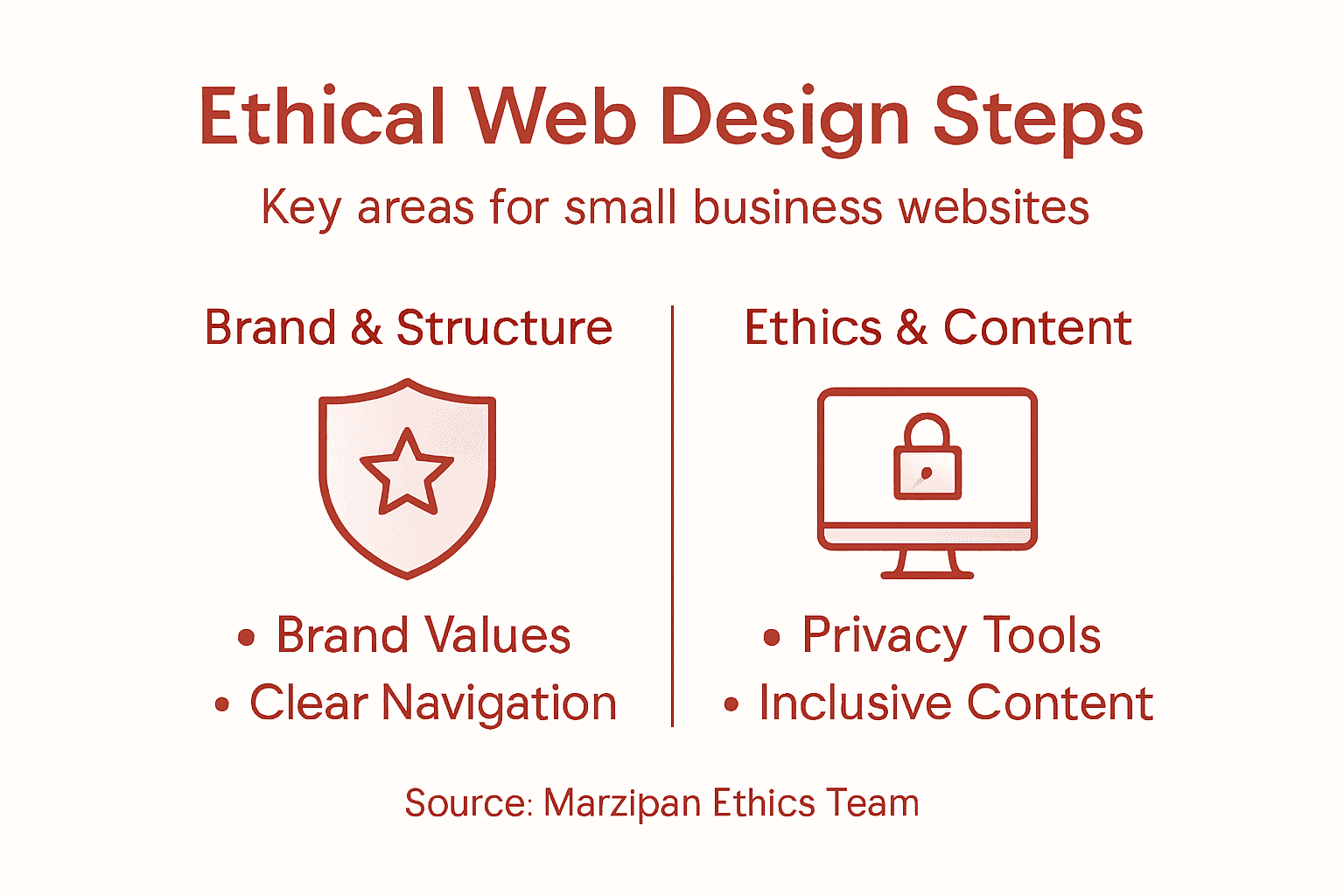
Sustainable digital practices involve more than technical optimisation. Focus on creating high quality content that genuinely answers user questions and provides meaningful insights. This means researching keywords that align with your audience’s actual search intentions rather than attempting to manipulate search rankings. Prioritise loading speed, mobile responsiveness, and clean website architecture that makes navigation intuitive and accessible for all users.
Search engine optimisation should be approached with integrity and user experience at its core. Ethical SEO techniques emphasise creating comprehensive, well-structured content that demonstrates expertise and builds trust. Use descriptive headings, include relevant internal links, optimise image alt text, and ensure your website provides clear information about your business. Remember that genuine, helpful content will always outperform keyword stuffing or manipulative tactics.
Professional insight: Regularly audit your website performance using free tools to understand how users interact with your content and identify areas for improvement.
Step 5: Test performance and launch with community focus
Preparing your website for launch requires comprehensive testing and a strategic approach that prioritises user experience and community engagement. Your goal is to create a digital platform that not only performs technically but also resonates authentically with your target audience.
Rigorous testing protocols are essential to ensure your website functions smoothly across different devices and browsers. Conduct thorough checks for mobile responsiveness, page loading speed, navigation clarity, and accessibility features. Test every form, link, and interactive element to guarantee a seamless user experience. Consider recruiting a small group of community members or potential users to provide real world feedback and identify potential usability challenges before your official launch.
Community engagement strategies are crucial for building trust and establishing your online presence. Plan a soft launch that allows you to gather initial feedback, make refinements, and demonstrate your commitment to serving your audience. Create multiple channels for user input such as feedback forms, social media connections, and direct contact options. This approach shows transparency and signals that your website is a living platform designed to evolve with your community’s needs.
Professional insight: Schedule a comprehensive website review three months after launch to assess performance metrics and user feedback, ensuring continuous improvement.
Build an Ethical Website That Truly Reflects Your Values
Designing a website ethically for your small business means embracing user-friendly navigation, transparent privacy practices, and sustainable SEO strategies that build genuine trust and lasting connections. If you are striving to balance performance with integrity while making a meaningful impact, you are not alone. Key challenges include defining clear brand values, ensuring accessible design, and creating authentic content that resonates with your community.
At Marzipan, we specialise in thoughtful web design for community-based organisations. By combining sustainable web design, ethical SEO, and performance-driven digital campaigns, we help mission-led brands grow online without compromising their principles. Discover how to translate your unique business goals into a website that performs for your audience while respecting their autonomy at Marzipan.
Start your journey towards an impactful and ethical online presence today. Visit Marzipan to explore how we blend ethical AI and sustainable design with SEO built to last. Connect with us to craft a website that is more than just a digital space — it’s a trusted community hub aligned with your values.
Frequently Asked Questions
What are the key steps to design a website for my small business ethically?
To design a website ethically, start by defining your brand values and mission. Make a clear plan for a user-friendly structure, create engaging content, implement ethical features, optimise for search engines, and conduct thorough testing before launch. Follow these steps to ensure your website reflects your commitment to ethical practices.
How can I ensure my website is user-friendly and respects privacy?
To create a user-friendly website, develop a clear and logical navigation structure that keeps important information within three clicks. Incorporate ethical features like transparent data practices and secure connections to enhance user trust and privacy. Regularly test your website with real users to identify any areas for improvement.
What content should I prioritise for my small business website?
Focus on creating authentic, engaging content that addresses your target audience’s needs and showcases your expertise. Use a professional yet approachable tone, prioritising clarity and inclusivity in your communication. Aim to update your content regularly to keep it relevant and engaging for visitors.
How can I implement ethical SEO practices for my website?
To implement ethical SEO, create high-quality content that genuinely answers user inquiries and focuses on natural keyword usage. Avoid manipulative tactics by prioritising user experience, such as fast loading speeds and clear website structure. Regularly audit your website performance to identify areas for optimisation and improvement.
What should I test before launching my small business website?
Before launching your website, conduct rigorous testing on various devices and browsers to ensure it functions properly. Test for mobile responsiveness, page loading speed, navigation clarity, and accessibility. Gathering feedback from community members can also help identify usability challenges and enhance the overall user experience.
How can I gather user feedback after my website goes live?
Create multiple channels for user feedback, such as surveys, contact forms, and social media interactions. Encourage visitors to share their experiences and suggestions for improvements. Plan a review period three months after launch to assess feedback and make necessary adjustments to enhance user engagement.