When every decision needs to reflect your community’s values, modern digital marketing can seem like a balancing act. Organisations in Sydney face growing expectations for online experiences that are not only effective but also ethical and sustainable. With strategies influenced by the Australian Government’s commitment to simple, secure, and connected digital services, this article guides you through sustainable web design and ethical SEO that strengthen your presence while supporting your mission.
Table of Contents
- What Digital Marketing Means in Australia
- Key Digital Marketing Types and Channels
- Ethical SEO and Sustainable Web Design
- How AI and Trends Shape Marketing Success
- Legal Requirements and Compliance for Marketers
Key Takeaways
| Point | Details |
|---|---|
| Digital Marketing Complexity | Australian digital marketing is characterised by a mobile-first approach, personalised experiences, and the adoption of emerging technologies like artificial intelligence. |
| Importance of Ethical Practices | Ethical SEO and sustainable web design focus on user experience and environmental responsibility, emphasising genuine value over traditional tactics. |
| AI Integration in Marketing | AI enhances digital marketing strategies through predictive analytics and personalised content, enabling businesses to engage target audiences more effectively. |
| Legal Compliance is Essential | Marketers must adhere to local regulations, including privacy laws and consent management, to build consumer trust and maintain ethical standards in communications. |
What Digital Marketing Means in Australia
Digital marketing in Australia represents a sophisticated ecosystem of online strategies tailored to connect businesses with their target audiences through innovative digital channels. Unlike traditional marketing approaches, digital marketing leverages technology to create meaningful, data-driven interactions that resonate with Australian consumers.
The Australian digital marketing landscape is characterised by several unique features:
- Emphasis on mobile-first experiences
- Strong focus on personalised customer journeys
- High adoption of emerging technologies like artificial intelligence
- Commitment to creating inclusive and accessible digital experiences
The Australian Government’s digital transformation strategy underscores the national commitment to leveraging digital technologies effectively. This strategic approach influences how businesses conceptualise and implement their digital marketing efforts, prioritising user experience and technological innovation.
Key components of digital marketing in the Australian context include search engine optimisation, social media marketing, content marketing, email campaigns, and targeted digital advertising. Businesses are increasingly recognising that successful digital marketing goes beyond mere visibility—it requires creating genuine connections and delivering value to audiences.
Pro tip: Develop a holistic digital marketing strategy that balances technological innovation with authentic human connection, focusing on creating meaningful experiences rather than simply generating noise.
Key Digital Marketing Types and Channels
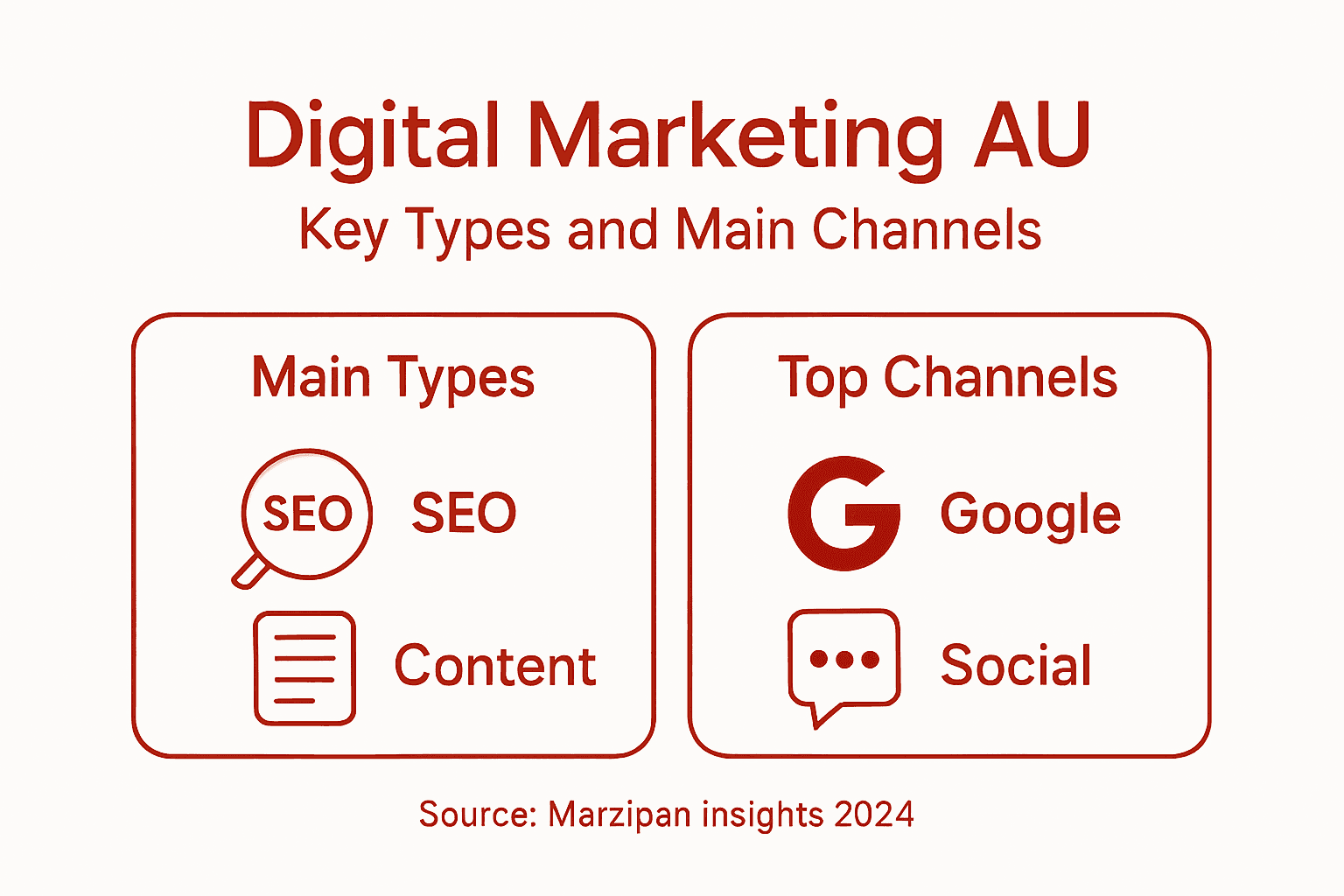
Australian digital marketing comprises a sophisticated array of channels and strategies designed to engage consumers across multiple digital platforms. Understanding the diverse landscape of digital marketing requires exploring the key types and channels that businesses leverage to connect with their target audiences.
The primary digital marketing channels in Australia include:
- Search Engine Optimisation (SEO): Improving organic search rankings
- Social Media Marketing: Engaging audiences on platforms like Facebook, Instagram, and LinkedIn
- Content Marketing: Creating valuable, relevant content to attract and retain customers
- Video Marketing: Leveraging multimedia content for enhanced engagement
- Email Marketing: Personalised communication strategies
- Influencer Marketing: Collaborating with digital personalities
Digital marketing strategies in Australia are increasingly sophisticated, with Google dominating over 95% of search traffic and marketers adopting multi-channel approaches. Social media platforms play a crucial role, allowing businesses to create targeted, interactive experiences that resonate with Australian consumers.
Here is a summary comparing key digital marketing channels and their best business use cases in Australia:
| Channel | Primary Business Goal | Ideal For |
|---|---|---|
| Search Engine Optimisation | Boosting organic visibility | Long-term brand awareness |
| Social Media Marketing | Community engagement | Direct communication with audiences |
| Content Marketing | Educating and nurturing leads | Establishing thought leadership |
| Video Marketing | Driving high engagement | Product showcases and tutorials |
| Email Marketing | Personalised retention | Customer loyalty programmes |
| Influencer Marketing | Rapid brand expansion | New product launches |
Emerging trends are reshaping the digital marketing landscape, with mobile-first strategies, voice search optimization, and social commerce becoming increasingly important. Businesses must adapt to these evolving channels, focusing on creating authentic connections rather than simply broadcasting messages.
Pro tip: Develop a comprehensive digital marketing strategy that integrates multiple channels, prioritising user experience and creating genuine value for your target audience.
Ethical SEO and Sustainable Web Design
Ethical SEO and sustainable web design represent a progressive approach to digital marketing that prioritises user experience, environmental responsibility, and genuine value creation. For mission-driven brands in Australia, these principles are not just optional strategies, but fundamental requirements for building meaningful online connections.
Key principles of ethical SEO and sustainable web design include:
- Transparency in search ranking methods
- Minimising digital carbon footprint
- Prioritising user accessibility
- Protecting user privacy
- Creating meaningful content
- Reducing unnecessary digital waste
Sustainable digital initiatives in Australia emphasise creating web experiences that are not only performant but also environmentally conscious and socially responsible. This approach goes beyond traditional SEO tactics, focusing on creating genuine value for users while maintaining ethical standards.

This table contrasts ethical SEO and traditional SEO approaches in terms of focus and outcomes:
| Aspect | Ethical SEO Approach | Traditional SEO Approach |
|---|---|---|
| Content Quality | Genuine user value | Often keyword-focused |
| User Privacy | Respects all regulations | May overlook some requirements |
| Sustainability | Minimises digital footprint | Typically not prioritised |
| Ranking Goal | Long-term brand trust | Short-term ranking gains |
Sustainable web design involves optimising websites for efficiency, reducing energy consumption, and ensuring inclusive access. This means developing lightweight websites, using green hosting solutions, implementing efficient coding practices, and designing with accessibility at the forefront. Ethical SEO complements this approach by prioritising authentic content, avoiding manipulative techniques, and focusing on providing real value to users.
Pro tip: Conduct a comprehensive website audit to identify opportunities for reducing digital carbon footprint and improving user accessibility.
How AI and Trends Shape Marketing Success
Artificial Intelligence is revolutionising digital marketing strategies across Australia, transforming how businesses understand, engage, and convert their target audiences. The integration of AI technologies enables more sophisticated, personalised marketing approaches that go beyond traditional one-size-fits-all communication methods.
Key AI-driven marketing capabilities include:
- Predictive customer analytics
- Personalised content generation
- Automated customer segmentation
- Real-time performance optimization
- Advanced audience targeting
- Intelligent campaign management
AI-powered marketing tools are transforming digital strategies by enabling greater automation, data optimization, and personalised campaign experiences. These technologies allow marketers to create more nuanced, responsive marketing strategies that adapt dynamically to changing consumer behaviours.
Emerging trends demonstrate that successful marketing now requires a sophisticated blend of human creativity and technological intelligence. Machine learning algorithms can analyse vast datasets, identifying subtle consumer patterns that human analysts might miss. This enables businesses to craft highly targeted marketing messages that resonate more deeply with specific audience segments, ultimately driving more meaningful engagement and conversion rates.
Pro tip: Invest in continuous learning about AI marketing technologies to stay ahead of rapidly evolving digital strategies.
Legal Requirements and Compliance for Marketers
Digital marketing in Australia requires a comprehensive understanding of legal frameworks that protect consumer rights, ensure data privacy, and maintain ethical marketing practices. Marketers must navigate a complex landscape of regulations designed to safeguard individual privacy and promote transparent communication.
Key legal considerations for digital marketers include:
- Privacy Act compliance
- Spam legislation regulations
- Australian Consumer Law obligations
- Data protection standards
- Digital advertising disclosure requirements
- Consent management protocols
Marketing company guidelines emphasise the importance of understanding legal boundaries in digital communication. This involves implementing robust consent mechanisms, ensuring transparent data collection practices, and maintaining clear communication about how customer information will be used.
Understanding regulatory requirements means more than simply avoiding legal penalties. It represents a commitment to building trust with consumers by demonstrating respect for their privacy and autonomy. Marketers must develop comprehensive strategies that balance innovative marketing techniques with stringent legal and ethical standards, ensuring that every digital interaction remains transparent, consensual, and aligned with Australian consumer protection principles.
Pro tip: Regularly consult legal professionals specialising in digital marketing regulations to ensure your marketing strategies remain compliant and ethically sound.
Elevate Your Ethical Brand with Purpose-Driven Digital Marketing
The challenge of balancing ethical SEO, sustainable web design, and impactful digital marketing is real for mission-led brands in Australia. This article highlights how combining transparency, reduced digital carbon footprint, and authentic connections can transform your online presence into a trusted, engaging experience. If you want to grow without compromising your values or contributing to digital noise, you need a partner who understands these priorities.
At Marzipan, we specialise in building websites and campaigns that scale impact not noise. Our approach integrates ethical AI, performance-driven SEO, and sustainable design principles tailored for community-based organisations and purpose-driven businesses. We know your audience wants real value and trustworthy engagement—something that lasts beyond short-term gains.
Ready to lead with integrity and innovation?
Discover how we can help you create a lasting online presence that respects user privacy, reduces environmental impact, and drives measurable growth. Visit Marzipan today and start building your ethical digital future with web design and SEO that align perfectly with your brand values.
Frequently Asked Questions
What is digital marketing?
Digital marketing refers to a collection of online strategies that businesses use to connect with their target audiences through various digital channels, leveraging technology for data-driven interactions.
How can ethical brands benefit from digital marketing?
Ethical brands can build meaningful connections with their audiences by prioritising transparency, user experience, and creating valuable content, thus enhancing brand trust and loyalty in their marketing efforts.
What are the key components of a digital marketing strategy for ethical brands?
Key components include search engine optimisation (SEO), social media marketing, content marketing, email campaigns, video marketing, and influencer marketing, all focused on delivering genuine value and creating authentic experiences for users.
How does artificial intelligence impact digital marketing strategies?
Artificial intelligence enhances digital marketing by enabling predictive customer analytics, personalised content generation, and real-time performance optimisation, allowing brands to tailor their marketing efforts to resonate deeply with their target audiences.