TL;DR:
- Bespoke web design aligns better with mission-driven organisations’ values for credibility and scalability.
- Ethical features like accessibility, green hosting, and privacy-enhancing tools significantly reduce environmental impact.
- Ethical SEO and values-based design foster trust, improve visibility, and support long-term social impact.
- If this sounds like you, you may want to skip the read and head straight to our web design for NonProfits page.
Choosing a web design partner is rarely straightforward for mission-driven organisations in Sydney. The stakes are higher when your website must reflect your values, serve your community, and demonstrate accountability to donors and supporters. Generic, off-the-shelf solutions often fall short, leaving organisations with sites that look credible but fail to perform ethically or sustainably. Bespoke web design empowers mission-driven organisations to lead with ethics and measurable impact. This article outlines the key criteria, compares design approaches, and identifies the features that genuinely support social impact for Sydney organisations.
Table of Contents
- Key criteria for web design with social impact
- Bespoke versus template web design: What builds trust?
- Must-have features for sustainable, ethical web design
- Ethical SEO and Sydney values: Growing without the grey areas
- Why values-aligned design wins for social change
- Next steps: Sustainable web design partners in Sydney
- Frequently asked questions
Key Takeaways
| Point | Details |
|---|---|
| Ethics-first approach | Prioritising accessibility, privacy, and sustainability strengthens brand trust and social impact. |
| Bespoke design advantage | Bespoke web solutions offer unmatched credibility and accountability for mission-driven organisations. |
| Sustainable features matter | Green hosting, optimised media, and transparent analytics significantly reduce emissions and boost engagement. |
| Avoid SEO shortcuts | Ethical SEO delivers meaningful growth and avoids penalties, outperforming grey-area tactics. |
| Sydney resources available | Specialised local agencies can help turn your organisation’s mission into lasting digital influence. |
Key criteria for web design with social impact
Before selecting a web design approach, Sydney organisations need a clear set of criteria that reflect both their mission and their operational realities. The discovery phase is where this starts. Good web design begins with user research, understanding who your community members, donors, and beneficiaries actually are, and then aligning every design decision with their needs.
Defining ethical priorities like accessibility and privacy is central to a credible digital presence. Accessibility means meeting WCAG (Web Content Accessibility Guidelines) standards so that people with disabilities can fully use your site. Privacy means collecting only the data you need and being transparent about how it is used.
Key criteria to evaluate include:
- Accessibility compliance: Does the design meet WCAG 2.1 AA standards as a minimum?
(If you’re not sure you can use our free Accessibility Compliance Checker) - Privacy-first data practices: Are analytics tools and forms collecting data ethically?
- Sustainability: Is the site hosted on green servers and optimised for low energy use?
- Donation and conversion flows: Are giving pathways simple, trustworthy, and frictionless?
- Impact tracking: Can the organisation measure and report outcomes transparently?
- Values alignment: Does the visual identity and content reflect the organisation’s mission?
Australia’s AI Ethics Principles, developed by the federal government, also provide a useful framework for organisations using AI-assisted tools in their digital projects. These principles emphasise fairness, accountability, and transparency, qualities that should run through every layer of a mission-driven website.
Working with Sydney impact web agencies that understand these criteria means you are not starting from scratch on every decision. Similarly, applying ethical SEO practices from the outset ensures your site is found by the right people without compromising your values.
Pro Tip: Prioritise accessibility and low-carbon practices from day one. Retrofitting these features later costs significantly more in both time and money, and the compounded benefit to users and the environment is far greater when built in from the start.
Bespoke versus template web design: What builds trust?
After establishing the essential criteria, it is vital to evaluate the core design path: bespoke builds versus off-the-shelf templates.
Templates are fast and affordable. Platforms like Squarespace or WordPress with pre-built themes can get a site live within days. For organisations with very limited budgets and short timelines, this can seem like the obvious choice. However, templates are generic by design. They are built for broad appeal, not for the specific trust signals that community organisations need.
Templates save time, but mission-driven brands risk appearing inauthentic.
Bespoke web design takes 80 to 100 hours for a 10-page nonprofit site but achieves superior alignment with mission-driven goals. That investment pays off in credibility, donor confidence, and long-term scalability.
Bespoke builds allow accessibility, sustainability, and brand integrity to be embedded from the ground up. There is no working around a template’s structural limitations or overriding someone else’s design decisions. Every element is intentional.
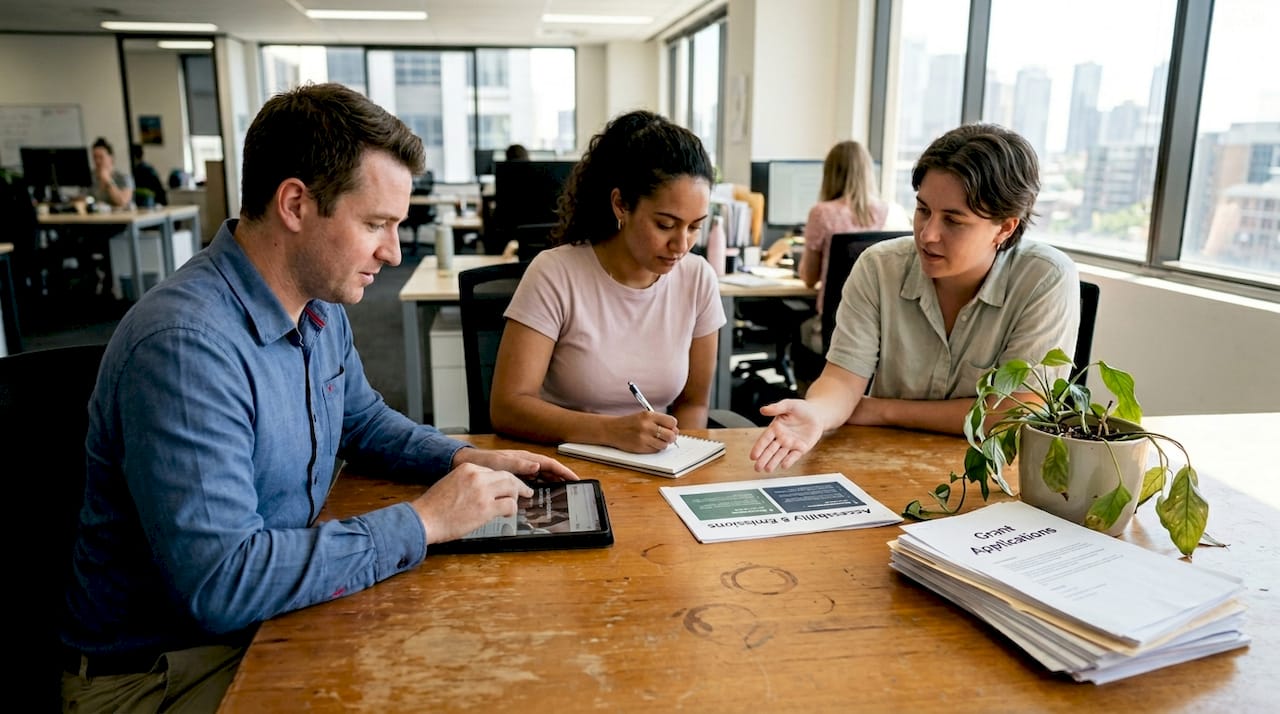
Here is a direct comparison:
| Feature | Bespoke design | Template design |
|---|---|---|
| Values alignment | High | Low to moderate |
| Scalability | High | Limited |
| Initial cost | Higher | Lower |
| Long-term ROI | Strong | Variable |
| Accessibility built-in | Yes | Often requires add-ons |
| Sustainability optimised | Yes | Rarely |
| Donor trust signals | Strong | Weaker |
The trust gap is real. Supporters and donors increasingly scrutinise the organisations they back. A site that looks like a thousand others raises questions about professionalism and commitment. A thoughtfully designed, unique site communicates that the organisation takes its mission seriously at every level.
For small nonprofits concerned about cost, it is worth considering the total cost of ownership. Template sites often require ongoing plugin purchases, developer workarounds, and eventual rebuilds as the organisation grows. Bespoke builds, done well, scale with you.
Must-have features for sustainable, ethical web design
Beyond picking a design approach, it is important to clarify exactly which features elevate your social impact and sustainability.
- Accessible navigation and content: Clear headings, sufficient colour contrast, descriptive alt text for images, and keyboard-navigable menus are non-negotiable for WCAG compliance.
- Green hosting: Choose providers powered by renewable energy. Australian options exist, and the difference in emissions is significant.
- Optimised media: Use WebP image formats and compress all files. Unoptimised images are one of the largest contributors to page weight and carbon output.
- Lazy-loading assets: Load images and videos only when a user scrolls to them, reducing unnecessary data transfer.
- Privacy-first analytics: Tools like Plausible Analytics collect no personal data and require no cookie consent banners, keeping your site clean and compliant.
- Transparent impact data: Display outcome metrics, financial summaries, and programme results clearly for donors and supporters.
Implementing green hosting, WebP images, and lazy-loading shaves up to 90% of website emissions without any sacrifice to user experience. That figure is significant. It means that technical choices, not just policy statements, are where environmental commitments are demonstrated.
| Feature | Benefit | Tool or approach |
|---|---|---|
| Green hosting | Reduces carbon footprint | Renewable-powered providers |
| WebP images | Smaller file sizes | Image conversion at upload |
| Lazy-loading | Faster load, less data | Native HTML or JS libraries |
| Plausible Analytics | Privacy-first tracking | Replaces Google Analytics |
| WCAG compliance | Inclusive access | Audit tools and manual testing |
For organisations working on local SEO for sustainable impact, site speed and accessibility also directly influence search rankings. Google rewards fast, accessible sites, so sustainable choices benefit both the planet and your visibility.
Pro Tip: Choose tools and features with a low carbon footprint and simple user journeys. Every unnecessary script or plugin adds weight to your site and friction for your users.
Ethical SEO and Sydney values: Growing without the grey areas
Having established must-have sustainable features, it is now crucial to ensure visibility and credibility through ethical SEO.
Ethical SEO means building search visibility through honest, human-centred content and genuine authority. It excludes tactics like buying links, keyword stuffing, or using AI-generated content that adds no real value. For mission-driven organisations, the reputational risk of being caught using these shortcuts is particularly high.
Sydney mission-driven organisations see 246% more leads using ethical SEO and avoiding risky shortcuts. That result reflects what happens when content genuinely serves the audience rather than gaming an algorithm.
Practical ethical SEO for Sydney organisations includes:
- Local keyword targeting: Focus on terms your community actually searches for, not just high-volume generic phrases.
- Authentic storytelling: Case studies, beneficiary stories, and impact reports build authority and trust simultaneously.
- Privacy-respecting analytics: Measure what matters without surveilling your users.
- Accessible content: Plain language, proper heading structures, and descriptive links improve both SEO and usability.
- Consistent local presence: Google Business Profile, local citations, and community partnerships all contribute to ethical SEO growth.
Working with local SEO agencies that specialise in mission-driven organisations means your growth strategy reflects your values. There are also SEO packages for social impact specifically designed for nonprofits and community groups that want results without compromising their integrity.
Pro Tip: Invest in local SEO and authentic stories to reach supporter communities ethically. A single well-written case study can outperform dozens of generic blog posts in both search rankings and donor engagement.
Why values-aligned design wins for social change
There is a pattern worth noting among organisations that choose template solutions to save time and money upfront. Many return within two to three years needing a rebuild, not because the template stopped working technically, but because it stopped working for their community. Supporters noticed the generic feel. Donors questioned the professionalism. Staff found it impossible to update content without breaking layouts.
Values-aligned, sustainable web design is not a premium add-on. It is a foundation. When accessibility, privacy, and low-carbon practices are built into a site from the start, the compounded benefit over time is substantial. Global benchmarks show 50 to 90% emissions cuts are possible with sustainable web practices, with no UX sacrifice. That is not a marginal gain.
Sydney organisations have an opportunity to model a better standard. When a community group or nonprofit demonstrates that its digital presence reflects its values at every level, it earns a different quality of engagement. Supporters trust it more. Donors give more confidently. Volunteers feel proud to be associated with it. Ethical SEO that lasts reinforces this by ensuring the organisation is found by people who genuinely align with its mission, not just anyone clicking through from a broad search.
The organisations that invest in values-driven design now are building something that templates simply cannot replicate: genuine digital credibility.
Next steps: Sustainable web design partners in Sydney
To put these ideas into action, here is how Sydney organisations can work with a values-driven web partner.
Marzipan specialises in sustainable web design for mission-driven organisations across Sydney. Every project starts with understanding your community, your goals, and the ethical standards your supporters expect from you.
From accessibility-first builds to AI-driven SEO services that grow your reach without shortcuts, Marzipan’s approach is built around your values, not just your brief. Whether you need a full website rebuild or a targeted digital marketing for social impact strategy, the team brings both technical expertise and genuine commitment to ethical practice. If your organisation is ready to translate its mission into a digital presence that performs and endures, Marzipan is the place to start.
Frequently asked questions
What does ethical web design mean for nonprofits?
Ethical web design for nonprofits prioritises accessibility, privacy, and sustainability to ensure that technology choices align with the organisation’s mission and community values.
How can my Sydney organisation cut website emissions?
Adopt green hosting, optimise images using formats like WebP, and enable lazy-loading to reduce emissions by up to 90% without any reduction in user experience quality.
Is bespoke web design worth the investment for small nonprofits?
Bespoke web design builds credibility and trust that templates cannot replicate, making it a sound long-term investment for organisations focused on measurable social impact.
Can ethical SEO really boost leads for Sydney community groups?
Yes. Ethical SEO has produced up to 246% more leads for mission-driven Australian organisations by focusing on genuine content and avoiding high-risk tactics.
Find out how we can help today. Contact ben@marzipan.com.au for brief conversation about how we can help you shine online.