

Most content marketing advice still relies on outdated british strategies that overlook the growing demand for genuine audience connection. For Sydney organisations committed to sustainability, ethical digital content is more than a trend. With over 65 percent of consumers in Australia ranking trust as their top factor when engaging with brands, the way you communicate makes a lasting impact. This guide unpacks how strategic storytelling and transparent practices set your organisation apart while meeting community expectations.
Table of Contents
- Defining Content Marketing for 2026
- Main Content Marketing Types and Channels
- How Content Marketing Drives Sustainable Results
- Ethics and Legal Standards in Australia
- Common Pitfalls and Effective Strategies
Key Takeaways
| Point | Details |
|---|---|
| Audience-Centric Approach | Focus content marketing strategies on understanding and addressing specific audience needs to build trust and engagement. |
| Diverse Content Formats | Leverage emerging content types like AR, VR, and podcasts to enhance audience interaction and deliver valuable experiences. |
| Sustainable Impact | Prioritise authentic engagement and storytelling to foster long-term relationships, ultimately leading to brand credibility and loyalty. |
| Legal Compliance | Adhere to ethical guidelines and legal standards to maintain transparency and protect consumer rights in digital content. |
Defining Content Marketing for 2026
Content marketing in 2026 represents a strategic approach that goes beyond traditional advertising, focusing on creating meaningful connections through targeted, valuable digital content. Storytelling and authentic engagement have become central to this evolving discipline, transforming how businesses communicate with their audiences.
At its core, content marketing involves developing and distributing digital assets designed to inform, educate, and ultimately inspire action. These assets range from blog posts and videos to comprehensive digital solution briefs that provide genuine value to specific audience segments. The key distinguishing factor is the intentional focus on audience needs rather than direct product promotion.
Modern content marketing strategies for Australian businesses prioritise building long-term relationships through consistent, high-quality content delivery. This approach recognises that consumers seek authentic connections with brands that demonstrate understanding of their challenges and aspirations. By creating content that addresses specific audience pain points, organisations can establish trust, credibility, and sustainable engagement.
Pro tip: When developing content marketing strategies, always map your content directly to specific stages of your audience’s journey, ensuring each piece provides tangible value and addresses precise information needs.
Main Content Marketing Types and Channels
Content marketing in 2026 encompasses a diverse range of digital assets and distribution channels designed to engage audiences through innovative and targeted approaches. Emerging content formats now include interactive experiences such as augmented reality (AR), virtual reality (VR) content, podcasts, and dynamic multimedia presentations that go far beyond traditional blog posts.
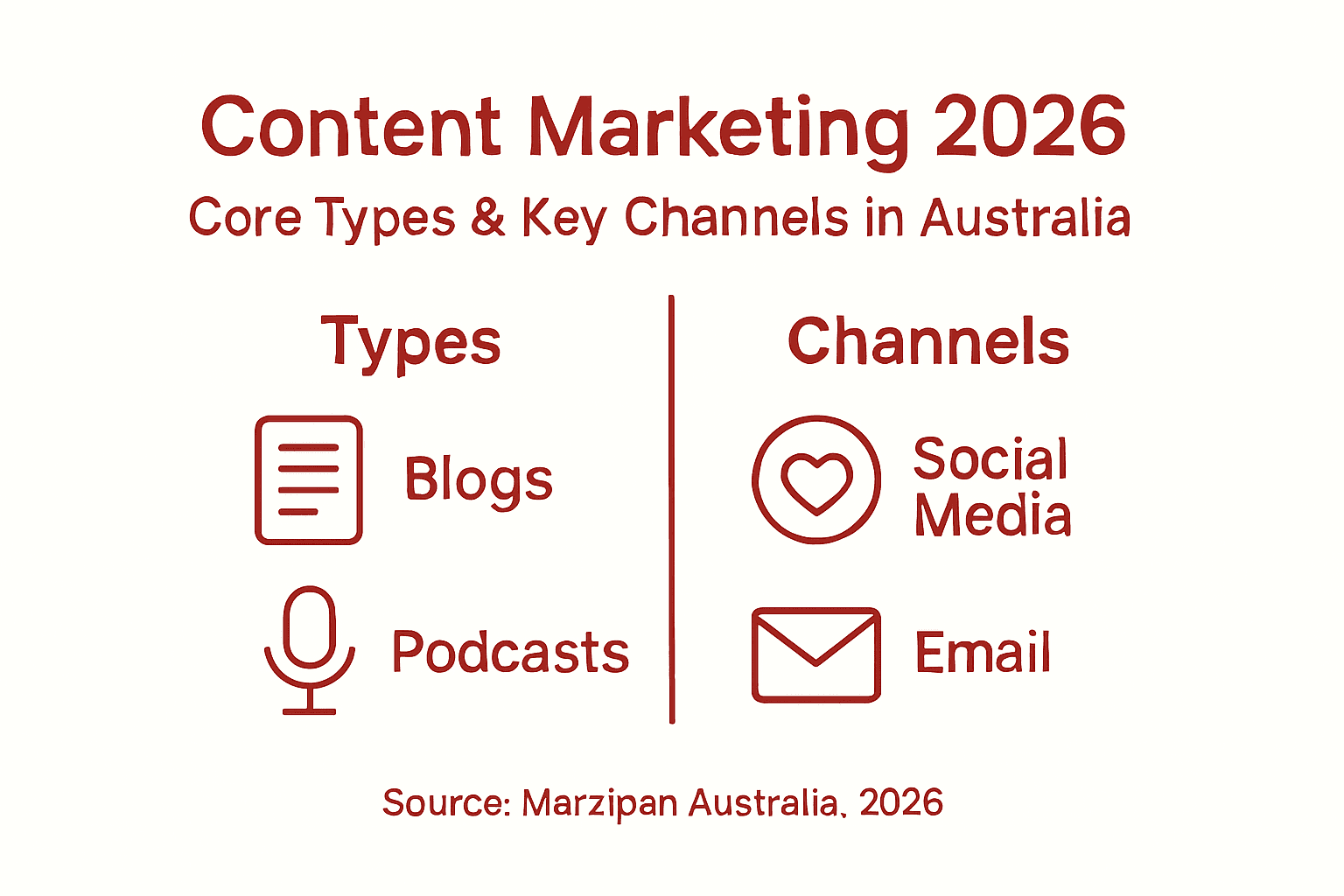
Digital marketing channels have significantly evolved, with Australian businesses prioritising an omnichannel strategy that ensures seamless content distribution. Key content channels now span social media platforms, video streaming services, newsletters, voice search interfaces, and AI-powered chatbot interactions. This multifaceted approach allows organisations to reach diverse audience segments through personalised, contextually relevant content experiences.
The most effective content marketing strategies in 2026 integrate multiple content types to create comprehensive audience engagement. These might include:
- Blog articles with deep industry insights
- Short-form video content for social media
- Interactive webinars and live streaming events
- Podcasts exploring complex industry topics
- User-generated content campaigns
- Immersive AR/VR brand experiences
Successful content marketing requires understanding audience preferences and delivering value through carefully crafted digital assets that inform, entertain, and inspire action.
Pro tip: Develop a flexible content ecosystem that allows seamless adaptation across multiple platforms, ensuring your message remains consistent while tailoring the format to each channel’s unique audience expectations.
Here is a summary of popular 2026 content marketing types and their unique business impacts:
| Content Type | Distinctive Feature | Primary Business Benefit |
|---|---|---|
| AR/VR Experiences | Immersive audience interaction | Elevated brand perception |
| Podcasts | Long-form audio learning | Deep audience engagement |
| User-generated Content | Community-driven narratives | Enhanced trust and loyalty |
| Interactive Webinars | Real-time information sharing | Direct audience participation |
How Content Marketing Drives Sustainable Results
Content marketing has emerged as a powerful strategy for driving sustainable business outcomes, particularly for organisations committed to creating meaningful, long-term value. Sustainable website marketing requires a holistic approach that goes beyond traditional short-term sales tactics, focusing instead on building genuine connections and delivering consistent value to target audiences.

At its core, sustainable content marketing prioritises authentic engagement and meaningful storytelling. This approach recognises that modern consumers seek deeper connections with brands that demonstrate genuine commitment to their needs, challenges, and broader societal goals. By creating content that addresses real-world problems, provides actionable insights, and reflects organisational values, businesses can develop trust and loyalty that transcends transactional relationships.
The sustainable results driven by effective content marketing are multifaceted and extend far beyond immediate revenue generation. These outcomes include:
- Enhanced brand reputation and credibility
- Increased audience trust and loyalty
- Improved search engine visibility
- More meaningful customer relationships
- Reduced marketing acquisition costs
- Greater audience understanding and insights
Successful sustainable content marketing requires a strategic, purpose-driven approach that aligns business objectives with audience needs and broader societal expectations.
Pro tip: Develop a content strategy that measures impact through qualitative metrics like audience engagement and brand sentiment, not just quantitative performance indicators.
The table below compares traditional and sustainable content marketing outcomes for businesses:
| Approach | Short-Term Outcome | Long-Term Outcome |
|---|---|---|
| Traditional | Spike in sales | Declining audience trust |
| Sustainable | Steady audience growth | Strong brand credibility |
Ethics and Legal Standards in Australia
Content marketing in Australia requires a robust ethical framework that balances innovation with legal compliance. Copyright compliance standards have become increasingly complex, particularly with the emergence of artificial intelligence and digital content creation technologies.
The Australian content marketing landscape is governed by stringent regulations that prioritise transparency and intellectual property protection. Government content strategy frameworks mandate comprehensive guidelines ensuring that organisations maintain high ethical standards in their digital communications. Government content strategies emphasise accountability, particularly concerning user privacy, data management, and responsible content creation.
Key ethical and legal considerations for content marketers in Australia include:
- Strict adherence to intellectual property laws
- Transparent disclosure of AI-generated content
- Protecting individual privacy rights
- Ensuring accurate and truthful representations
- Maintaining cultural sensitivity
- Complying with Australian Competition and Consumer Commission (ACCC) guidelines
Navigating these complex legal standards requires a proactive approach that prioritises integrity and user trust over short-term marketing gains.
Pro tip: Regularly consult legal professionals specialising in digital communications to ensure your content marketing strategy remains fully compliant with evolving Australian regulations.
Common Pitfalls and Effective Strategies
Content marketing presents numerous challenges that can derail even the most well-intentioned strategies. SEO best practices highlight the importance of understanding potential obstacles before launching any digital content campaign.
The most prevalent pitfalls in content marketing emerge from fundamental strategic misalignments. Audience misunderstanding remains the critical weakness for many organisations, with marketers frequently creating content that fails to resonate with their intended demographic. Effective strategies demand deep audience research, persona development, and continuous engagement monitoring to ensure content remains relevant and impactful.
Key pitfalls content marketers must navigate include:
- Inconsistent content quality
- Lack of clear strategic objectives
- Insufficient audience research
- Neglecting content distribution channels
- Overlooking performance measurement
- Failing to adapt to changing audience needs
Successful content marketing requires a dynamic approach that balances strategic planning with flexibility, allowing organisations to pivot quickly in response to emerging audience insights and market trends.
Pro tip: Develop a quarterly content audit process that systematically evaluates your content’s performance, audience engagement, and alignment with strategic objectives.
Elevate Your Content Marketing with Sustainable Digital Solutions
The article highlights the vital role of authentic engagement, strategic audience understanding, and ethical practices in content marketing for 2026 Australia. If you are facing challenges like inconsistent content quality or aligning communication with evolving legal and ethical standards, you are not alone. Many mission-led brands struggle to build long-term trust while maintaining compliance and genuine connection. By embracing sustainable web design, ethical AI, and performance-driven SEO strategies, brands can create digital experiences that resonate deeply and build lasting relationships.
At Marzipan, we transform these content marketing insights into impactful action. We specialise in designing websites that perform without compromising values. Our approach ensures your content reaches the right audiences through well-crafted, transparent, and legally sound digital campaigns.
Take control of your content marketing journey today. Discover how to build your online presence with Web Design for Community-Based Organisations, leverage Ethical SEO Strategies, and create sustainable connections that grow your impact.
Ready to scale your mission-led brand with content marketing that lasts? Visit Marzipan now to start building websites and campaigns that blend purpose with performance. Your audience is searching for authenticity; ensure they find it with your brand.
Frequently Asked Questions
What is the definition of content marketing for 2026?
Content marketing for 2026 is a strategic approach that focuses on creating valuable digital content to build meaningful connections with audiences. It emphasises storytelling, authentic engagement, and addressing audience needs rather than direct product promotion.
What types of content are most effective in today’s content marketing?
Effective content types in 2026 include blog articles, short-form videos, podcasts, interactive webinars, user-generated content, and immersive AR/VR experiences. Integrating multiple content types helps create comprehensive audience engagement.
How can businesses ensure their content marketing strategy drives sustainable results?
To drive sustainable results, businesses should focus on authentic engagement, meaningful storytelling, and delivering consistent value. Successful content marketing prioritises long-term relationships with audiences, enhancing brand reputation and trust.
What are the key ethical considerations in content marketing?
Key ethical considerations include adhering to intellectual property laws, ensuring transparency in AI-generated content, protecting user privacy rights, and complying with industry guidelines. A robust ethical framework is crucial for maintaining user trust in content marketing.