

Websites might look harmless but every click, scroll, and image actually draws energy from the planet. The surprising part is that digital technologies now contribute about 4 percent of all global carbon emissions and this number could double by 2025. The real shock comes when you realise that tiny design updates and efficient coding can make a dramatic difference to the web’s environmental impact without compromising performance or style.
Table of Contents
- What Is Environmental Website Design?
- The Importance Of Environmental Considerations In Web Design
- Key Principles Of Sustainable Website Design
- How User Experience Influences Environmental Goals
- Real-World Impact Of Effective Environmental Website Design
Quick Summary
| Takeaway | Explanation |
|---|---|
| Reduce your website’s carbon footprint | Implement strategies like optimising code and minimising file sizes to lower energy usage. |
| Choose green web hosting | Opt for hosting providers using renewable energy to significantly reduce emissions. |
| Enhance user experiences for sustainability | Design websites that encourage eco-friendly behaviour through engaging, informative interfaces. |
| Monitor digital infrastructure efficiency | Regularly assess and track carbon emissions from servers and data centres to improve sustainability. |
| Communicate your sustainability efforts | Use your website to showcase commitment to environmental responsibility and attract eco-conscious consumers. |
What is Environmental Website Design?
Environmental website design represents a holistic approach to creating digital platforms that minimise ecological impact while maximising technological efficiency. This innovative strategy goes beyond traditional web development by integrating sustainability principles directly into the digital infrastructure and user experience.
Core Principles of Sustainable Digital Design
At its foundation, environmental website design focuses on reducing the carbon footprint of digital platforms. Websites consume significant energy through data centres, server operations, and user interactions. By implementing strategic design choices, web developers can dramatically decrease these environmental demands.
To help clarify the various aspects of sustainable website design mentioned in the article, the following table organises the core principles alongside their specific focus and intended benefits.
| Principle | Focus | Intended Benefit |
|---|---|---|
| Optimising website code | Efficiency and performance | Reduced energy consumption and faster websites |
| Selecting green web hosting providers | Infrastructure and energy source | Lower carbon emissions from server operations |
| Minimising data transfer and file sizes | Resource optimisation | Less energy required for website usage and storage |
| Using energy-efficient design techniques | Design methodology and user interaction | Overall reduction in digital carbon footprint |
| Implementing efficient caching mechanisms | Technical speed and repeated access | Improved performance and decreased energy usage |
Key aspects of environmental website design include:
- Optimising website code for maximum efficiency
- Selecting green web hosting providers
- Minimising data transfer and file sizes
- Using energy-efficient design techniques
Technical and Ecological Considerations
According to research from the Association for Computing Machinery, digital technologies contribute approximately 4% of global carbon emissions. Environmental website design directly addresses this challenge by creating web solutions that are not just visually appealing, but also ecologically responsible.
The process involves careful consideration of multiple technical elements: reducing image and video file sizes, implementing efficient caching mechanisms, and choosing colour schemes and design elements that require less computational energy. Learn more about our approach to sustainable web development.
By prioritising environmental website design, organisations can demonstrate their commitment to sustainability while delivering high-performance digital experiences that respect our planet’s finite resources.
The Importance of Environmental Considerations in Web Design
In an era of increasing digital transformation, understanding the environmental impact of websites has become critically important. Web design is no longer just about aesthetic appeal and functionality but also about responsible digital citizenship and ecological sustainability.
Digital Carbon Footprint and Global Impact
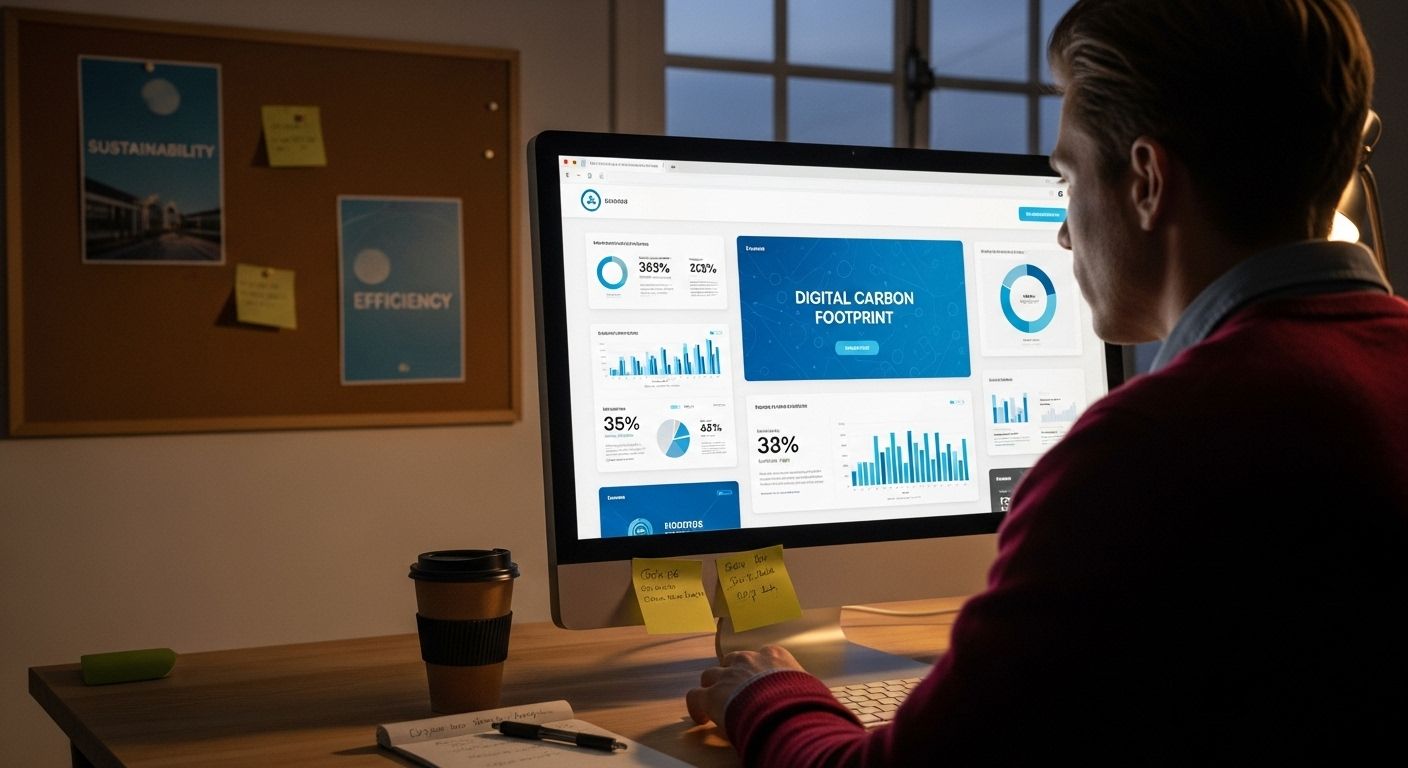
Digital technologies consume substantial energy resources, with websites contributing significantly to global carbon emissions. Research from the Shift Project reveals that digital technologies currently account for approximately 4% of global greenhouse gas emissions, a figure projected to double by 2025.
Key environmental challenges in web design include:
- Energy consumption by data centres
- Carbon emissions from server infrastructure
- Computational resources required for website operations
- Data transmission and storage requirements
Sustainable Design as a Strategic Imperative
Environmental considerations in web design represent more than an ethical choice. They are becoming a strategic necessity for businesses seeking to demonstrate corporate responsibility and reduce operational carbon footprints. By implementing sustainable web design practices, organisations can achieve multiple objectives:
- Reduce energy consumption
- Lower operational costs
- Enhance brand reputation
- Contribute to global sustainability goals
Explore our comprehensive carbon footprint assessment to understand how your digital presence impacts the environment.
Moreover, sustainable web design is not about compromise but innovation. By prioritising efficiency, designers can create faster, more responsive websites that consume less energy while delivering superior user experiences. This approach represents a win-win scenario for businesses, users, and the planet.
Key Principles of Sustainable Website Design
Sustainable website design represents a comprehensive approach to creating digital platforms that balance technological performance with environmental responsibility. By integrating strategic principles, web designers can significantly reduce the ecological footprint of online experiences.
Efficiency and Performance Optimization
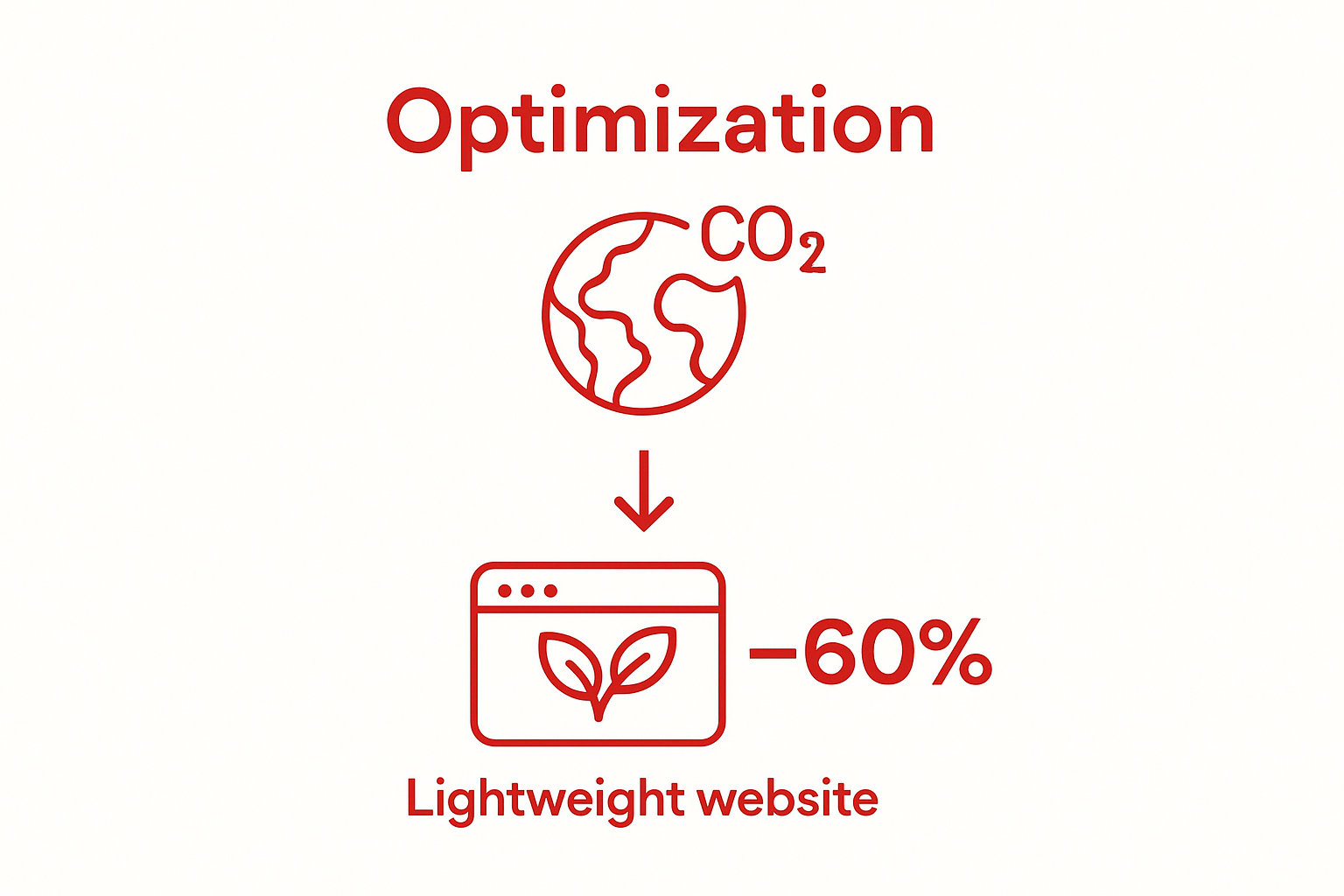
The core of sustainable web design lies in maximising efficiency while minimising resource consumption. Research from the World Wide Web Consortium emphasises that efficient websites consume less computational energy and provide faster, more streamlined user experiences.
Critical efficiency strategies include:
- Minimising file sizes and data transfer
- Implementing intelligent caching mechanisms
- Reducing unnecessary scripts and plugins
- Optimising images and multimedia content
Green Hosting and Infrastructure Considerations
Choosing environmentally responsible hosting solutions is fundamental to sustainable web design. Green web hosting providers utilise renewable energy sources and implement advanced cooling technologies to reduce carbon emissions associated with server operations.
Key infrastructure considerations encompass:
- Selecting data centres powered by renewable energy
- Utilising energy-efficient server hardware
- Implementing cloud computing solutions with low environmental impact
- Measuring and tracking carbon emissions from digital infrastructure
Explore our sustainable web development approach to understand how technology and environmental consciousness can coexist.
By embracing these principles, web designers and organisations can create digital platforms that are not only functionally superior but also contribute positively to global sustainability efforts.
How User Experience Influences Environmental Goals
User experience design plays a pivotal role in advancing environmental sustainability, transforming digital interactions from passive consumption to active ecological engagement. By strategically designing interfaces that promote awareness and encourage responsible digital behaviour, designers can create powerful platforms for environmental education and action.
Design Strategies for Ecological Awareness
Research from the Digital Policy journal highlights how user interface design can directly influence environmental consciousness. Thoughtful design can nudge users towards more sustainable digital practices by making ecological choices intuitive, engaging, and visually compelling.
Key design approaches for promoting environmental awareness include:
- Creating transparent carbon usage indicators
- Visualising energy consumption in real-time
- Designing intuitive recycling and waste reduction interfaces
- Implementing gamification elements that reward sustainable actions
Behavioural Nudges through Digital Design
User experience goes beyond aesthetic appeal, serving as a powerful mechanism for behaviour modification. By integrating subtle design cues and interactive elements, websites can encourage users to make more environmentally conscious decisions without feeling pressured or lectured.
Effective behavioural intervention strategies comprise:
- Providing clear, actionable sustainability recommendations
- Using positive reinforcement techniques
- Simplifying complex environmental information
- Creating engaging, interactive sustainability tools
Discover our approach to sustainable digital experiences and how design can drive meaningful environmental change.
Ultimately, user experience design represents a critical intersection between technology, psychology, and environmental stewardship, transforming digital platforms into catalysts for global sustainability.
Real-World Impact of Effective Environmental Website Design
Environmental website design transcends theoretical concepts, delivering tangible, measurable impacts on ecological sustainability and organisational performance. By implementing strategic digital solutions, businesses and organisations can drive meaningful environmental change through their online presence.
Quantifiable Ecological Benefits
Research published in Sustainability demonstrates that well-designed environmental websites can significantly influence public engagement and behavioural transformation. These digital platforms serve as powerful communication tools that translate complex environmental data into accessible, actionable insights.
Key measurable ecological benefits include:
- Reduced digital carbon footprint
- Enhanced public environmental awareness
- Improved resource allocation strategies
- Increased engagement with sustainability initiatives
Organisational Performance and Reputation
Effective environmental website design directly correlates with organisational credibility and market positioning. Companies that demonstrate genuine commitment to digital sustainability attract environmentally conscious consumers and stakeholders, creating a competitive advantage in an increasingly eco-aware marketplace.
The following table summarises key measurable ecological and organisational benefits of effective environmental website design as discussed in the article.
| Benefit Type | Specific Benefit | Description |
|---|---|---|
| Ecological | Reduced digital carbon footprint | Direct decrease in website-related emissions and energy use |
| Ecological | Enhanced public environmental awareness | Presenting clear, actionable information for greater engagement |
| Ecological | Improved resource allocation strategies | Better use of digital resources and infrastructure |
| Organisational | Strengthened brand reputation | Positive market positioning for eco-conscious audiences |
| Organisational | Attraction of environmentally conscious clients | Greater appeal to users valuing sustainability |
| Organisational | Improved stakeholder trust | Increased credibility with partners and regulators |
| Organisational | Potential cost savings through efficient infrastructure | Reduced overheads from streamlined digital operations |
Strategic advantages encompass:
- Strengthened brand reputation
- Attraction of environmentally conscious clients
- Improved stakeholder trust
- Potential cost savings through efficient digital infrastructure
Check your website’s carbon impact and understand how digital design choices can transform environmental performance.
Ultimately, environmental website design represents a sophisticated intersection of technology, communication, and ecological responsibility, enabling organisations to drive meaningful change through innovative digital strategies.
Ready to Transform Your Website into a Sustainable Powerhouse?
You have learned how environmental website design can make a real difference to the planet and your mission. The article highlighted the urgent need to minimise your digital carbon footprint and build truly responsible online platforms. If you are feeling the weight of rising energy costs and want your website to meet modern sustainability expectations, now is the perfect moment to act. Imagine delivering lightning-fast digital experiences that are both eco-friendly and help your business stand out for all the right reasons.

Start your journey towards a greener digital future today. Discover how our team can help you create a sustainable website and shape your brand’s impact with purpose-driven sustainable web design. If you want to see how your site stacks up, try our website carbon check tool to measure your real impact. For a full transformation guided by experts who understand both technology and sustainability, visit Marzipan and take the first step now. The sooner you act, the faster your business and the planet will benefit.
Frequently Asked Questions
What is environmental website design?
Environmental website design is a holistic approach to creating digital platforms that reduce ecological impact while maximising technological efficiency, integrating sustainability principles into both digital infrastructure and user experience.
Why is it important to focus on sustainability in web design?
Focusing on sustainability in web design is increasingly important due to the significant energy consumption and carbon emissions associated with digital technologies. By adopting sustainable practices, organisations can contribute to global sustainability goals, enhance their brand reputation, and reduce operational costs.
How can I ensure my website is energy efficient?
To ensure energy efficiency, you can optimise website code for maximum efficiency, choose green web hosting providers, minimise file sizes, and implement intelligent caching mechanisms. These strategies help reduce the carbon footprint of your website while enhancing performance.
What are some strategies for promoting environmental awareness through UX design?
To promote environmental awareness through user experience design, consider creating transparent carbon usage indicators, visualising energy consumption in real-time, and implementing gamification elements that reward sustainable actions. These techniques engage users and encourage environmentally conscious behaviours.