
Sustainable web design is about building websites that are lighter, faster, more efficient, and more ethical. It goes beyond green hosting to consider everything from page weight and performance to accessibility and digital carbon footprint. Done right, it’s better for your users, your business, and the planet.
Key Stats: The average website produces 0.5g of CO₂ per page view. With 4.1 billion people online, sustainable design isn’t optional—it’s essential.

Sustainable web design is the practice of creating websites that minimise environmental impact whilst maximising performance and accessibility. It goes beyond choosing green hosting to encompass every aspect of web development—from code efficiency to content strategy.
The digital sector now accounts for 3.7% of global carbon emissions—more than the aviation industry. As AI tools proliferate and internet usage grows, this impact is accelerating rapidly.
With over 4.1 billion people online, individual web page requests create a massive cumulative environmental impact. Each “small raindrop” of data transfer builds into a gigantic sea of energy consumption.
The AI Factor: AI-powered features like chatbots and recommendation engines consume up to 10 times more energy than standard web interactions, according to Bloomberg research. Every AI search query can use as much energy as 10 traditional searches.
Faster internet speeds and accessible content creation tools have led to bloated websites. Businesses now load pages with large graphics, videos, and animations to capture shrinking attention spans, whilst adding multiple tracking scripts to monitor visitor behaviour. This bulk dramatically increases page-load times and the energy required to load websites, driving up their carbon footprint.
Common Website Sustainability Issues:
Website carbon emissions directly correlate with page load speed. Slower-loading pages force servers to work harder, consume more energy, and generate more carbon. Faster pages produce fewer emissions.
Bloated code slows things down and burns more energy. Focus on:
If your site lives on fossil-fuelled infrastructure, it’s leaving a carbon footprint. Choose green hosts powered by renewables, preferably with local data centres to reduce transmission distance.
What to Look For:
Sustainable equals fast. Optimise for:
When you design inclusively, you naturally:
Sustainable content is:
Sustainability isn’t just good for the planet—it’s profitable for business.
It’s more than a website. It’s a story of doing better—and people notice.
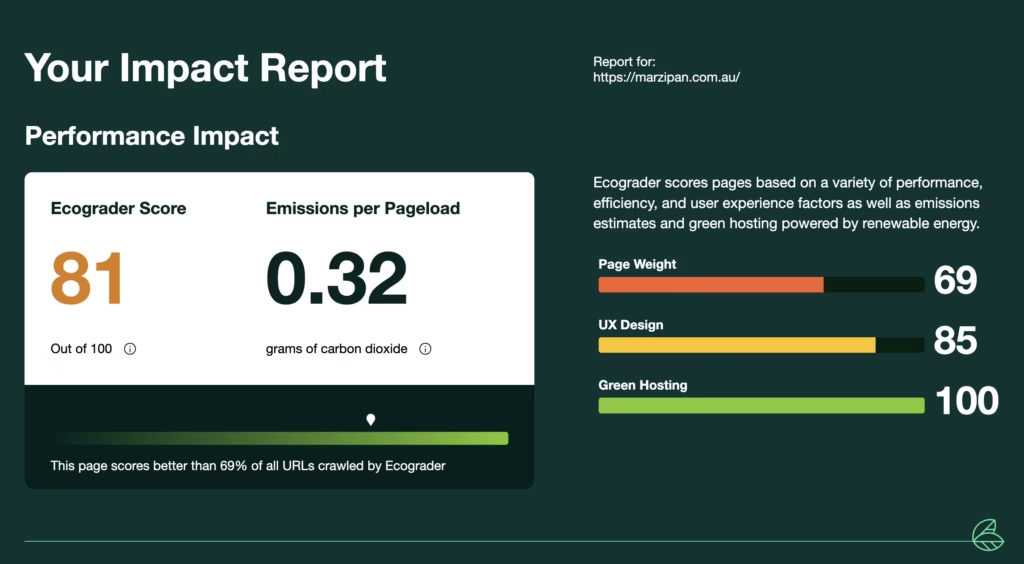
We’re proud of our impact and sustainability score for the Marzipan Media website:
Results: +310% new users, 134/100 site health score, 40% higher engagement Approach: Optimised images, streamlined code, green hosting migration View Case Study
Results: Fast-loading experiential site with full accessibility and reduced emissions Approach: Modern build tools, efficient animations, sustainable infrastructure View Case Study
Run your website through these tools:
Immediate Actions:
Research sustainable hosting providers:
Technical Improvements:
Sustainable web design isn’t about stripping everything back or sacrificing great design. It’s about making conscious, efficient choices that create high-performing websites without unnecessary waste.
Whether you’re a startup, non-profit, or enterprise brand, you can lead the way by choosing a digital presence that reflects your values and respects both users and the environment.
Your website should:
The internet isn’t going anywhere—but the way we build it can change for the better. Every sustainable choice you make contributes to a more efficient, accessible, and environmentally responsible web.
Ready to make your website part of the solution? The more sustainable your site becomes, the more powerful your message grows.
Ready to let your website shine a little brighter online?