
Most social enterprise founders in Sydney know that building a web design business with ethical foundations is more than a trendy ideal. Over 60% of clients now expect digital agencies to show social and environmental commitment in their work. Crafting a sustainable digital strategy that prioritises transparency, community partnerships, and eco friendly web solutions sets you apart in a crowded market. This guide shares unfiltered steps for establishing a purpose-driven business that champions real impact and authentic professional standards. Planting tree’s for every website we build is just the beginning of our sustainable and ethical practices and we’ll outline these for you here so we can grow a broader, more ethical vision together.
Table of Contents
- Step 1: Define Your Ethical Business Vision
- Step 2: Register Your Business And Set Up Operations
- Step 3: Develop Your Sustainable Service Offering
- Step 4: Build Your Portfolio And Website
- Step 5: Launch Targeted Marketing And Outreach
- Step 6: Assess And Optimise Your Business Growth
Quick Summary
| Key Takeaway | Explanation |
|---|---|
| 1. Define your ethical vision | Reflect on values and desired change to create a clear, impactful vision statement. |
| 2. Register and structure your business | Choose and register an appropriate business structure to align with your ethical objectives and legal requirements. |
| 3. Build a sustainable service model | Develop an offering that minimises ecological impact while delivering exceptional digital solutions. |
| 4. Create an impactful portfolio website | Showcase your work effectively, highlighting your commitment to ethical design principles. |
| 5. Implement targeted marketing strategies | Use content and networking to connect with purpose-driven clients and demonstrate your unique value. |
Step 1: Define your ethical business vision
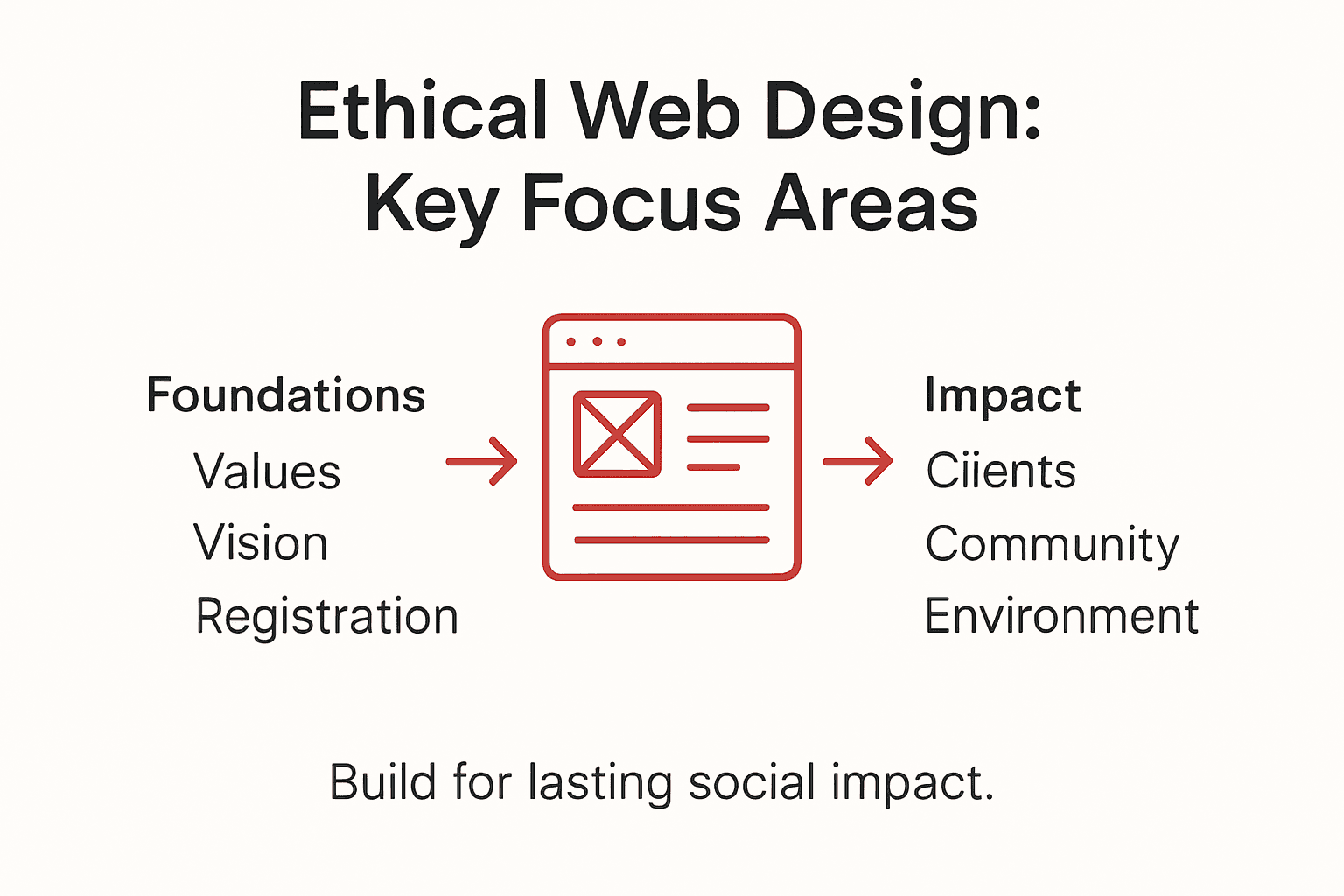
Creating an ethical web design business starts with crafting a clear vision that goes beyond profit and focuses on meaningful digital impact. Your business vision serves as the foundational blueprint for how you will approach web design with purpose and integrity.
To develop a compelling ethical vision, begin by reflecting on your core values and the specific change you want to create through your web design work. Queensland Government’s business planning resources recommend conducting a strategic workshop to articulate your mission. Consider questions like: What social or environmental problems can your web design skills help solve? How will your work contribute to sustainable digital practices? Are you committed to supporting community organisations, promoting accessibility, or reducing digital carbon footprints?
Your vision statement should be concise yet powerful, capturing the essence of your commitment to ethical web design. It might focus on empowering purpose-driven brands, creating digitally inclusive experiences, or supporting local Australian social enterprises through thoughtful, sustainable web solutions. The key is authenticity transparency about your professional principles.
Here is a summary showing how ethical principles align with various aspects of a sustainable web design business:
| Ethical Focus Area | Practical Application | Positive Impact |
|---|---|---|
| Social Responsibility | Prioritise accessibility features | Enables broader user inclusion |
| Environmental Impact | Use energy-efficient hosting | Reduces digital carbon emissions |
| Community Support | Partner with local organisations | Strengthens positive social outcomes |
| Business Integrity | Adopt transparent pricing | Builds client trust and loyalty |
Pro tip: Write your vision statement as if you are explaining your mission to a trusted colleague who shares your values. Keep it genuine, specific, and inspiring.
Step 2: Register your business and set up operations
Transitioning your web design vision into a legitimate business requires careful legal and operational planning. This step involves transforming your entrepreneurial passion into a structured professional entity that can effectively serve ethical digital design needs.
Australian Government’s comprehensive business startup guide provides essential insights for registering your web design business. You will need to select an appropriate business structure such as sole trader or company registration that aligns with your operational scale and ethical objectives. Obtaining an Australian Business Number (ABN) is crucial for establishing your legal trading identity. Consider factors like potential tax implications, personal liability, and administrative requirements when making your structural decision.
Beyond legal registration, setting up operational foundations involves establishing professional banking arrangements, implementing robust accounting systems, and securing appropriate professional insurance coverage. Research local business support services in your region that can provide guidance specific to digital service providers. Your operational setup should reflect the ethical principles outlined in your business vision creating a seamless connection between your professional infrastructure and your core values.
Below is a comparison of business structures relevant to ethical web design professionals:
| Structure Type | Administrative Complexity | Liability Level | Suitability for Ethical Goals |
|---|---|---|---|
| Sole Trader | Low | High | Suited for single operators |
| Company | Moderate to high | Limited | Better for scaling mission |
| Partnership | Moderate | Shared | Good for collaborative ethos |
Pro tip: Consult with a local accountant who understands the unique needs of digital service businesses to ensure your financial and legal foundations are strategically structured from the beginning.
Step 3: Develop your sustainable service offering
Transforming your web design business into a sustainable digital service requires strategic planning and a clear commitment to environmental and social responsibility. This step involves crafting a service model that not only delivers exceptional digital solutions but also minimises ecological impact and supports meaningful technological practices.
Business sustainability planning resources provide crucial guidance for developing an ethical service framework. Your sustainable web design offering should incorporate key principles like energy efficient coding, renewable hosting solutions, and digital carbon footprint reduction. Drawing from Australian green web development practices, consider implementing strategies such as optimising image sizes, using lightweight design frameworks, selecting eco friendly web hosting providers, and developing websites that consume minimal computational resources.
Beyond technical considerations, your sustainable service offering must communicate your commitment to ethical digital practices. This means developing transparent pricing structures, offering clients clear insights into the environmental benefits of your approach, and demonstrating how sustainable web design can actually improve website performance and user experience. Green web development solutions highlight that sustainability is not just an environmental choice but a competitive advantage for forward thinking digital businesses.
Pro tip: Create a sustainability scorecard for each project that quantifies and communicates the ecological impact of your web design work to clients, transforming sustainability from an abstract concept into a tangible deliverable.
Step 4: Build your portfolio and website
Creating a compelling online presence is crucial for establishing your web design business and attracting purpose driven clients. Your portfolio website will serve as a powerful tool to showcase your expertise, demonstrate your commitment to sustainable digital solutions, and communicate your unique value proposition.

Portfolio website creation strategies emphasise the importance of carefully curating your digital showcase. Focus on developing a website that not only displays your best work but also reflects your ethical design principles. Include detailed case studies that highlight the sustainable impact of your web design projects, demonstrating how your approach delivers both aesthetic excellence and environmental responsibility. Your portfolio should feature a diverse range of projects that showcase your ability to create digital experiences for different types of purpose driven organisations.
Structure your portfolio website with clear sections that tell a comprehensive story about your professional journey. Essential pages should include a compelling about section that articulates your mission, a detailed showcase of your most impactful projects, client testimonials that validate your approach, and a contact page that makes it easy for potential clients to connect with you. Ensure your website itself embodies the principles of sustainable web design through efficient coding, optimised images, and a lightweight design that minimises digital carbon footprint.
Pro tip: Develop a digital case study template that systematically breaks down each project to showcase not just the visual design but the specific sustainable outcomes achieved for each client.
Step 5: Launch targeted marketing and outreach
Launching an effective marketing strategy is crucial for attracting purpose driven clients and establishing your web design business as a leader in sustainable digital solutions. Your marketing approach must authentically communicate your unique value proposition and demonstrate your commitment to ethical design practices.
Purpose driven marketing strategies require a targeted approach that resonates with organisations seeking meaningful digital partnerships. Begin by identifying your ideal client base such as social enterprises, community organisations, and sustainable businesses in the Australian market. Develop targeted content that showcases your expertise in creating digital experiences that align with their values. This might include case studies, blog posts, and social media content that highlight the tangible environmental and social impacts of your web design approach.
Expand your outreach through strategic networking and relationship building. Attend local sustainability conferences, join professional networks focused on ethical business practices, and engage with community organisations that share your values. Consider offering free workshops or webinars on sustainable web design to demonstrate your expertise and build credibility. Create compelling presentation materials that explain how your web design services can help organisations reduce their digital carbon footprint and create more impactful online experiences.
Pro tip: Develop a targeted email newsletter that provides actionable sustainability insights for potential clients, positioning yourself as a thought leader in ethical web design.
Step 6: Assess and optimise your business growth
Growing a sustainable web design business requires continuous strategic assessment and intentional optimisation. This stage is about developing a dynamic approach to measuring performance, identifying opportunities, and making data driven improvements that align with your ethical business vision.
Business growth checklists from government resources recommend implementing systematic evaluation processes to track your business development. Start by establishing clear key performance indicators that go beyond financial metrics to include sustainable impact measurements. These might include client satisfaction ratings, carbon footprint reduction achieved through your web design projects, and the number of purpose driven organisations you support. Regularly review your service offerings, pricing strategies, and operational efficiency to ensure you are creating meaningful value for your clients while maintaining sustainable business practices.
Develop a holistic growth strategy that encompasses professional development, technological skills enhancement, and strategic networking. Attend industry conferences focused on sustainable digital practices, invest in continuous learning about emerging web design technologies, and seek mentorship from experienced professionals in the ethical design sector. Consider creating an advisory board or seeking peer feedback to gain diverse perspectives on your business growth. Track your progress through quarterly reviews, adjusting your strategies to remain adaptable and responsive to the evolving needs of purpose driven organisations.
Pro tip: Create a comprehensive scorecard that measures both financial performance and social impact, providing a nuanced view of your business growth beyond traditional metrics.
Build Your Ethical Web Design Business with Marzipan
Starting a web design business focused on impact means navigating complex challenges like integrating sustainable web design, ethical SEO, and building trust with purpose driven clients. The article on “How to Start a Web Design Business for Impact” highlights crucial goals such as minimising digital carbon footprints, creating accessible online experiences, and communicating your unique mission clearly. At Marzipan, we understand that your web presence must do more than just look good — it must perform reliably while reflecting your values authentically.
We specialise in websites built to perform and SEO built to last — tailored expressly for community based organisations and mission led brands. By combining ethical AI, sustainable design principles, and performance driven strategies, we help you grow online without compromising your ethics. Whether you need a beautifully crafted portfolio that showcases your sustainable projects or targeted digital campaigns that connect meaningfully with your audience, Marzipan stands ready to amplify your impact.
Elevate your web design business today with confidence and clarity. Discover how our approach can help you create digital experiences that resonate and scale real impact at Marzipan. Ready to start your journey? Explore our web design solutions and let us help you bring your ethical vision to life.
Is your web design business ready to lead in sustainability and ethics? Connect with Marzipan now and build a website that embodies your values while delivering exceptional results. Visit us at Marzipan and take the next step towards a thriving, purpose driven online presence.
Frequently Asked Questions
How can I define my ethical business vision for a web design business?
Start by reflecting on your core values and the impact you want to create through your work. Write a clear vision statement that captures your commitment to ethical web design, focusing on aspects like social responsibility and sustainability.
What legal steps should I take to register my web design business?
Register your business by selecting an appropriate structure, such as a sole trader or company, and obtain an Australian Business Number (ABN). Aim to complete this registration within a few weeks to establish your legal identity early on.
How can I develop a sustainable service offering in web design?
Create a service model that prioritises energy efficiency and minimal ecological impact. Incorporate practices like optimising image sizes and using renewable hosting solutions into your projects to demonstrate your commitment to sustainability.
What should I include in my portfolio website to attract clients?
Ensure your portfolio website showcases your best work and ethical design principles. Include detailed case studies that highlight the sustainable impact of your projects, along with client testimonials that validate your approach, to attract purpose-driven clients.
How can I effectively market my ethical web design business?
Identify your ideal client base and develop targeted content that resonates with them. Consider engaging in networking opportunities and offering workshops to establish yourself as a thought leader in sustainable web design.
What metrics should I use to assess the growth of my web design business?
Establish key performance indicators that measure both financial success and social impact, such as client satisfaction ratings and the carbon footprint reduction achieved by your projects. Regularly review these metrics to identify areas for improvement and adapt your strategies accordingly.