

Most british businesses underestimate how much local context matters for search rankings. Competing in the Australian market is not just about broad digital tactics—regional trends and behaviours play a huge role in success. With over 90 percent of online experiences beginning with a search engine, understanding these differences is crucial. This guide helps british companies navigate Australia’s unique SEO requirements, giving practical tools for stronger online visibility and growth.
Table of Contents
- Defining SEO Best Practices For Australia
- Types Of SEO: Technical, On-Page, Off-Page
- Ethical SEO And Sustainable Web Design
- On-Page Essentials For Lasting Performance
- Risks, Pitfalls, And What To Avoid
- Real-World Impact For Purpose-Led Brands
Key Takeaways
| Point | Details |
|---|---|
| Local SEO is Essential | Australian businesses must tailor their SEO strategies to reflect local user behaviours and preferences for optimal results. |
| Importance of Technical SEO | A robust technical foundation is crucial for effective crawling and indexing, impacting overall search engine visibility. |
| Ethical SEO Practices | Adopting ethical SEO and sustainable web design principles ensures long-term success and builds user trust. |
| Holistic SEO Approach | Integrating technical, on-page, and off-page SEO strategies enhances overall digital performance and user experience. |
Defining SEO Best Practices for Australia
Search Engine Optimisation (SEO) represents a strategic approach to improving online visibility for businesses across Australia. Unlike generic global strategies, local SEO practices demand nuanced understanding of regional digital landscapes and user behaviours. Effective SEO in the Australian context requires comprehensive knowledge of how search engines evaluate and rank content specific to local markets.
Australian businesses must recognise that search engine algorithms are continuously evolving, demanding adaptive strategies that align with emerging technological trends. For instance, local SEO strategies in Sydney demonstrate the importance of geographical targeting and region-specific content optimisation. Successful SEO implementation involves understanding user intent, creating high-quality content, and maintaining technical website performance that meets search engine guidelines.
Key elements of Australian SEO best practices include developing mobile-responsive websites, creating locally relevant content, optimising for voice search, and maintaining fast page loading speeds. Businesses must also focus on building authoritative backlinks from reputable Australian websites and ensuring their online presence reflects local search preferences. SEO tips for beginners in Sydney highlight the significance of understanding regional search patterns and user behaviours.
Pro Tip: Conduct Regular Keyword Research: Invest time in understanding local search terms and user queries specific to your Australian target market, updating your keyword strategy at least quarterly to maintain competitive digital relevance.
Types of SEO: Technical, On-Page, Off-Page
Search Engine Optimisation (SEO) encompasses three fundamental strategies that work collaboratively to improve a website’s search engine ranking and online visibility. SEO strategies for Sydney businesses demonstrate how these distinct yet interconnected approaches can be tailored to maximise digital performance.
Technical SEO focuses on optimising a website’s backend infrastructure to enhance search engine crawling and indexing capabilities. This involves improving website speed, ensuring mobile responsiveness, implementing secure HTTPS protocols, creating clear site architecture, and developing comprehensive XML sitemaps. Technical SEO addresses structural elements that directly impact how search engines interpret and rank web content, making it a critical foundation for digital visibility.
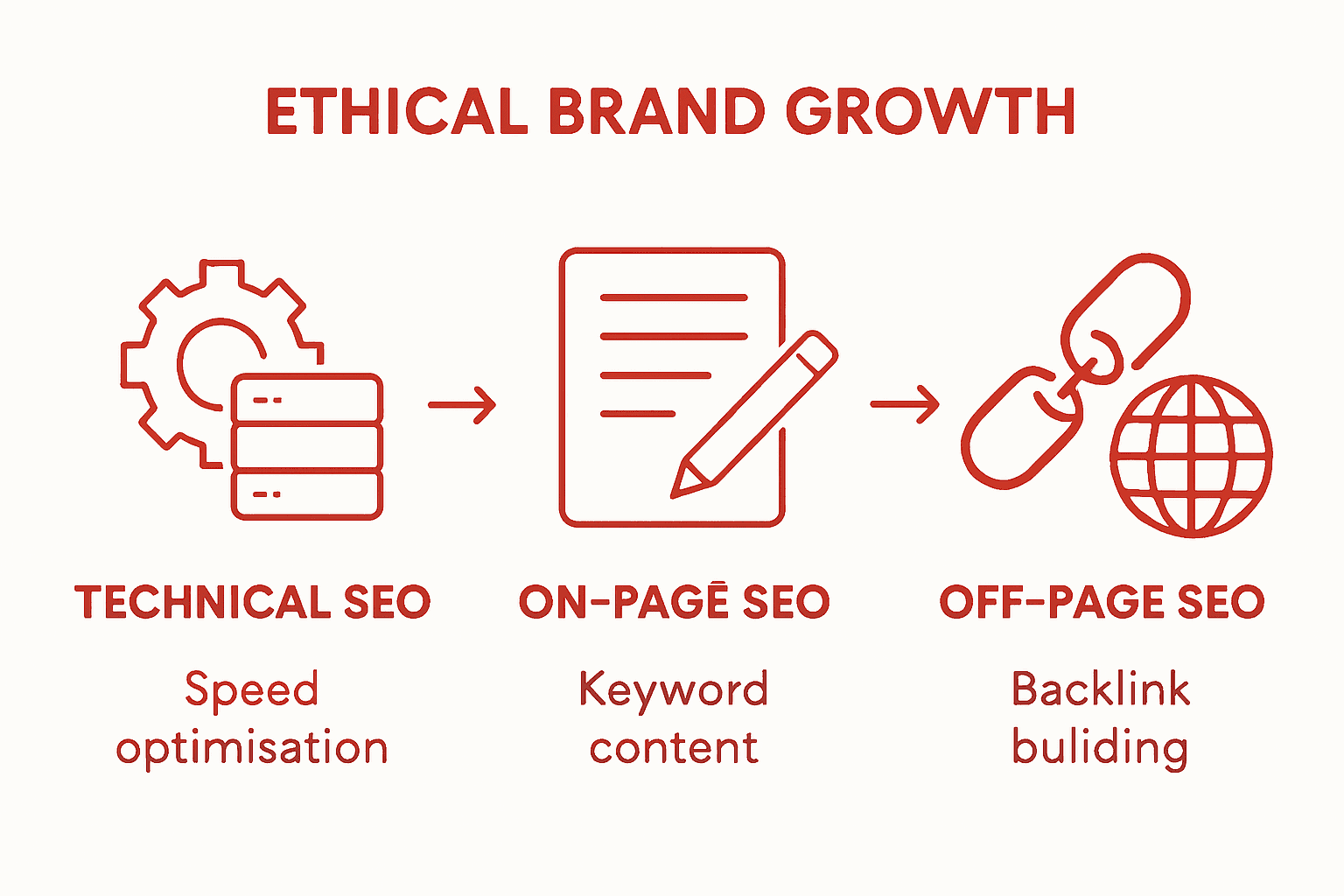
While technical SEO handles backend performance, On-Page SEO concentrates on optimising individual webpage elements. This includes crafting high-quality, keyword-rich content, strategic headline formatting, meta description development, image alt text optimisation, and internal linking strategies. Off-Page SEO complements these efforts by building external credibility through quality backlink acquisition, social media engagement, and establishing domain authority through reputable online references.
Here’s how the main types of SEO differ in focus and strategic benefit:
| SEO Type | Core Focus Area | Typical Activities | Key Business Impact |
|---|---|---|---|
| Technical | Website infrastructure | Speed, mobile-friendliness, HTTPS | Stronger crawlability and ranking |
| On-Page | Webpage content and structure | Keywords, meta tags, headers | Improved relevance and engagement |
| Off-Page | External authority and trust | Backlink building, PR, social | Higher domain authority and reach |
Pro Tip: Holistic SEO Approach: Treat technical, on-page, and off-page SEO as interconnected strategies, regularly auditing and balancing your efforts to create a comprehensive and adaptive digital marketing approach.
Ethical SEO and Sustainable Web Design
Ethical SEO transcends traditional search engine optimisation by integrating principles of transparency, user value, and environmental responsibility. Understanding eco web design principles reveals how digital strategies can simultaneously enhance online performance and demonstrate corporate social commitment.
Sustainable web design focuses on reducing digital carbon footprints by creating energy-efficient websites that minimise computational resources. This approach involves optimising website architecture to decrease data transfer, utilising green hosting solutions, implementing efficient coding practices, and designing streamlined user experiences that consume minimal processing power. Ethical SEO principles demand that websites prioritise genuine user value over manipulative ranking tactics, ensuring content authenticity, transparency, and meaningful information delivery.
The intersection of ethical SEO and sustainable web design creates a holistic digital strategy that balances technical performance with environmental and social responsibility. By developing websites that are not only search engine friendly but also environmentally conscious, businesses can demonstrate their commitment to sustainable digital practices. This approach requires careful consideration of website design elements, content strategy, and technical infrastructure to create digital experiences that are both efficient and impactful.
To understand sustainable and ethical SEO, consider these guiding principles:
| Principle | Aim | Example Approach |
|---|---|---|
| Transparency | Build user trust | Honest communication on website |
| Environmental Efficiency | Reduce website energy usage | Green hosting and code optimisation |
| User Value | Provide meaningful, accurate content | Comprehensive, relevant information |
| Long-Term Compliance | Avoid search engine penalties | Ethical link-building and content |
Pro Tip: Digital Sustainability Assessment: Regularly audit your website’s performance metrics, energy consumption, and content quality to ensure alignment with ethical SEO and sustainable web design principles.
On-Page Essentials for Lasting Performance
On-page SEO represents the foundational strategy for creating high-performing digital content that resonates with both search engines and human readers. Responsive web design principles demonstrate how technical elements and content strategy interconnect to deliver exceptional user experiences.

The core components of effective on-page SEO involve strategic content development, precise HTML structure, and user-centric design. Keyword optimisation requires thoughtful integration of relevant search terms within natural, engaging content, ensuring that headings, meta descriptions, and body text align with user search intent. Implementing clear, descriptive title tags, crafting compelling meta descriptions, and maintaining a logical header hierarchy are critical techniques for improving search engine visibility and user engagement.
Beyond technical optimisation, on-page SEO demands a holistic approach that prioritises content quality, readability, and genuine value. This includes developing comprehensive, well-researched content that addresses user questions comprehensively, utilising internal linking strategies to enhance site navigation, and ensuring fast page loading speeds across multiple devices. Multimedia elements such as images, videos, and infographics should be optimised with descriptive alt text and compressed file sizes to improve overall page performance without compromising visual quality.
Pro Tip: Content Relevance Audit: Regularly review your webpage content to ensure alignment with current user search intentions, updating and refining your material to maintain maximum relevance and engagement.
Risks, Pitfalls, and What to Avoid
Search engine optimisation carries significant risks when implemented without strategic consideration and ethical principles. 8 essential steps in SEO auditing highlight the critical importance of understanding potential pitfalls before they compromise digital performance.
Black hat SEO techniques represent the most dangerous risks for businesses seeking sustainable online growth. These unethical practices include keyword stuffing, hidden text, cloaking, purchasing low-quality backlinks, and generating duplicate content. Such strategies might provide temporary ranking improvements but ultimately result in severe search engine penalties, including potential website deindexing and permanent damage to online reputation. Modern search algorithms have become increasingly sophisticated in detecting manipulative tactics, making these approaches not only ineffective but potentially catastrophic for digital visibility.
Additional critical risks emerge from neglecting technical website elements and user experience. Poorly optimised websites suffering from slow loading speeds, non-responsive design, broken internal links, and inconsistent content structure can significantly undermine SEO performance. Search engines prioritise websites that deliver seamless user experiences, meaning technical deficiencies can rapidly erode search rankings and organic traffic potential. Businesses must continuously monitor website performance, ensuring mobile compatibility, rapid page loading, secure protocols, and clean technical infrastructure.
Pro Tip: Ethical Monitoring Strategy: Conduct comprehensive quarterly SEO audits, systematically reviewing your digital strategy to identify and mitigate potential risks before they escalate into significant performance challenges.
Real-World Impact for Purpose-Led Brands
Purpose-driven brands are transforming digital marketing strategies by integrating authentic storytelling with strategic SEO approaches that genuinely connect with audiences. Purpose-driven marketing strategies demonstrate how ethical digital communication can simultaneously drive business growth and social impact.
SEO for purpose-led brands transcends traditional performance metrics by prioritising meaningful engagement and transparent communication. Authentic digital presence requires brands to align their online content with core values, creating narratives that resonate beyond simple transactional interactions. This approach involves developing content that addresses genuine user needs, showcases organisational mission, and provides tangible value to target audiences while maintaining robust technical SEO performance.
Successful purpose-driven brands leverage SEO as a strategic tool for amplifying social impact, using digital platforms to communicate complex messages about sustainability, community engagement, and ethical business practices. By developing comprehensive, value-driven content strategies, these organisations can attract audiences who share their fundamental beliefs, creating deeper connections that extend beyond traditional marketing approaches. Strategic keyword research, local SEO optimisation, and targeted content development become powerful mechanisms for communicating meaningful brand stories.
Pro Tip: Values-Aligned Content Strategy: Develop a content roadmap that explicitly connects your brand’s core mission with user search intentions, ensuring every piece of digital content reinforces your fundamental organisational purpose.
Align Your Ethical Brand Growth with Sustainable SEO Solutions
The article highlights common challenges faced by purpose-driven brands aiming for ethical SEO that balances transparency, user value, and environmental efficiency. If you want to avoid pitfalls like black hat SEO and poor website performance while embracing sustainable web design, you need a partner who understands these complexities and respects your values.
At Marzipan, we specialise in building websites and SEO campaigns that support mission-led brands without compromising on ethics or sustainability. Our approach integrates performance-driven SEO strategies with eco-conscious design to help your brand grow authentically online. Discover how our expertise in ethical SEO and sustainable web design principles can empower your digital presence while remaining true to your purpose.
Ready to elevate your online impact with a website built to perform and a strategy designed to last? Visit Marzipan today to start growing your brand with digital solutions that connect meaningfully and scale responsibly.
Frequently Asked Questions
How can SEO impact ethical brand growth?
SEO enhances online visibility and authenticity, helping ethical brands communicate their mission and values effectively. A strong SEO strategy fosters genuine connections with audiences who share similar beliefs, driving both engagement and business growth.
What are the key elements of ethical SEO practices?
Key elements include transparency in communication, prioritising user value, sustainable web design, and avoiding manipulative tactics. Ethical SEO focuses on creating meaningful content that resonates with users while complying with search engine guidelines.
Why is content relevance important for purpose-driven brands?
Content relevance is crucial as it ensures that a brand’s messaging aligns with user search intentions, fostering trust and engagement. Relevant content helps brands showcase their values and mission, attracting like-minded audiences who support their goals.
How often should brands perform SEO audits to maintain ethical standards?
Brands should conduct comprehensive SEO audits at least quarterly. Regular reviews help identify potential risks, ensure compliance with ethical practices, and optimise overall digital performance.