

Building a british small business website might seem simple, yet only about 64 percent of British small businesses actually have a dedicated online presence. In such a crowded digital space, the right website can mean the difference between standing out and being overlooked. This guide walks you through every crucial step, from defining clear website goals to choosing ethical hosting, so your business can connect effectively with the right customers.
Table of Contents
- Step 1: Define Your Website Goals And Audience
- Step 2: Choose Ethical Hosting And Design Tools
- Step 3: Develop Your Content And Site Structure
- Step 4: Optimise For Seo And Local Discovery
- Step 5: Test Functionality And Launch Online
Quick Summary
| Key Insight | Explanation |
|---|---|
| 1. Define clear website goals | Establish specific, measurable objectives to align your website with your business strategy. |
| 2. Understand your target audience | Develop detailed customer personas to tailor your website content and marketing efforts effectively. |
| 3. Choose ethical hosting services | Select hosting providers committed to sustainable practices and transparency in their operations. |
| 4. Optimise for SEO and local search | Incorporate relevant keywords and ensure consistent business listings to enhance visibility online. |
| 5. Conduct thorough testing before launch | Verify the functionality of your website on multiple devices to ensure a seamless user experience. |
Step 1: Define your website goals and audience
Creating an effective website starts with crystal clear objectives and a deep understanding of who you want to reach. Your website is more than just a digital brochure it is a strategic tool designed to connect with potential customers and drive your business forward.
Begin by articulating specific goals that align with your business strategy. Are you looking to generate leads, showcase your services, or provide information? Business Victoria recommends establishing precise targets, such as attracting new customers, encouraging repeat business, and delivering consistent content. Consider creating a list of measurable objectives like increasing website traffic by 25 percent, generating 10 qualified leads per month, or boosting online sales by a specific percentage.
Understanding your target audience is equally critical. Develop detailed customer personas by examining demographics, interests, online behaviours, and pain points. The City of Perth suggests considering factors like age, location, income, and specific interests to create more targeted and effective marketing strategies. Research where your potential customers spend time online and what type of content resonates most with them.
Top tip: Create a one-page document that clearly outlines your website goals and target audience profile. Review and refine this document every six months to ensure your digital strategy remains aligned with your business evolution.
Step 2: Choose ethical hosting and design tools
Selecting the right hosting and design tools for your small business website requires careful consideration of both performance and ethical principles. Your digital infrastructure should not only support your business goals but also align with responsible technology practices.
The Ethics Centre emphasises the importance of creating technology that is secure, ethical, effective, and efficient, which means looking beyond mere functionality when choosing your web tools. When evaluating hosting providers, prioritise those committed to sustainable practices such as using renewable energy, minimising carbon footprint, and demonstrating transparent environmental policies. Similarly, design tools should support accessibility, user privacy, and inclusive digital experiences.
The Melbourne Social Equity Institute recommends using a Digital Design Matrix to assess the ethical implications of your digital choices. This means examining potential hosting and design platforms through lenses of social responsibility, data protection, and community impact. Look for providers that offer green hosting options, have clear data privacy policies, and demonstrate a commitment to reducing environmental strain through energy efficient infrastructure.
Top tip: Request detailed sustainability reports from potential hosting providers and design tool companies. A truly ethical technology partner will be transparent about their environmental and social practices, making it easy for you to verify their commitment to responsible digital solutions.
Here is a summary comparing key considerations for ethical hosting and design tools:
| Consideration | Hosting Provider | Design Tool |
|---|---|---|
| Environmental Impact | Renewable energy, low emissions | Accessibility features, low-energy code |
| Data Protection | Transparent privacy policies | User privacy controls |
| Social Responsibility | Public sustainability reports | Supports inclusive design |
| Community Impact | Community initiatives, open reporting | Collaborative features, equity focus |
Step 3: Develop your content and site structure
Developing a robust content strategy and intuitive site structure is crucial for creating a website that effectively communicates your business value and engages potential customers. Your website should tell a compelling story about your brand while making navigation seamless and information easily accessible.

Business Victoria recommends creating a content marketing plan that aligns precisely with your business objectives and audience expectations. Start by mapping out key pages like homepage, about, services, contact, and any specific product or service sections. Consider the customer journey and how each page will guide visitors towards taking action. Your content should answer critical questions potential customers might have demonstrating your expertise and building trust through clear, concise information.
When structuring your site, prioritise user experience by creating a logical hierarchy and intuitive navigation. Group related content together, use clear menu labels, and ensure that visitors can find what they need within three clicks. Each page should have a specific purpose and include compelling, benefit-driven content that speaks directly to your target audience’s needs and challenges. Include clear calls to action that guide visitors towards converting whether that means making a purchase, booking a consultation, or signing up for more information.
Top tip: Create a content calendar to plan and schedule your website updates. Regular, high quality content keeps your site fresh, improves search engine rankings, and demonstrates ongoing value to your potential customers.
Below is a quick reference for essential website content pages and their primary business purpose:
| Page | Main Purpose | Customer Benefit |
|---|---|---|
| Homepage | Brand introduction, welcome | Quick overview, easy navigation |
| About | Share business story and values | Builds trust, personal connection |
| Services | Detail offerings | Informs, guides decision-making |
| Contact | Provide contact methods | Encourages engagement, easy reach |
| Products | Showcase items for sale | Enables direct purchase |
Step 4: Optimise for SEO and local discovery
Optimising your website for search engines and local discovery is essential for attracting potential customers and improving your online visibility. Your goal is to make your website easily findable by people searching for services like yours in your local area.
Business Victoria emphasises understanding your target market using digital tools to identify where potential customers are searching online. Start by researching relevant keywords specific to your business and location. Incorporate these naturally into your website content including page titles, headings, and descriptive text. Focus on long tail keywords that reflect local search terms potential customers might use when looking for your specific services.
To improve local search performance, ensure your business is listed on Google Business Profile and other local directories. Include consistent contact information across all platforms including your exact business name, address, and phone number. Business Victoria recommends using web analytics tools to track your website performance and understand how customers interact with your site. Use these insights to continuously refine your content and improve user engagement.
Top tip: Create location specific content that answers common questions your local customers might have. This helps establish your expertise and improves your chances of ranking higher in local search results.
Step 5: Test functionality and launch online
Bringing your small business website from concept to live platform requires meticulous testing and strategic launching. This final step ensures your digital presence is polished, professional, and ready to engage potential customers.
Begin by conducting comprehensive functionality testing across multiple devices and browsers. Check that all links work correctly, forms submit properly, contact information is accurate, and pages load quickly. Test your website on desktop computers, tablets, and mobile phones to guarantee a seamless user experience. Pay special attention to responsive design elements ensuring your site looks and functions perfectly regardless of screen size.
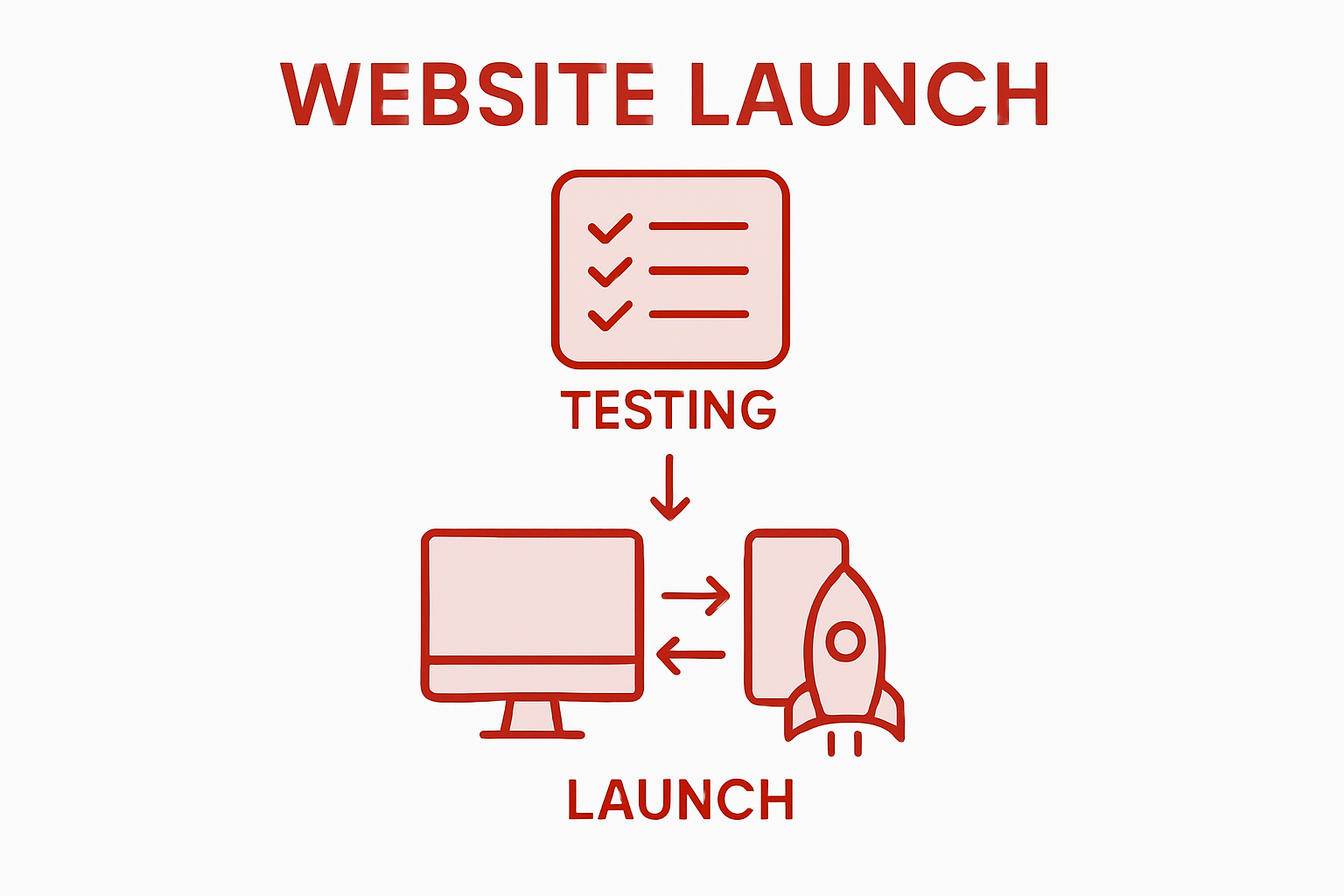
Once you have thoroughly verified all technical aspects, prepare for your website launch by setting up web hosting, configuring your domain name, and implementing basic security measures. Consider creating an initial announcement on your social media channels or sending an email to your professional network to generate initial traffic. Monitor your site closely during the first few weeks after launch watching for any unexpected issues or user experience challenges that might need refinement.
Top tip: Create a launch day checklist that includes technical tests, content verification, and initial promotional activities. This structured approach will help you feel confident and prepared as you introduce your new online presence to the world.
Build Your Small Business Website with Purpose and Performance
Creating a website for your small business can feel overwhelming when trying to balance clear goals, ethical hosting, engaging content and effective SEO. The article highlights the importance of defining your audience, selecting sustainable tools, and optimising for local discovery while ensuring your site functions seamlessly on all devices. We understand how critical these elements are for mission-led brands that want to grow online without compromising on their values or future impact.
At Marzipan, we specialise in crafting websites built to perform and designed to last by combining ethical AI, sustainable design and performance-driven SEO strategies. Whether you need help articulating your website goals or want a digital platform that truly connects with your audience through purposeful content and thoughtful structure, our team is ready to support your journey. Discover how our approach aligns with concepts like responsible web design and local search optimisation to help your brand shine brighter online.
Ready to create an online presence that scales impact not noise Explore Our Services today and take the next step towards a website that works for your business and your values.
Start your ethical website journey now with Marzipan by visiting Visit Marzipan. Let’s build a platform that performs, resonates and respects the future.
Frequently Asked Questions
How do I define my website goals for a small business?
To define your website goals, start by identifying what you want to achieve, such as generating leads or providing information. Create a list of specific, measurable objectives, like aiming to increase website traffic by 25% within six months.
What should I consider when choosing hosting and design tools for my website?
When selecting hosting and design tools, evaluate their performance and ethical practices. Look for providers that utilise renewable energy and offer user privacy controls to ensure a responsible digital environment.
How can I develop an effective content strategy for my small business website?
To develop an effective content strategy, map out key website pages such as the homepage, services, and contact. Include clear calls to action and ensure that each page provides informative, benefit-driven content that addresses your audience’s needs.
What are the best practices for optimising my website for SEO?
Optimising your website for SEO involves researching relevant keywords and incorporating them naturally into your content. Ensure your business details are consistent across online directories to improve local search visibility.
How do I test my website functionality before launching it?
To test your website functionality, conduct comprehensive checks on multiple devices and browsers, ensuring all links work and pages load quickly. Complete these tests before launching to guarantee a seamless user experience, thereby reducing user frustration post-launch.
What steps should I take for a successful website launch?
For a successful launch, create a checklist that includes testing all technical aspects and preparing initial promotional activities. Consider announcing your site on social media or via email to kickstart traffic on launch day.