Many Sydney-based nonprofits and community organisations build their first website using a template or DIY platform. It is fast, low cost, and gets something live quickly. However, DIY solutions lack scalability and often fail to reflect the ethical values that define mission-driven work. Donors, volunteers, and community members notice when a website feels generic. This guide walks through a clear, step-by-step process for commissioning and building a bespoke website that aligns with your organisation’s values, supports long-term growth, and builds genuine trust with the people you serve.
Table of Contents
- Why choose bespoke over template or DIY web design?
- Get ready: Requirements, stakeholders and tools
- Step-by-step bespoke web design process
- Troubleshooting, verification, and measuring online impact
- Support your mission with proven bespoke web solutions
- Frequently asked questions
Key Takeaways
| Point | Details |
|---|---|
| Bespoke drives real impact | Tailored design aligns your site with your organisation’s values and maximises engagement and trust. |
| Preparation ensures success | Clear goals, the right team, and essential tools lead to a smooth and mission-focused process. |
| Proven iterative steps | Following a structured, user-centred process results in better experiences and sustained online growth. |
| Continuous improvement matters | Regular feedback and accessible metrics keep your online presence aligned with evolving community needs. |
Why choose bespoke over template or DIY web design?
The appeal of template and DIY platforms is understandable. They are affordable and quick to set up. However, template sites compromise scalability and long-term return on investment, particularly for organisations that need to grow, pivot campaigns, or demonstrate ethical credibility online.
Bespoke web design is built around your specific goals, audience, and values. It is not adapted from a generic layout. Every feature, every page structure, and every visual element is created to serve your mission. For nonprofits, this matters because your website is often the first point of contact for donors and community members. A site that reflects your values builds trust before a single word is read.
Understanding ethical site terminology is a useful starting point when evaluating your options. It helps you ask the right questions of any design agency or freelancer.
| Feature | Template or DIY | Bespoke design |
|---|---|---|
| Setup speed | Fast | Slower, more thorough |
| Cost upfront | Low | Higher |
| Long-term ROI | Limited | Strong |
| Mission alignment | Weak | Purpose-built |
| Scalability | Restricted | Fully flexible |
| Ethical credibility | Generic | Embedded by design |
Organisations that invest in bespoke design also benefit from stronger digital branding for community groups, which reinforces recognition and trust across all digital touchpoints.
Two common project approaches exist: waterfall and agile. Waterfall follows a fixed sequence from planning to launch. Agile works in shorter cycles, allowing for feedback and adjustment throughout. For nonprofits with evolving needs, an agile approach often produces better results because it accommodates stakeholder input at each stage.
Key advantages of bespoke design for mission-driven organisations include:
- Full control over visual identity and messaging
- Integration of donation tools, impact trackers, and community features
- Accessibility standards built in from the start
- Ethical data practices and privacy compliance
- Flexibility to update content without technical support
Before committing to any build, a website audit for nonprofits can identify what is working on your current site and what needs to change. This prevents duplication of effort and focuses investment where it matters most.
“A bespoke site is not just a design choice. It is a strategic decision that reflects how seriously an organisation takes its mission and its audience.”
Get ready: Requirements, stakeholders and tools
Preparation is the most important phase of any bespoke web project. Organisations that skip this step often face scope creep, budget overruns, and a final product that does not meet their needs.
Start by identifying your goals. What do you want the website to achieve? Common goals for nonprofits include increasing donations, recruiting volunteers, sharing impact reports, and building community awareness. Each goal shapes the structure and features of the site.
Next, form a project team. This should include internal stakeholders such as your communications lead, programme manager, and a board representative. It should also include your external design partner. Clear roles and decision-making authority prevent delays.
A custom site typically requires 80-100 hours for a 10-page nonprofit build. This estimate covers discovery, design, development, testing, and launch. Use it as a baseline when setting your timeline and budget.
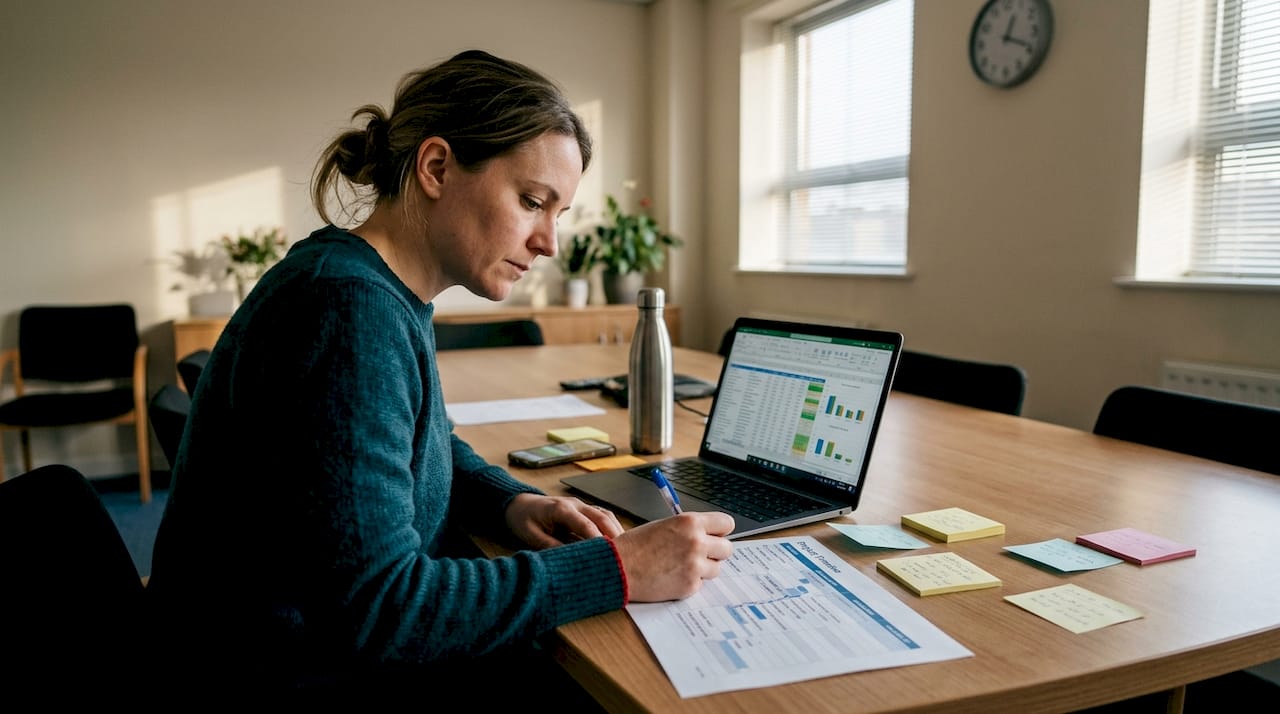
The UX design process provides a structured framework for understanding user needs before any design work begins. Applying this framework ensures the site serves real people, not assumptions.
| Preparation area | Key actions |
|---|---|
| Goals and audience | Define primary goals, map user journeys |
| Stakeholder alignment | Assign roles, agree on decision process |
| Budget and timeline | Set realistic figures based on scope |
| Tools and platforms | Choose CMS, donation tools, analytics |
| Success metrics | Define KPIs before build begins |
Useful tools for mission-driven builds include open-source CMS platforms, accessible design systems, and ethical analytics tools that do not rely on invasive tracking. Reviewing website layouts for impact can help your team visualise what is possible before briefing a designer.
For organisations focused on digital impact for good, aligning the brief with measurable outcomes from the outset makes it far easier to evaluate success after launch.
Pro Tip: Write a one-page project brief before approaching any agency. Include your mission, target audience, three primary goals, and one example of a website you admire. This saves time and improves the quality of proposals you receive.
Step-by-step bespoke web design process
With preparation complete, the build process can begin. Each step below reflects best practice for nonprofit and community organisation websites.
-
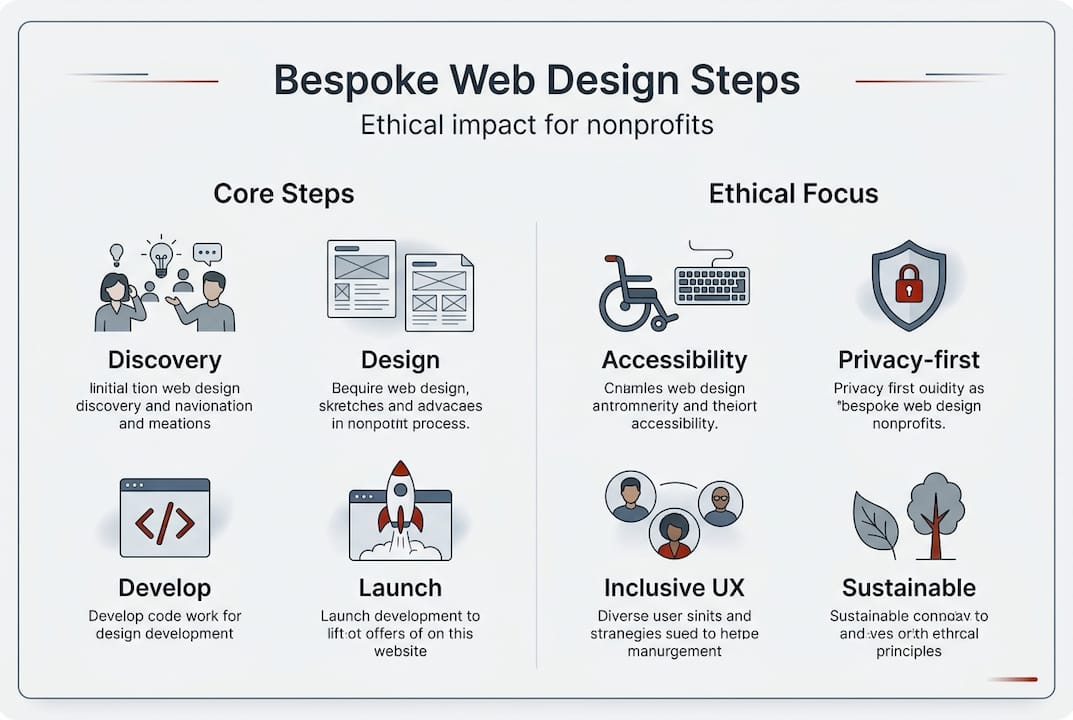
Discovery. Conduct interviews with donors, volunteers, and community members. Understand what they need from your website and what currently frustrates them. This is the empathise phase of iterative UX testing, which is essential for meaningful impact.
-
Define scope and ethical priorities. Document what the site must do, what it must not do, and which ethical standards apply. This includes accessibility requirements, data privacy policies, and sustainability considerations such as low-carbon hosting.
-
Ideate layouts and features. Sketch page structures and identify key features. For nonprofits, this often includes impact widgets, donation integrations, event calendars, and volunteer sign-up forms. Review SEO for mission-driven sites at this stage to ensure discoverability is built into the structure.
-
Prototype and iterate. Build low-fidelity wireframes and share them with real users. Gather feedback and refine. This step prevents costly changes during development. It also surfaces accessibility issues early, when they are cheapest to fix.
-
Develop, test, and launch. Build the site, conduct thorough testing across devices and browsers, and launch with a clear communications plan. Transparency about the launch, including what is new and why, builds community confidence.
Throughout the process, apply ethical SEO guidance to ensure your site ranks for the right terms without resorting to manipulative tactics. The SEO benefits for nonprofits are significant, particularly for organisations that rely on organic search to reach new supporters.
Pro Tip: Schedule a user testing session with at least five people from your target audience before finalising any prototype. Even informal feedback from community members reveals usability issues that internal teams consistently miss.
Key statistic: A 10-page bespoke nonprofit site typically requires 80 to 100 hours of professional work. Allocating this time properly across discovery, design, and testing produces a far stronger outcome than rushing to launch.
Troubleshooting, verification, and measuring online impact
Launching a bespoke site is not the end of the process. Ongoing measurement and improvement are essential for maintaining alignment with your mission and demonstrating value to stakeholders.
Real-time impact metrics and donation tools build stakeholder trust and increase conversions. Organisations that display live data, such as funds raised or people supported, consistently report stronger engagement from donors and community members.
Common issues to monitor after launch include:
- Accessibility gaps: Screen reader compatibility, colour contrast, and keyboard navigation should be tested regularly, not just at launch.
- Page speed: Slow loading times reduce engagement and harm search rankings. Compress images and review hosting performance quarterly.
- Unclear messaging: If visitors cannot identify your mission within five seconds of landing on your homepage, the messaging needs revision.
- Data security: Ensure SSL certificates are current, donation forms use secure payment gateways, and privacy policies reflect actual data practices.
A structured SEO audit for mission-driven sites should be conducted every six months. This identifies technical issues, content gaps, and opportunities to improve visibility for key search terms.
Use the following framework to assess ongoing performance:
| Metric | What to measure | Review frequency |
|---|---|---|
| Donor conversion rate | Completed donations per visit | Monthly |
| Volunteer sign-ups | Form completions | Monthly |
| Page speed score | Core Web Vitals | Quarterly |
| Accessibility compliance | WCAG 2.1 AA standard | Bi-annually |
| Organic search traffic | Sessions from search engines | Monthly |
A website audit template provides a structured way to review all of these areas in one sitting. It is particularly useful for organisations without a dedicated digital team.
“Continuous improvement based on real user feedback is what separates a website that serves its mission from one that simply exists online.”
Verifying ethical standards is an ongoing responsibility. Review your data collection practices, third-party integrations, and hosting provider at least once per year. Stakeholders increasingly expect transparency about how their data is used and how the organisation’s digital footprint is managed.
Support your mission with proven bespoke web solutions
Building a bespoke website is a significant undertaking, but it does not have to be done alone. Marzipan works with Sydney-based nonprofits and community organisations to deliver ethical, performance-driven web design that reflects your values and supports your goals.
From sustainable web design to targeted digital marketing services, the Marzipan team provides hands-on support at every stage of the process. Whether you are starting from scratch or improving an existing site, the approach is grounded in transparency, ethical practice, and measurable impact. Review transparent pricing to understand what a bespoke build involves and how it can be structured to suit your budget and timeline. Marzipan is here to help your organisation grow online without compromising what matters most.
Frequently asked questions
How long does a typical bespoke nonprofit website build take?
Most 10-page custom sites take 80-100 hours, depending on scope, user testing requirements, and the complexity of integrations such as donation tools or event management systems.
Is there a measurable ROI on investing in bespoke web design?
Bespoke sites support measurable ROI through improved donor conversion rates and stronger community engagement, particularly when the site is built around clearly defined goals and user needs.
Do I need technical skills to manage a bespoke website after launch?
No. A well-built bespoke site uses a user-friendly content management system that allows non-technical staff to update pages, publish news, and manage forms without developer support.
How does bespoke design strengthen ethical or mission-driven branding?
Custom design allows organisations to embed their values into every element of the site. Real-time impact tools and unique storytelling features build trust with donors and community members in ways that generic templates cannot replicate.